Hospitals operate around the clock, placing extreme demands on display stability and lifespan in command centers, surgical teaching, and academic lecture halls. COB fine-pitch displays, offering seamless splicing, high protection, and long service life, have become the core display terminals in hospital informatization. However, procurement often falls into a 'low bid, high maintenance' trap due to insufficient understanding of technical specs, installation environments, and after-sales terms. Based on industry practice and real cases, this article systematically reviews common pitfalls in hospital COB display procurement and installation, analyzes causes, and offers actionable avoidance strategies for integrators and hospital users.
Common Pitfalls
Hospital environments demand far higher display reliability than ordinary commercial settings. The following pitfalls are especially critical in hospital COB fine-pitch display projects:
1. Accelerated aging due to insufficient protection. Hospital corridors, operating room peripheries, and underground imaging departments contain dust, moisture, and even disinfectant fumes. Low-protection displays allow moisture and dust ingress, corroding PCB boards and oxidizing solder joints, accelerating pixel degradation. Stonbel COB fine-pitch displays achieve IP55 protection, effectively resisting dust and moisture to significantly extend screen lifespan. 2. Visual
Root Cause Analysis
Frequent pitfalls in hospital COB fine-pitch display projects stem from multiple compounding factors:
First, hospital procurement often prioritizes initial quotes over total lifecycle cost. Low-priced products save upfront expenses but incur repair and replacement costs far exceeding the savings. Stonbel COB displays offer a lifespan of ≥100,000 hours, with annual maintenance costs over 70% lower than traditional equipment, proving more economical long-term. Second, integrator technical capabilities vary widely. Hospital projects are often handled by low-voltage integrators, some lacking expertise in curved design and multi-signal integration. Stonbel provides free full-process bid

Pitfall Avoidance Solutions
To address the above pitfalls, hospital COB fine-pitch display selection and implementation should follow these principles:
First, rigorously verify protection ratings and core specifications. Require manufacturers to provide IP rating certifications and third-party test reports, ensuring products can handle complex hospital environments. Stonbel COB fine-pitch displays achieve IP55 protection, operating stably in high-dust, humid conditions. The Sinopec Qilu Branch refinery control room project (P1.2 explosion-proof) has achieved zero corrosion and zero dust-related failures year-round. Second, prioritize manufacturers with full-specification customization capabilities. Hospital spaces vary widely, with curved, irregular, and recessed installations common. Stonbel offers full pixel pitch coverage from P0.7 to P1.8, supporting 1:1
Recommended Models
Based on different hospital scenarios, Stonbel offers the following recommendations:
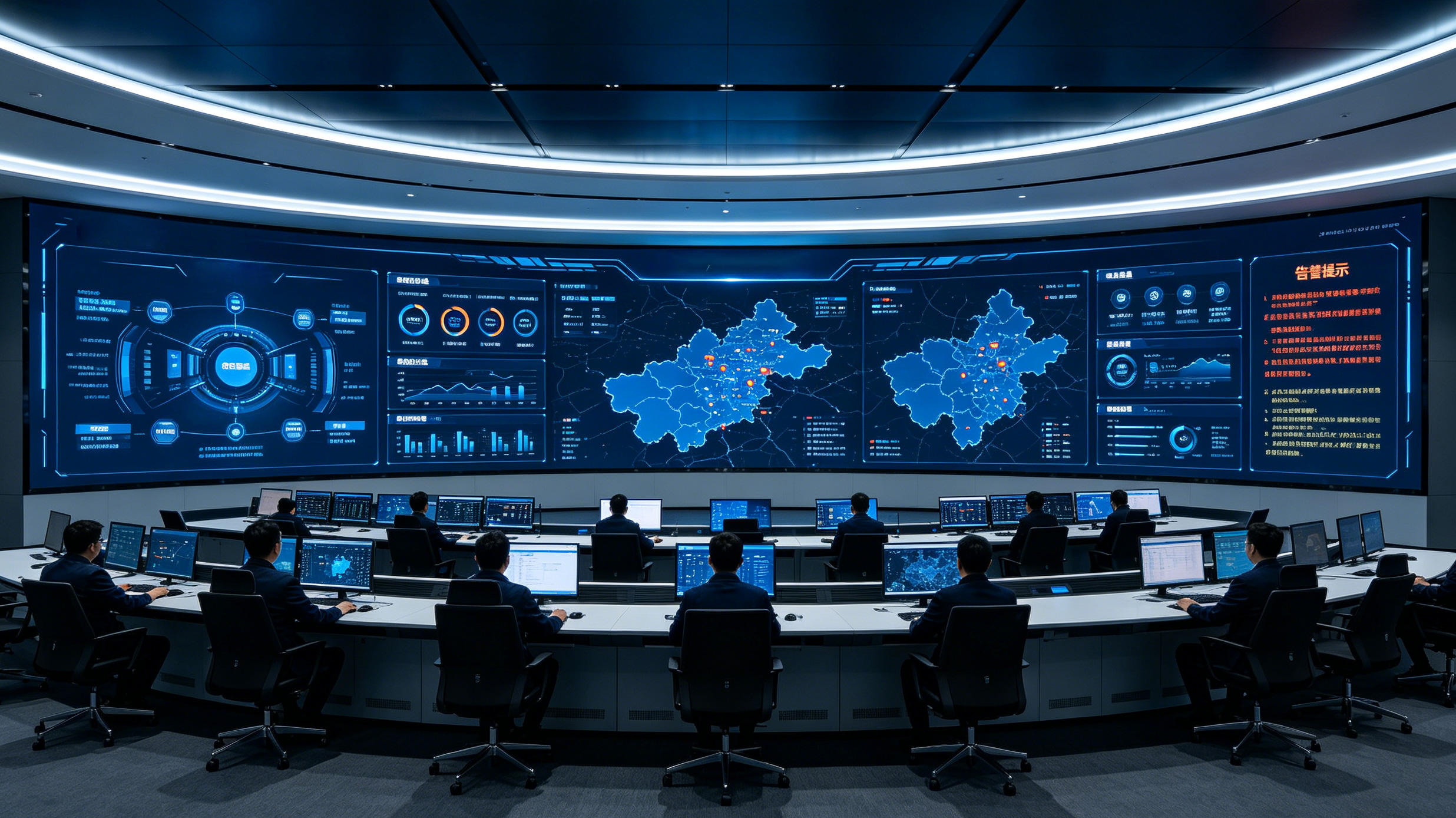
Command Center & Security Surveillance: P0.9 security-grade COB display. The Wuhan Public Security Bureau Tianwang Project command center uses 110㎡ of this model, with 256 surveillance signals connected simultaneously. Face and license plate recognition accuracy improved by 60%, police command response speed increased by 50%, with zero failures during year-round duty and O&M costs reduced by 65%. Hospitals can adopt this solution for emergency command centers with full-domain HD visualization. Surgical Teaching & Academic Lecture Halls:
Q1: What is the typical lifespan of hospital COB fine-pitch displays?
A: Hospital COB fine-pitch display lifespan is typically measured in hours. Stonbel COB fine-pitch displays have a rated lifespan of ≥100,000 hours, equivalent to over 11 years of continuous operation. However, actual lifespan is significantly affected by environmental factors: humidity, dust, and high temperatures accelerate pixel degradation. Therefore, hospitals should choose products with IP55 protection (standard across Stonbel's lineup) and intelligent cooling systems. In an underground defense command center project, Stonbel COB displays ran 7×24 year-round in sealed high-temperature, high-humidity conditions with zero downtime—stability improved by 94% and annual
Q2: How fast is the after-sales response for hospital COB fine-pitch displays?
A: Hospitals demand rapid after-sales response. Stonbel, with resident service points across 31 provinces and cities, can reduce response time to within 30 minutes and cut cross-regional maintenance costs by over 50%. The mechanism includes: First, the intelligent fault detection system monitors equipment status 24/7, automatically alerting and diagnosing remotely. Second, over 90% of routine faults are resolved via remote maintenance without on-site visits, reducing wait time. Third, if on-site service is required, localized teams arrive quickly with common spare parts, ensuring uninterrupted hospital operations. For example, the Wuhan Public Security Bureau Tianwang Project command center's 110㎡ COB display achieved zero failures during year-round duty with O&M costs reduced by 65%, validating the combination of rapid response and high reliability.
Q3: How do hospital COB fine-pitch displays handle humid or strong EMI environments?
A: Hospital underground spaces or nuclear medicine areas may have humidity or strong electromagnetic interference. Stonbel COB fine-pitch displays provide dual protection: At the hardware level, high-thermal-conductivity silicone integrated packaging and full-metal shielding achieve IP55 protection against moisture, dust, and corrosion. They also pass GJB 151B military EMI testing, with full-metal shielded packaging resisting strong interference to ensure flicker-free, streak-free images. At the software level, intelligent brightness adaptation and fault self-check automatically adjust display parameters in complex environments. For classified areas, chip-level signal encryption and dedicated confidential O&M services prevent
Q4: How do hospital COB fine-pitch displays adapt to curved walls?
A: Hospital lobbies or command centers often feature curved designs. Stonbel offers 1:1 custom curved splicing solutions with flatness deviation controlled within 0.1mm, achieving seamless curved displays that eliminate blind spots and image distortion. Integrators need no curved-solution expertise—Stonbel provides full support for surveying, design, and installation. In a real case, a national economic development zone's smart operations center used a P1.5 curved COB display. The integrator initially lacked curved-solution capability, but Stonbel's full-specification customization delivered in 12 days, helping the integrator earn a 'Quality Service Provider' rating
Hospital COB display procurement involves technology, environment, service, and cost. Strictly evaluate protection rating, refresh rate, customization, and after-sales response. Stonbel, as an original manufacturer, offers self-developed packaging, full-spec customization, nationwide local service, and lifetime support—ensuring reliable operation from P0.9 HD monitoring to P1.2 explosion-proof control, reducing maintenance costs and ensuring worry-free project delivery.