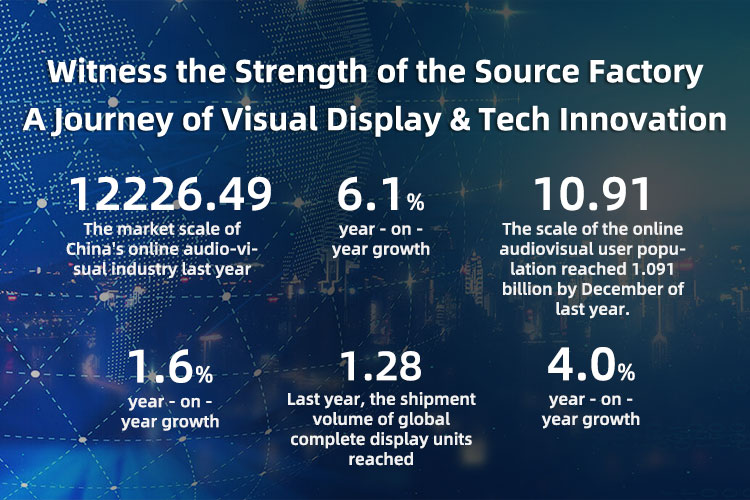
In government and enterprise meetings, command centers, and premium display settings, LCD video walls are becoming the mainstream choice over traditional projection and single-screen displays, thanks to high brightness, narrow bezels, and stable performance. However, buyers often struggle to choose between LCD and LED fine-pitch technologies. This article addresses key pain points, compares both solutions using real project cases, and offers configuration plans, hardware checklists, and budget guidance. As a certified manufacturer (3C, CE, FCC, ISO14001, ISO9001, ROHS), Stonbel shares insights based on actual deployments and industry-standard parameters.
Value of LCD Video Walls in High-End Conference Rooms
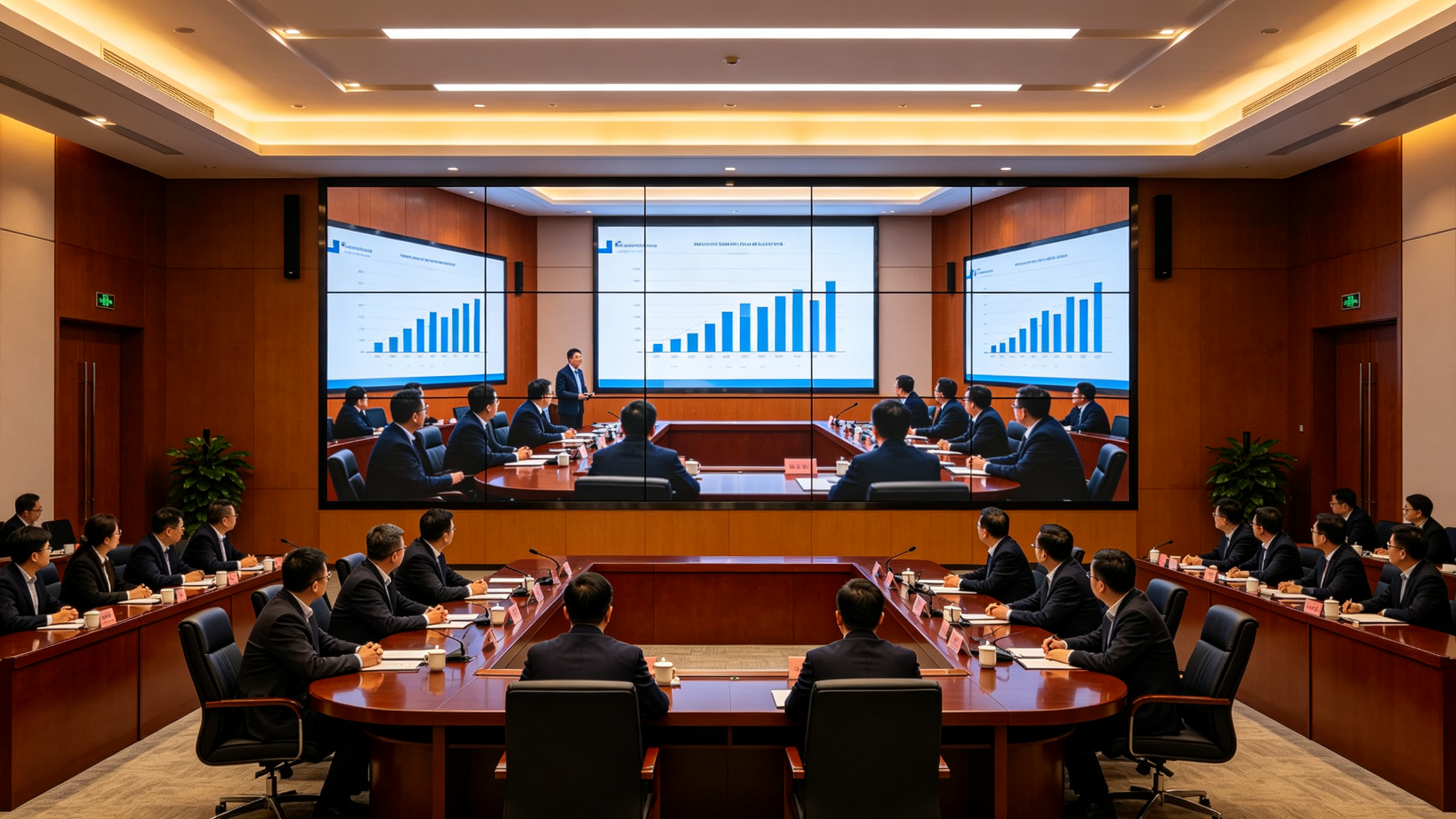
The value of LCD video walls in high-end conference rooms is proven across projects: from the 120-screen command center at the Shenzhen Emergency Management Bureau to the classified conference room at the China Electronics Technology Group (CETC) Research Institute. LCD video walls deliver fine image quality, high reliability, and secure controllability, making them the preferred choice for government and enterprise meetings and command dispatch. In the Shenzhen Emergency Management Bureau project, a 10×12 wall of 120 screens (55-inch, 0.88mm bezel) handled 256 signal inputs with 99.99% system availability and less than 30 minutes of
Key Pain Points
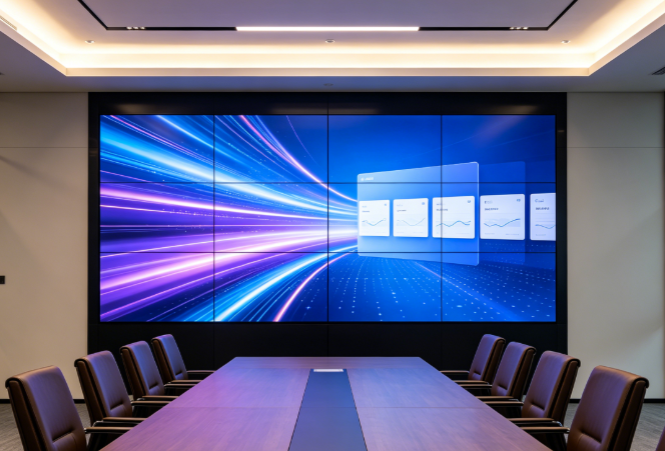
Core pain points in conference room displays include: insufficient brightness requiring curtains during daytime meetings, cumbersome multi-source switching, visual fatigue from prolonged viewing, and data security concerns. Traditional projectors underperform in brightly lit rooms, while LCD video walls typically exceed 500 cd/m² brightness, maintaining clear visibility even in bright environments. In the Shenzhen Nanshan Foreign Language School case, deploying 86-inch smart blackboards across 48 classrooms and 8 function rooms reduced visual fatigue by 60%—showing that
Configuration Options
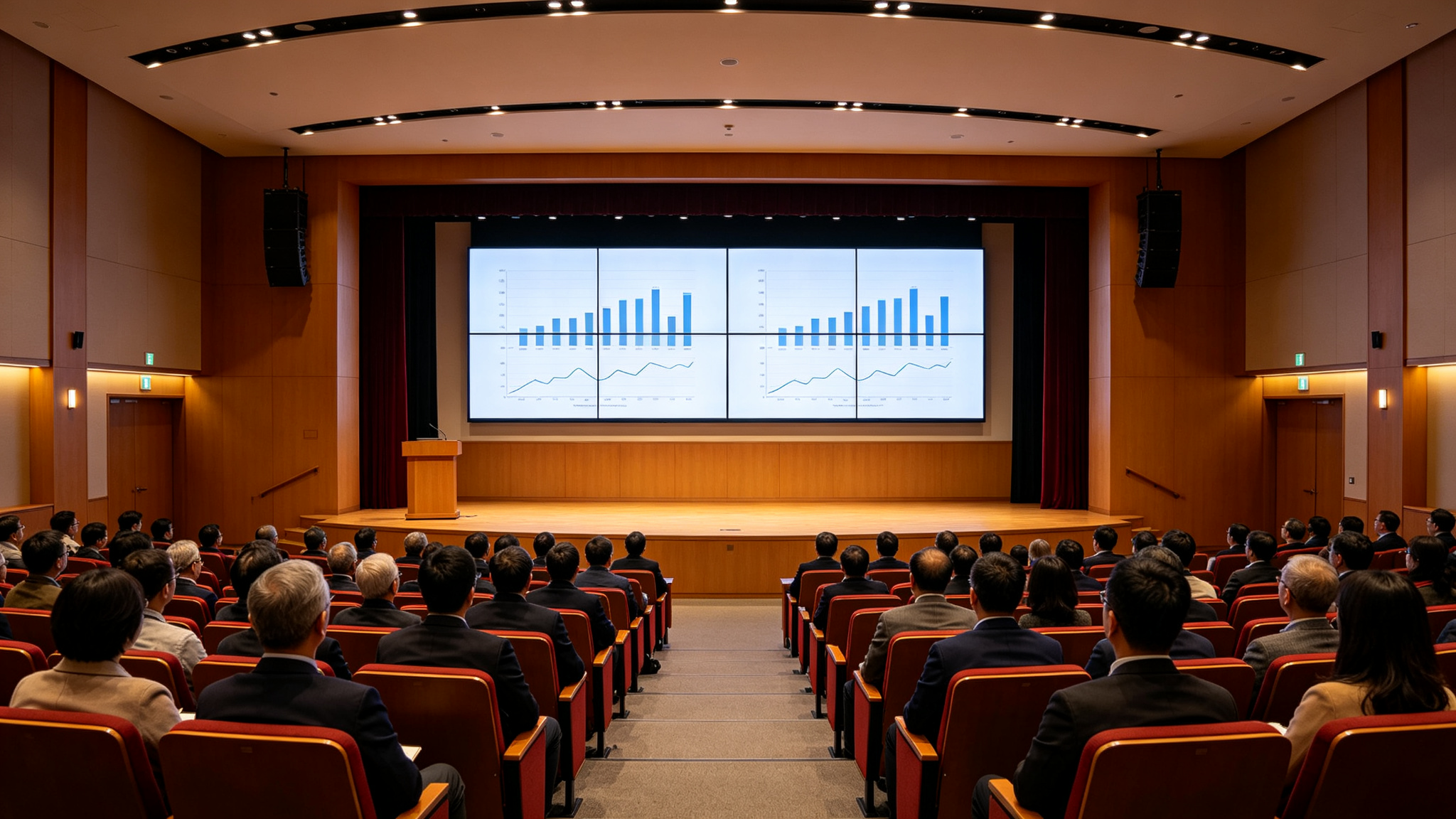
Installation methods for conference room LCD video walls typically include wall-mount or cabinet-mount. Wall-mount suits shallow rooms but requires a service access channel; cabinet-mount facilitates heat dissipation and maintenance, ideal for 7×24 operation. In the CETC classified conference room project, Stonbel deployed a combination of smart conference all-in-one units and LCD video walls, with all software and hardware localized for domestic compatibility and on-site 7×24 security maintenance—highlighting the need to prioritize
Hardware Checklist
A complete conference room LCD video wall system includes: LCD display units, a video wall processor, source devices (e.g., matrix switchers), an optional central control system, wall-mount/cabinet brackets, cabling, and accessories. For budget-constrained rooms, simplify the list: LCD units, a basic processor, and wall brackets—no central control needed, with signal switching via remote or buttons. However, lacking a professional controller may cause tearing or latency in multi-window
Deployment Advantages
LCD video walls offer high installation flexibility, supporting custom shapes like curved or L-shaped layouts to meet aesthetic needs in premium spaces. In the Xi'an Xianyang International Airport smart terminal project, Stonbel reduced maintenance labor by 50% through remote centralized management, showcasing LCD's scalability—over 400 display terminals, flight information updates reduced to second-level latency, and passenger complaint rates dropped by 70%. This case shows LCD video walls are not limited to single rooms but enable unified control
Budget Considerations
Budget planning must include long-term maintenance. LCD backlights last about 60,000 hours—roughly 16 years at 10 hours/day—but require periodic color calibration and cleaning, with annual maintenance costs around 3–5% of total system cost. Stonbel's service points in 31 provinces reduce travel expenses, though final costs depend on contract terms. We recommend reserving 10% of the budget as contingency for cable replacements or controller upgrades. In the Shenzhen Emergency Management Bureau project, 99.99%
Q1: Which is better for high-end conference rooms: LCD or LED video walls?
A: For high-end rooms requiring fine image detail (e.g., small text or detailed charts), LCD video walls are preferable due to higher pixel density and no graininess at close range. For rooms over 50 m² with viewing distances beyond 5 meters, fine-pitch LED (e.g., P1.0 COB) offers seamless large images, but higher brightness may cause fatigue. In Stonbel's cases, classified conference rooms and command centers typically use LCD walls for encrypted transmission, local storage, and controlled maintenance costs. Specifically, LCD
Q2: How to choose the bezel width for conference room LCD video walls?
A: Bezel width directly affects visual continuity. 0.88mm bezels show minimal separation when displaying maps or data, ideal for command centers or high-end rooms; 1.8mm offers good value for standard meetings; 3.5mm is lowest cost but shows visible black edges at close range. For viewing distances over 3 meters, 3.5mm is acceptable; under 3 meters, choose 0.88mm or 1.8mm. In the Shenzhen Emergency Management Bureau project, 0.88mm bezels across 120 screens displayed city maps with continuous lines and no breaks, meeting precision
Q3: What signal processing equipment is needed for conference room LCD video walls?
A: At minimum, a video wall processor is required for multi-window display and signal switching. High-end setups can use multi-screen controllers supporting up to 256 inputs (as in the Shenzhen Emergency Management Bureau project). For remote management, choose controllers with network interfaces for one-click layout and zone publishing. Classified environments require encrypted transmission modules and local storage for data security. In the CETC project, Stonbel's smart conference all-in-one and LCD wall combination included built-in encryption and local storage, with all software/hardware
Q4: What are the installation methods for conference room LCD video walls?
A: Common methods are wall-mount and cabinet-mount. Wall-mount suits shallow rooms but needs a service access channel; cabinet-mount aids heat dissipation and maintenance, ideal for 7×24 operation. Large rooms can use curved splicing, but LCD panels have limited bend radius—excessive curvature widens bezels. Before installation, verify wall load-bearing capacity and reserve space for power and signal cabling. Stonbel provides on-site survey and installation guidance through service points in 31 provinces. For classified rooms, consider physical isolation requirements such as shielded signal cables and independent power supply for equipment, ensuring compliance with confidentiality standards.
LCD video walls have proven their value in high-end scenarios: from Shenzhen Emergency Management Bureau's 120-screen command center to CETC's classified meeting rooms, Xi'an Xianyang International Airport's 400 terminals, and Shenzhen Nanshan Foreign Language School's 86-inch smart blackboards. Choose based on viewing distance, signal inputs, installation environment, and budget—prioritize certified manufacturers with nationwide service. Stonbel, a top-10 LED display company in China, serves clients like Huawei, Peking University, and Peking Union Medical College Hospital, offering design, supply, and on-site support across 31 provinces. Always conduct site surveys and prototype testing before purchase.