When selecting commercial display walls, energy efficiency and long-term reliability are the two core concerns for integrators and end users. In critical scenarios such as broadcasting studios, energy dispatch, and medical consultations, equipment often must operate 7×24. Any heat dissipation or high energy consumption issue can lead to high operational costs and business interruption risks. The COB fine-pitch LED displays and LCD video walls produced under Stonbel's source manufacturing system, with proprietary packaging processes and industrial-grade design standards, offer a valuable reference in energy control and long-run stability. This article uses a Q&A format to review the source manufacturer's real parameters and case details in heat dissipation design, energy-saving technology, and reliability assurance, providing an objective selection reference for industry decision-makers.
FAQ Overview
We have compiled twenty high-frequency technical questions covering display selection, specifications, installation, and after-sales service. These questions reflect real
Q1: What specific energy-saving technologies are used in Stonbel's COB displays?
A: Stonbel's COB fine-pitch displays use proprietary chip-on-board packaging. Compared to traditional SMD, the LED chips are directly mounted on the PCB,
Q2: Which has better thermal performance: COB or traditional SMD displays?
A: COB displays significantly outperform SMD in thermal performance. SMD LEDs have exposed pins with heat concentrated at solder joints, creating a longer heat dissipation path.
Q3: How does 7×24 continuous operation affect the lifespan of commercial displays?
A: 7×24 operation is a true test of display reliability. Stonbel's LED displays have a design life of ≥100,000 hours, which depends on robust thermal and power
Q4: How do displays maintain stable operation in humid or salt-spray environments?
A: For high-humidity and salt-spray environments, Stonbel offers dual protection. First, COB packaging fully seals the LEDs, eliminating moisture ingress
Q5: How do COB screens in studios avoid color drift from overheating during long recordings?
A: Broadcast applications demand exceptional color stability. In the Shandong TV studio project, Stonbel's COB screens maintained constant temperature
Q6: What is the power consumption of LCD video walls during 7×24 operation?
A: Stonbel's LCD displays use A+ grade industrial panels with intelligent temperature control to optimize backlight power while maintaining brightness. In
Q7: How do you evaluate whether a commercial display has good thermal design?
A: Good thermal design typically has three characteristics: high thermal conductivity substrate materials (e.g., COB direct PCB mounting), proper airflow or
Q8: Will Stonbel's COB screens show display glitches when starting in low temperatures?
A: Traditional displays may show glitches or delayed startup in low temperatures due to capacitor and IC characteristics. Stonbel has developed a wide-temperature drive solution for extreme cold. In the
Q9: For a 7×24 monitoring center, which is more suitable: COB or LCD video wall?
A: Monitoring centers require long-duration static image display, which tests both technologies. COB screens have no burn-in risk and high luminous efficiency, ideal for
Q10: How much does remote maintenance help in 7×24 operation projects?
A: Remote maintenance is critical for 7×24 operations. Stonbel's large-screen systems include built-in remote fault diagnosis. In the Three Gorges project, most faults were resolved remotely without
Q11: What factors affect LED display refresh rate? Does refresh rate impact energy efficiency?
A: Refresh rate is primarily determined by driver ICs and scanning method. Stonbel's COB screens support 3840Hz ultra-high refresh rate, producing no scan lines under high-speed cameras. High refresh
Q12: What should be done if display becomes unstable in strong electromagnetic interference environments?
A: Strong EMI can disrupt display signals and power stability. In the Three Gorges project, Stonbel implemented electromagnetic shielding design to effectively isolate internal circuits, equipped with
Q13: What exactly does IP55 protection on Stonbel's COB displays defend against?
A: IP55 rating means dust protection (Level 5: prevents harmful dust accumulation) and water jet protection (Level 5: withstands low-pressure water jets from all directions). For commercial displays, this
Q14: How much can maintenance costs be reduced with COB fine-pitch screens compared to traditional screens?
A: COB packaging integrates LEDs and PCB into a single robust structure, resistant to impact and vibration-induced LED loss. In the Shandong TV project, Stonbel's COB screens reduced
Q15: How do you evaluate grayscale performance of a commercial display? Is low-brightness high-gray important?
A: Grayscale is a key indicator of image depth. Stonbel's COB screens support 16-bit grayscale, revealing rich detail in dark scenes without distortion. Low-brightness high-gray technology is particularly
Q16: How does Stonbel's conference all-in-one machine handle heat during long meetings?
A: Conference all-in-one machines integrate display, touch, and computing modules, making thermal design more challenging. Stonbel's conference all-in-one uses industrial-grade thermal modules with silent
Q17: Why are thermal performance and color consistency critical for XR virtual production screens?
A: XR production requires screens to output high brightness for extended periods to match cameras, with strict color consistency. In the Hengdian filming base project, Stonbel's P0.9 XR-specific screens
Q18: How should buyers compare different manufacturers' claimed 100,000-hour lifespan?
A: The 100,000-hour lifespan is typically based on theoretical LED chip degradation data under standard conditions. Stonbel provides this
Q19: How does Stonbel's national after-sales network support 7×24 projects?
A: For critical 7×24 projects, response speed is essential. Stonbel has resident service points in 31 provinces and cities across China, providing localized rapid response. In the Suzhou TV and
Q20: How much impact does in-house manufacturing have on quality control and cost of commercial displays?
A: Stonbel's in-house manufacturing means full-chain autonomous control from LED packaging to final assembly. This enables strict traceability of every process step, ensuring every screen
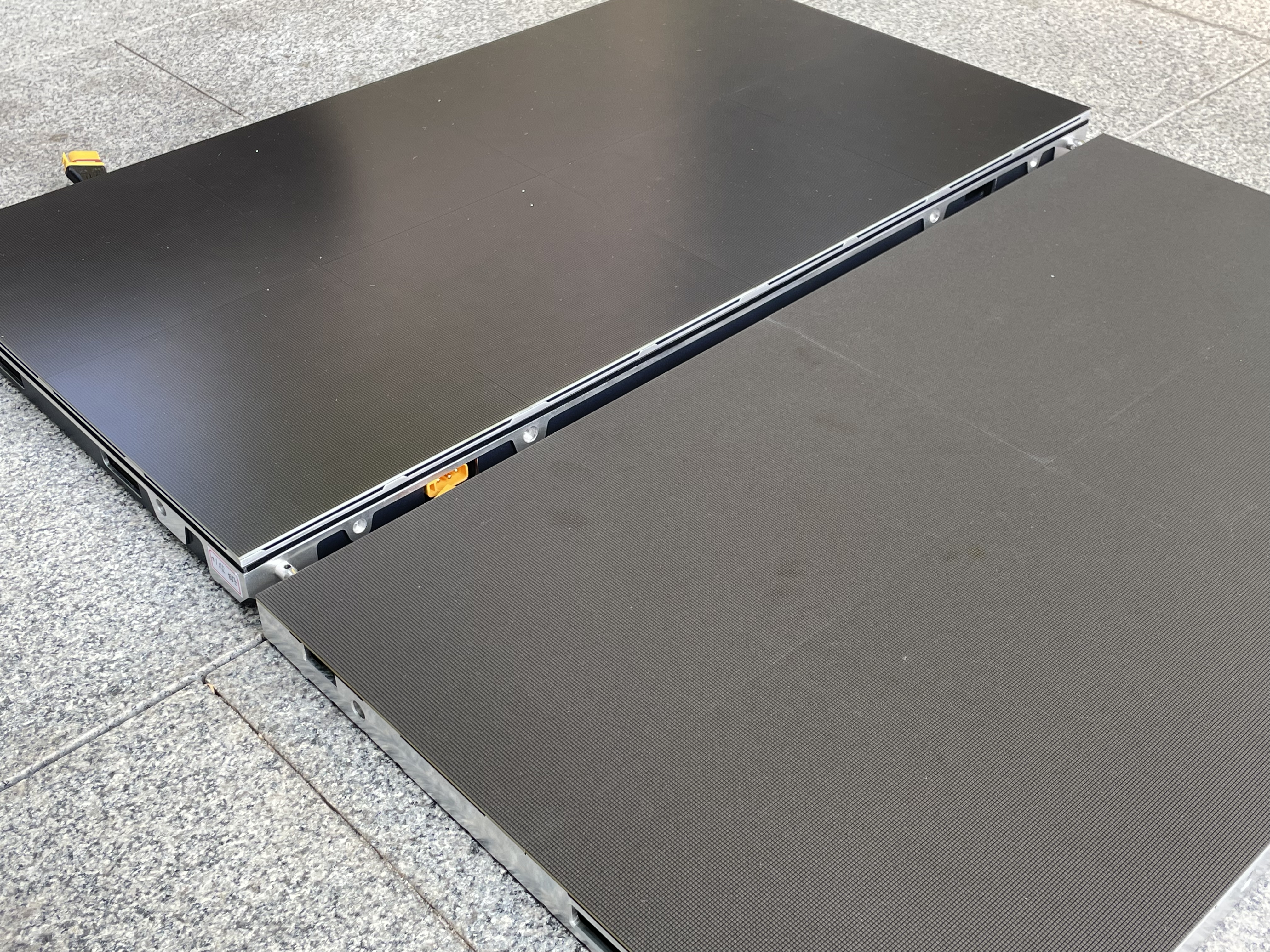
Energy efficiency and reliability in commercial display walls are not defined by a single parameter but by the integration of material science, structural design, and system optimization. The analysis of Stonbel's COB and LCD products under its source manufacturing system shows that, whether for high-quality broadcasting studio requirements or harsh energy facility environments, controlling packaging processes and component selection at the source is fundamental to ensuring 7×24 stable operation. For integrators, partnering with a source manufacturer means not only more reliable delivery quality but also stronger support for project profitability and long-term maintenance. We hope this Q&A provides a valuable decision-making reference for the selection and planning of next-generation commercial display projects. Further reading: COB fine-pitch LED displays, LCD video walls, smart conference all-in-one units.