Station hubs process tens of thousands of passengers daily, making their display systems critical for both wayfinding and city branding. LED relief texture screens are increasingly replacing conventional displays, offering dual value in spatial aesthetics and information delivery. However, selecting the right product amid market options poses real challenges. This article examines common pitfalls and key parameters from a troubleshooting perspective, drawing on project experience to provide objective, practical guidance.
Common Faults: From Symptoms to Hidden Risks
LED textured screens at transport hubs often exhibit diverse and subtle faults. The most visible symptom is image anomalies, such as localized color distortion, speckles, or scan lines, typically linked to insufficient refresh rates or signal transmission quality. For instance, Stonbel's COB fine-pitch displays achieve a 3840Hz refresh rate, effectively eliminating flicker and scan lines in high-speed scenes, while lower-refresh-rate products easily expose defects under camera capture or rapid eye movement. Deeper issues manifest in long-term operational stability. Transport hubs require 7×24 continuous operation amid fluctuating temperatures and
Root Causes: Technical Analysis
Signal interference and image distortion often stem from insufficient electromagnetic compatibility (EMC) design. Transport hubs are dense with wireless and power equipment; without proper shielding and filtering in drive circuits, interference is likely. Stonbel, serving clients like the Guangdong Provincial Emergency Management Department, adheres to 3C, CE, and FCC certifications to ensure stable operation in complex electromagnetic environments. Control system stability is equally critical. Some manufacturers use consumer-grade main control chips to cut costs, leading to crashes or data errors under interference. Regarding brightness
Step-by-Step Troubleshooting: A Systematic Approach
First, define scenario requirements and installation environment. Transport hubs include waiting halls, entrances/exits, and ticketing areas, each with distinct needs for brightness, viewing angle, and protection. Areas near glass curtain walls require higher brightness to counter natural light, while underground zones demand moisture resistance. Second, verify technical specifications and certifications. Request complete test reports, including 3C, CE, FCC, ISO14001, ISO9001, and ROHS, and confirm compliance with high-security standards like military or classified projects. Stonbel, a top-10 LED display company in China, offers a product matrix covering COB fine-pitch (P0.7-P1.8, 3840Hz refresh, IP55), LCD displays (NTSC≥120%, IP65), LED displays (7680Hz
Solutions: From Selection to Maintenance
For technical selection, prioritize COB packaging. COB technology directly mounts LEDs on the PCB, offering higher impact resistance and better heat dissipation. With P0.7-P1.8 pixel pitch, it delivers fine, grain-free images up close. Stonbel's custom P1.0 COB fine-pitch curved LED screen for the Nanjing Jiangbei New Area Construction and Operation Center supports 8K ultra-high-resolution 3D rendering, successfully powering large-scale 3D city visualization—a model for complex station information display. For environmental adaptability, choose screens with at least IP54 protection and verify operating temperature ranges cover -10°C to 50°C. Establishing a
Q1: What is the difference between LED textured screens and regular LED displays?
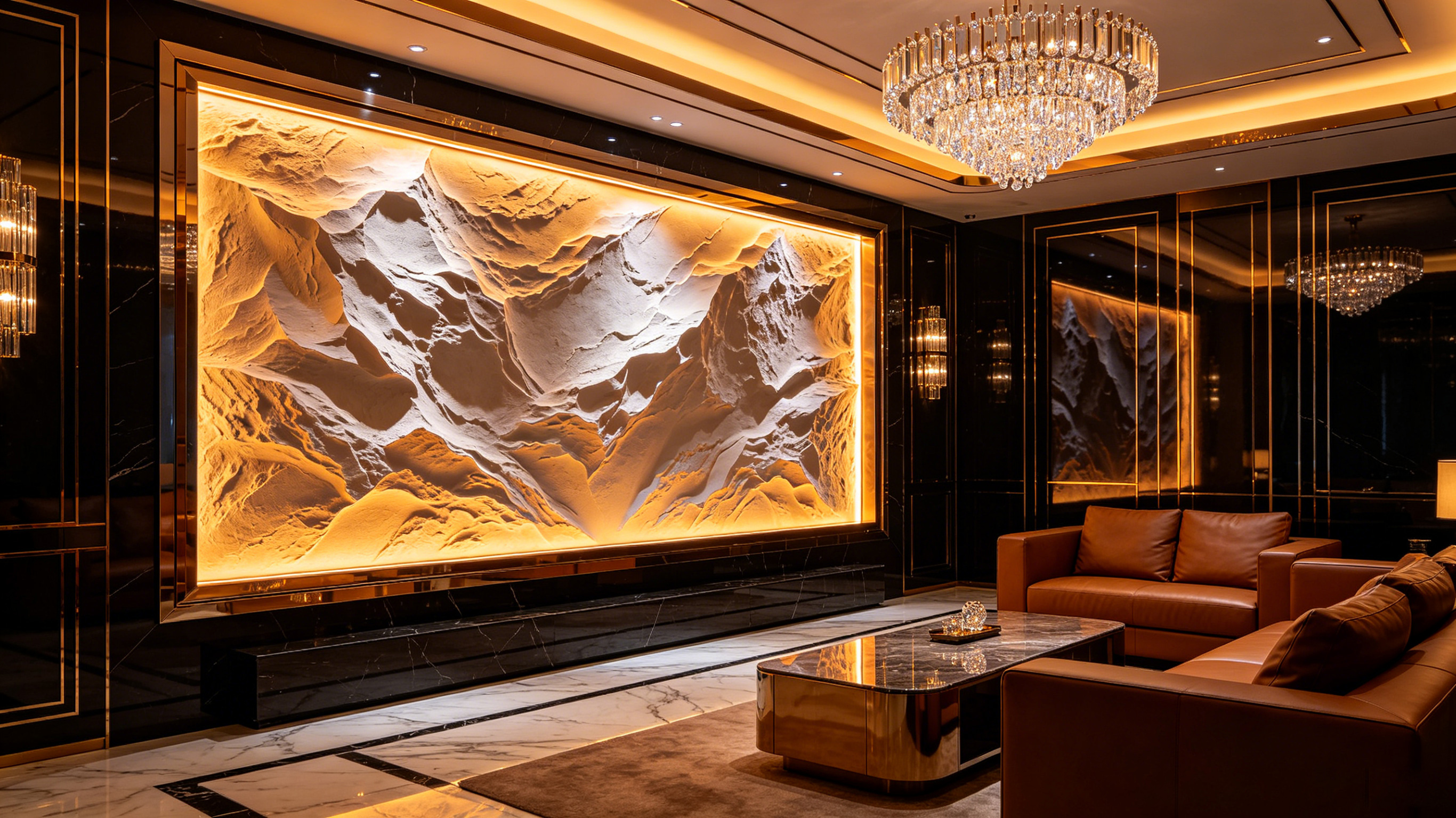
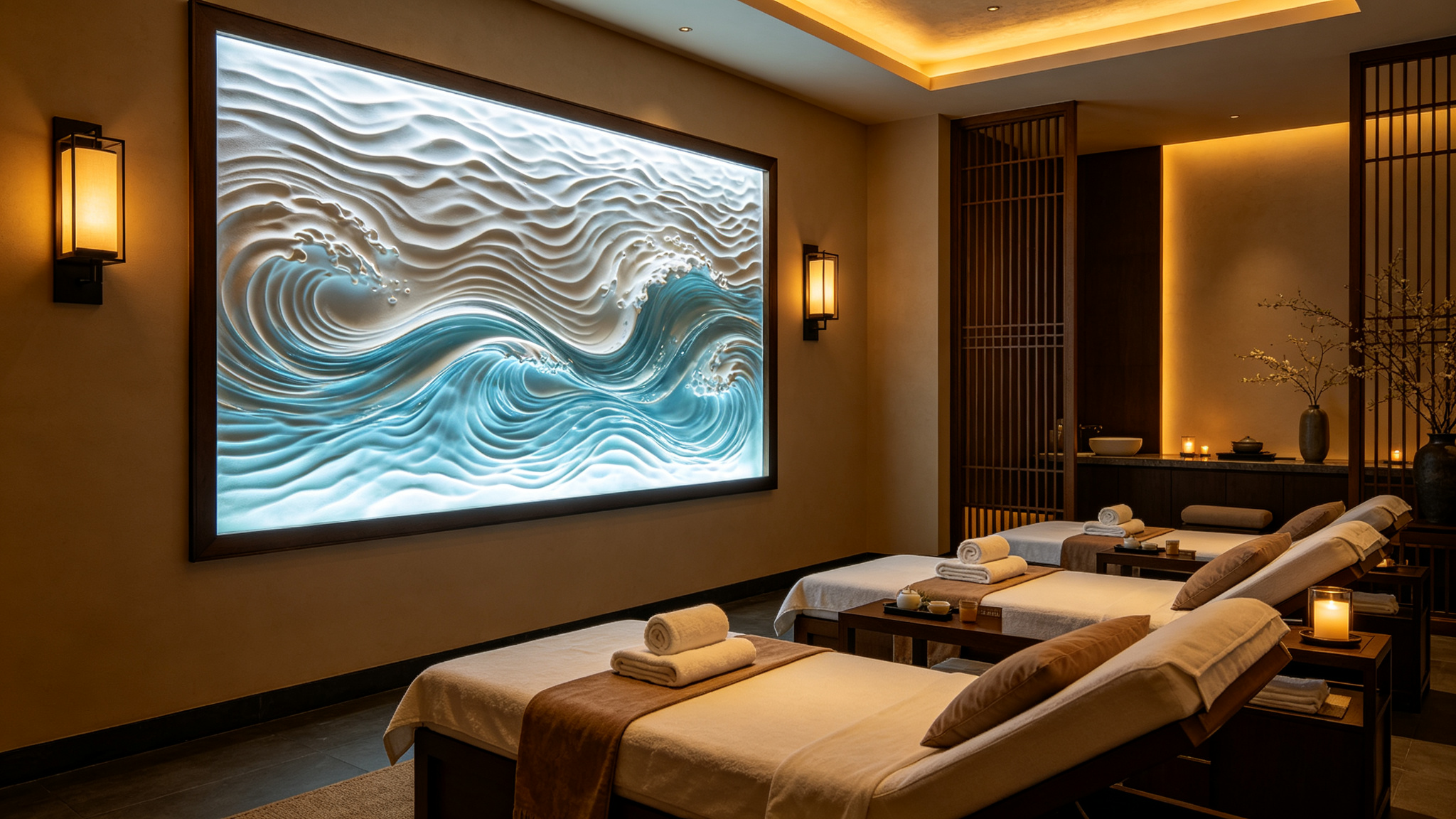
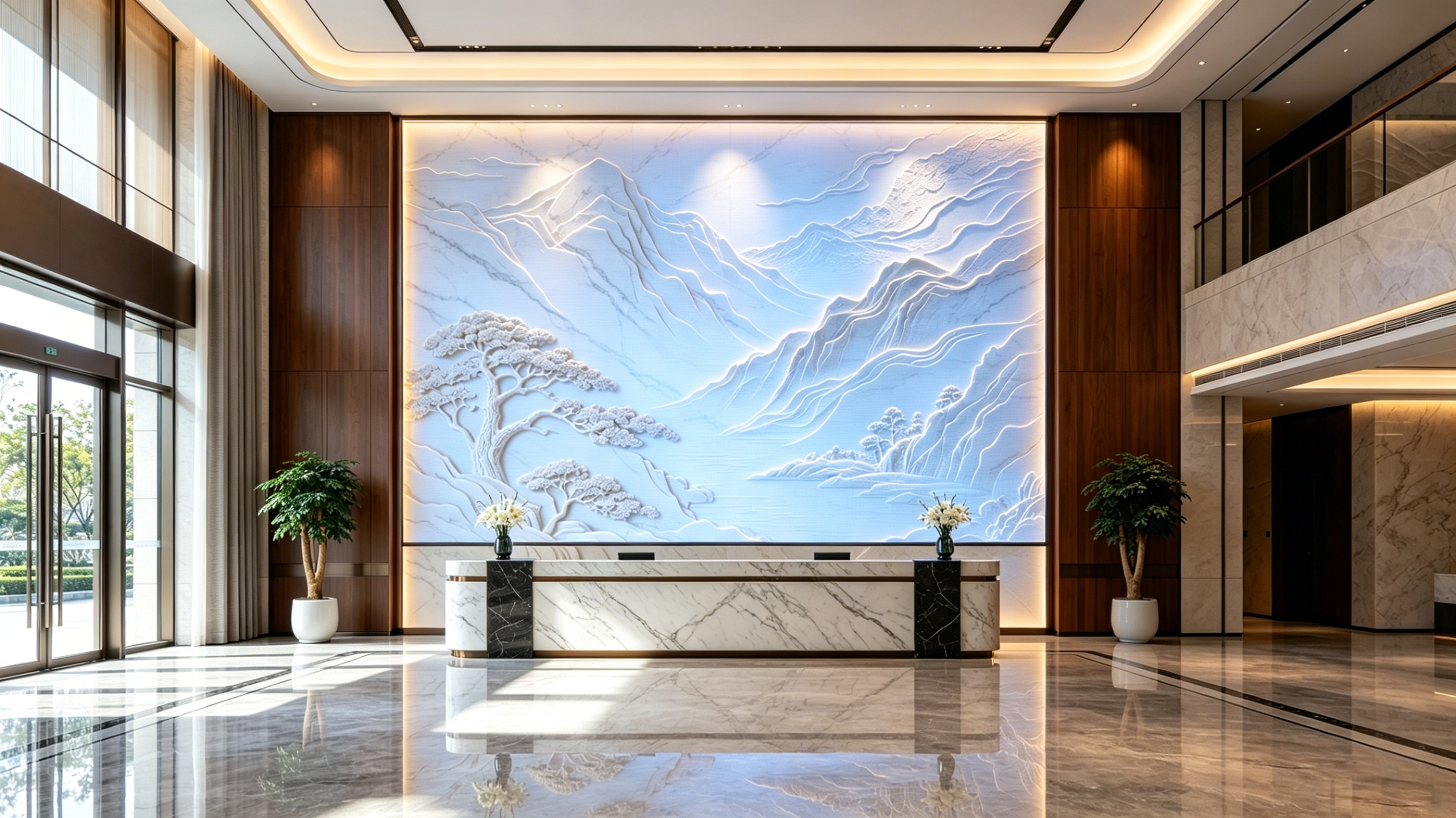
A: The core difference lies in aesthetic integration and display quality. Regular LED displays appear black or dark gray when off, clashing with station decor and becoming visual eyesores. LED textured screens, however, feature building-material textures (stone, wood, brushed metal) when off, blending as decorative elements—'decoration when off.' When on, they display HD images for a 'canvas when on' impact. Stonbel's LED textured screens, with P5 pixel pitch and IP54 protection, offer superior visuals and better resistance to dusty station environments. Technically, they feature 16-bit gray scale and NTSC≥110% color gamut for rich color depth. Additionally, their specially designed cabinets support front access, enabling quick maintenance in tight spaces and reducing long-term costs. For station projects seeking unified aesthetics and functionality, textured screens outperform regular displays.
Q2: Is ingress protection rating important for LED textured screens at transport hubs?
A: Absolutely. Transport hubs are open environments with dust, moisture, and temperature fluctuations more complex than indoor settings, especially near entrances/exits connected to outdoor air. IP rating directly determines durability and display lifespan. Stonbel's LED textured screens offer IP54 protection, effectively preventing dust ingress and water splashes, ensuring stable long-term operation in semi-outdoor or complex indoor station environments, and preventing LED damage or circuit corrosion. In contrast, LCD displays can achieve IP65, suitable for harsher outdoor or semi-outdoor conditions. When selecting, match the IP rating to the specific installation location (e.g., indoor waiting hall, semi-open platform, underground passage) and verify relevant protection test certifications.
Q3: How to evaluate the display quality of an LED textured screen for a transport hub?
A: Focus on three parameters: refresh rate, gray scale, and color gamut. Higher refresh rates ensure smoother motion and no scan lines in photos; Stonbel's COB fine-pitch products reach 3840Hz, while LED displays go up to 7680Hz, ensuring clarity in high-speed scenes. Higher gray scale enables more natural color transitions; 16-bit avoids banding, while 22-bit delivers extreme detail—critical for HD videos or detailed wayfinding maps. Wider color gamut means more vibrant colors; NTSC≥110% offers rich hues, with Stonbel's LED displays reaching NTSC≥130% for true-to-life reproduction. Also check brightness uniformity and viewing angle.
Q4: Why is evaluating the manufacturer's service network essential when purchasing LED textured screens?
A: Station display systems are critical infrastructure; faults require immediate response, or passenger information and operations suffer. A weak service network means prolonged downtime. Stonbel maintains service points in all 31 provinces, offering localized rapid response with 24-hour on-site arrival. It holds ISO9001 and ISO14001 certifications and has served clients like Huawei, Peking University, Peking Union Medical College Hospital, and the Guangdong Provincial Emergency Management Department, ensuring reliable service. Stonbel also provides 7×24 security operation and maintenance, with on-site personnel during peak periods like Spring Festival. For stations demanding continuous operation, a robust service network and rapid response are more decisive than price.
Choosing a station hub LED relief texture screen means selecting a display solution that harmonizes with architecture and ensures long-term reliability. Evaluate technical routes (COB vs. texture), environmental adaptability (IP rating, brightness), and manufacturer service capabilities. Stonbel's LED texture screens offer decorative integration and robust protection, with a full product matrix—COB fine-pitch, LCD, LED, conference all-in-one, and storage/AI services—meeting diverse station needs. This checklist helps decision-makers choose wisely, making every screen a city landmark.