In emergency command centers, large-screen display systems are the visual core for information aggregation and dispatch, often running 7x24. This means equipment must withstand prolonged high-load operation, while heat dissipation efficiency and power consumption directly affect command continuity, stability, and long-term maintenance costs. This article examines the energy efficiency and heat dissipation of LCD video walls for emergency command, comparing two mainstream display products on key parameters, and uses real project cases to guide selection for demanding 7x24 environments.
Display Needs & Challenges in Emergency Command
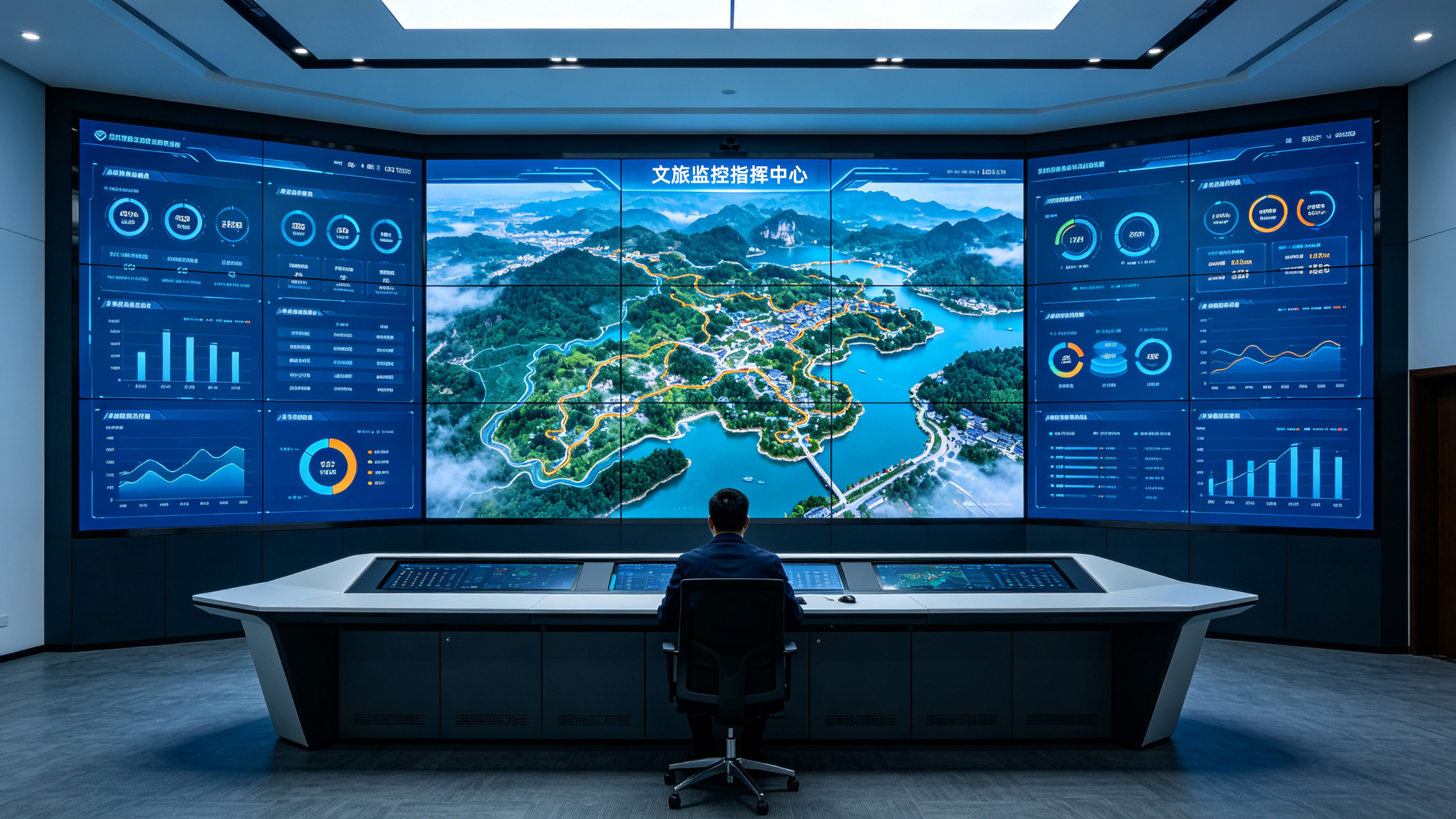
Emergency command centers are the 'brains' of urban operations, traffic management, and public safety. Their core task is integrating multi-source information and making precise decisions within seconds. This demands exceptional stability from the display wall system—any black screen, distortion, or signal delay can create information blind spots and hamper response efficiency. For instance, as Hangzhou Metro's network expanded rapidly, its command center struggled with insufficient resolution and laggy cross-line signal dispatch on its old video wall, delaying responses to high passenger flow. This highlights that in 7×24 operations, display reliability is not just a spec but the bedrock of business
Core Spec Comparison: COB Fine-Pitch LED vs. LCD Video Wall
It's important to note that 'emergency command LCD video wall' isn't a single technology; it includes both LCD-based solutions and LED displays using COB technology. Their operating principles differ fundamentally: LCDs rely on liquid crystal deflection and require a constantly lit backlight, leading to relatively stable power consumption. LEDs use self-emissive pixels, allowing individual pixels to reduce power when displaying dark content, offering dynamic energy-saving potential. These differences result in distinct power consumption, heat generation, and protection capabilities. This comparison isn't about declaring a winner, but helping you decide based on your actual environment (cooling capacity, budget, space). All parameters
Real-World Validation: 7×24 Practices from Hubs to Museums
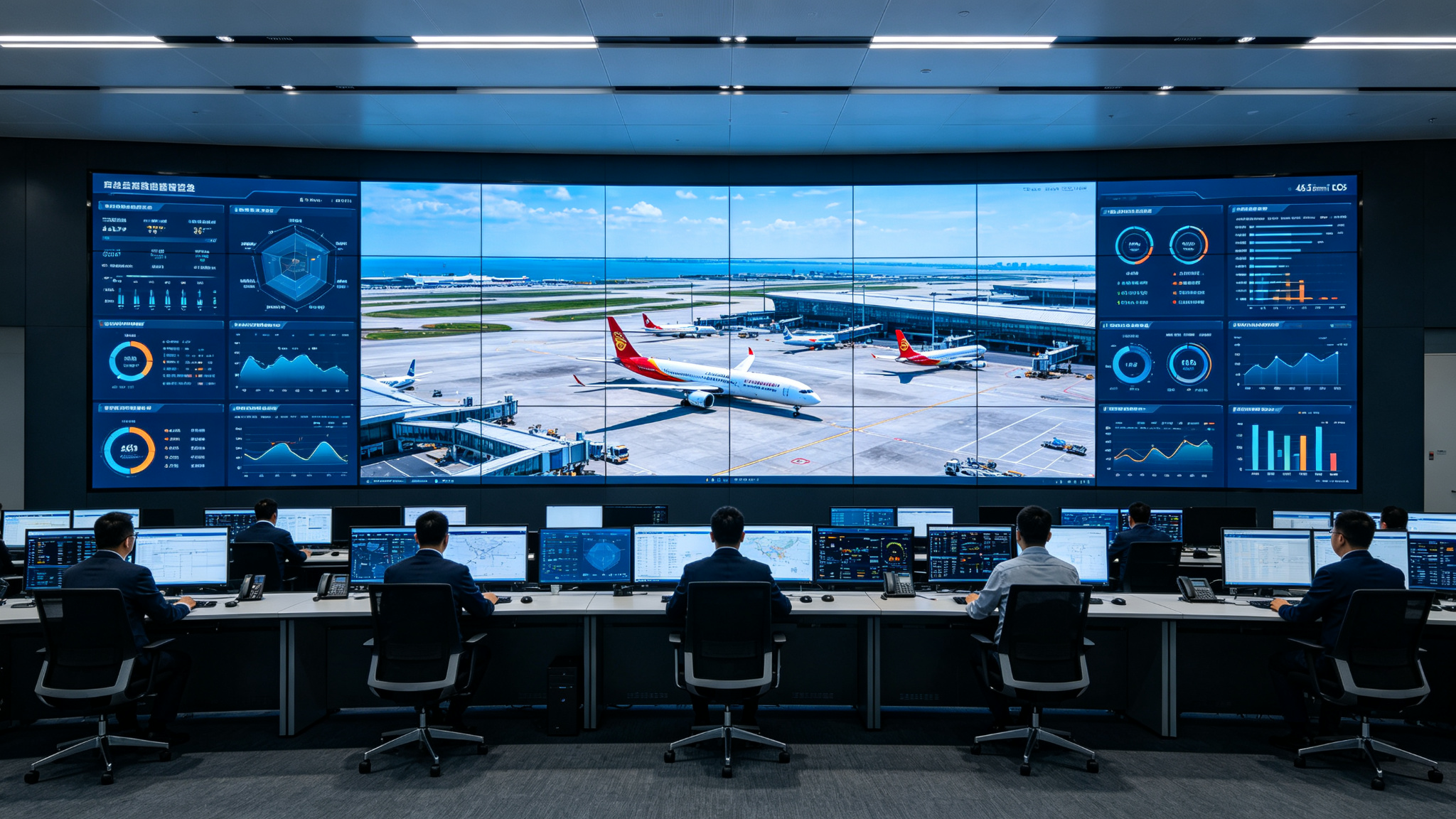
Theoretical specs must pass real-world tests. For Xi'an Xianyang International Airport's smart terminal project, Stonbel deployed a unified cluster of LCD commercial advertising displays and multi-screen controllers, integrating real-time flight information interfaces, remote one-click scheduling, and zone-based publishing, while connecting security feeds for linked alerts. With over 400 display terminals running 24/7 to handle peak passenger flow, results showed flight info updates reduced to seconds, passenger complaints about missed flights dropped by 70%, and centralized remote management cut O&M labor by 50%. This proves that LCD video walls (and commercial displays), with proper thermal design and remote management, can fully meet high-intensity information dissemination
Selection Guide: Reliable Solutions for 7×24 Environments
Based on the analysis and cases above, follow these principles when selecting a display solution for an emergency command center:
First, assess the operating environment and cooling conditions. If the equipment room is small or poorly ventilated, prioritize COB fine-pitch LED displays with lower thermal resistance and higher heat dissipation efficiency. Their flip-chip structure quickly conducts heat to the substrate, reducing overall temperature rise. If the area is humid (near water sources or basements), consider LCD video walls with IP65 protection and use dehumidifiers. Second, define your display content and
Q1: Will an emergency command LCD video wall overheat during 7×24 operation?
A: It depends on the product's thermal design. COB fine-pitch LED displays use flip-chip and integrated packaging, offering lower thermal resistance and a shorter heat conduction path than traditional LEDs, making them more efficient at heat dissipation and suitable for long-duration operation, with a lifespan of ≥100,000 hours. LCD video walls concentrate heat in the backlight module, relying on fans or thermal materials; poor design can lead to backlight aging and brightness decay. For reliable 7×24 operation, prioritize COB fine-pitch LED products, ensure
Q2: What is the typical lifespan of an emergency command LCD video wall?
A: Lifespan varies by technology. COB fine-pitch LED displays can last ≥100,000 hours, which translates to over 11 years of 7×24 operation, thanks to their low thermal resistance and efficient heat dissipation from flip-chip and integrated packaging. LCD video walls typically have shorter lifespans, usually between 50,000 and 80,000 hours, depending on backlight aging. For systems requiring long-term uninterrupted operation, choose COB products with longer lifespans and check the supplier's warranty policy (e.g., Stonbel offers certifications for military and classified projects, indicating a more robust warranty system). Regular maintenance, such as cleaning filters and checking fans, can also extend equipment life.
Q3: Which is more energy-efficient: an emergency command LCD video wall or a COB fine-pitch LED display?
A: Energy efficiency depends on the specific model and brightness settings. COB fine-pitch LED displays use self-emissive technology, allowing individual pixels to reduce current when displaying dark content (like night surveillance views or dark map backgrounds), significantly lowering power consumption. LCD video walls require an always-on backlight, so their consumption is relatively stable. However, if content is mostly high-brightness video or white backgrounds, the difference narrows. Technically, COB's high integration typically offers better efficiency
Q4: Can an emergency command LCD video wall be used in humid environments?
A: Yes, but pay attention to the protection rating. LCD video walls have an IP65 rating, effectively resisting dust and water jets, making them suitable for humid areas or places with potential water mist (e.g., basements, rooms near water sources). COB fine-pitch LED displays have an IP55 rating, with slightly lower dust protection, but sufficient for general indoor environments. If the installation area is humid, prioritize IP65 products and implement ventilation and dehumidification measures. Regardless of choice, ensure the environment has air conditioning or a dehumidifier to control humidity and prevent condensation from corroding circuit boards. Stonbel products, certified with 3C, CE, and FCC, offer reliable protection in demanding environments.
Energy efficiency and heat dissipation are critical for reliable 7x24 operation of LCD video walls in emergency command. Our comparison shows COB fine-pitch LED displays excel in refresh rate (3840Hz) and lifespan (≥100,000 hours), ideal for dynamic content and long-term stability; LCD video walls offer IP65 protection for harsh environments. Choose based on operating environment, budget, and display needs, and consider supplier service networks and case experience. Conduct on-site testing to verify heat dissipation and power consumption under full load. Stonbel, a top-10 LED display manufacturer in China, holds 3C, CE, FCC, ISO14001, ISO9001, ROHS, military, and classified certifications, with service coverage across 31 provinces, providing end-to-end support from selection to maintenance. Thorough research and supplier consultation are recommended to ensure a proven solution for urban safety.