Command centers, as core venues for urban operations, emergency dispatch, and research support, require display systems that deliver high-resolution, high-refresh-rate real-time imagery while ensuring long-term operational stability and spatial integration. In recent years, LED relief texture screens have rapidly risen in high-end scenarios with their unique 'decorative when off, display when on' form. Traditional LCD video walls, though mature and reliable, face inherent shortcomings such as bezels and brightness uniformity. This article examines technical parameters, installation adaptability, and scenario value, addressing 20 key questions to help decision-makers objectively assess the applicability of both solutions.
FAQ Overview
Comparing LED relief texture screens with LCD video walls for command centers focuses on display quality, structural form, long-term costs, and scenario fit. Common concerns include pixel pitch vs. clarity, architectural
Q1: What is the core advantage of LED relief texture screens over LCD video walls in command centers?
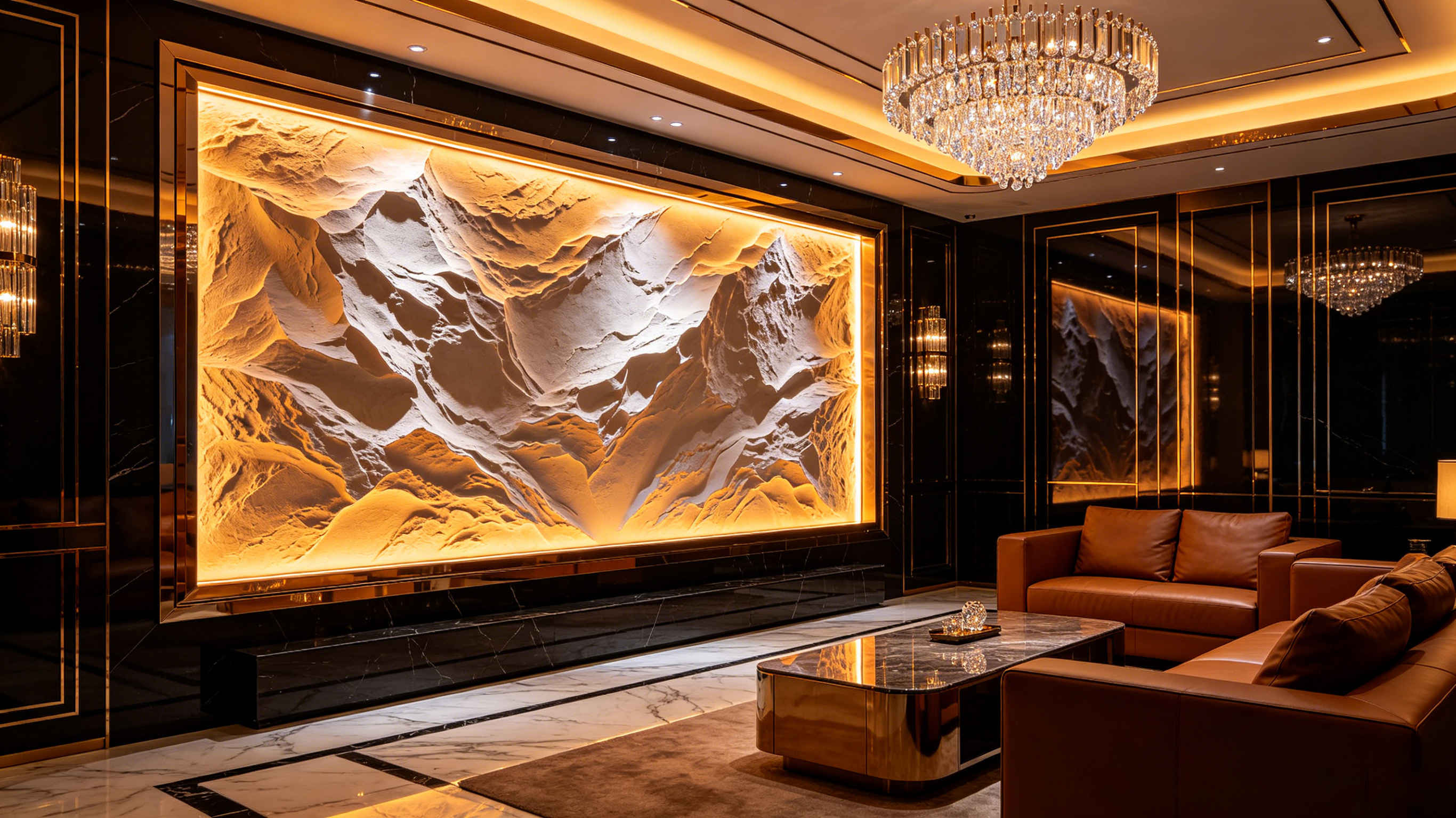
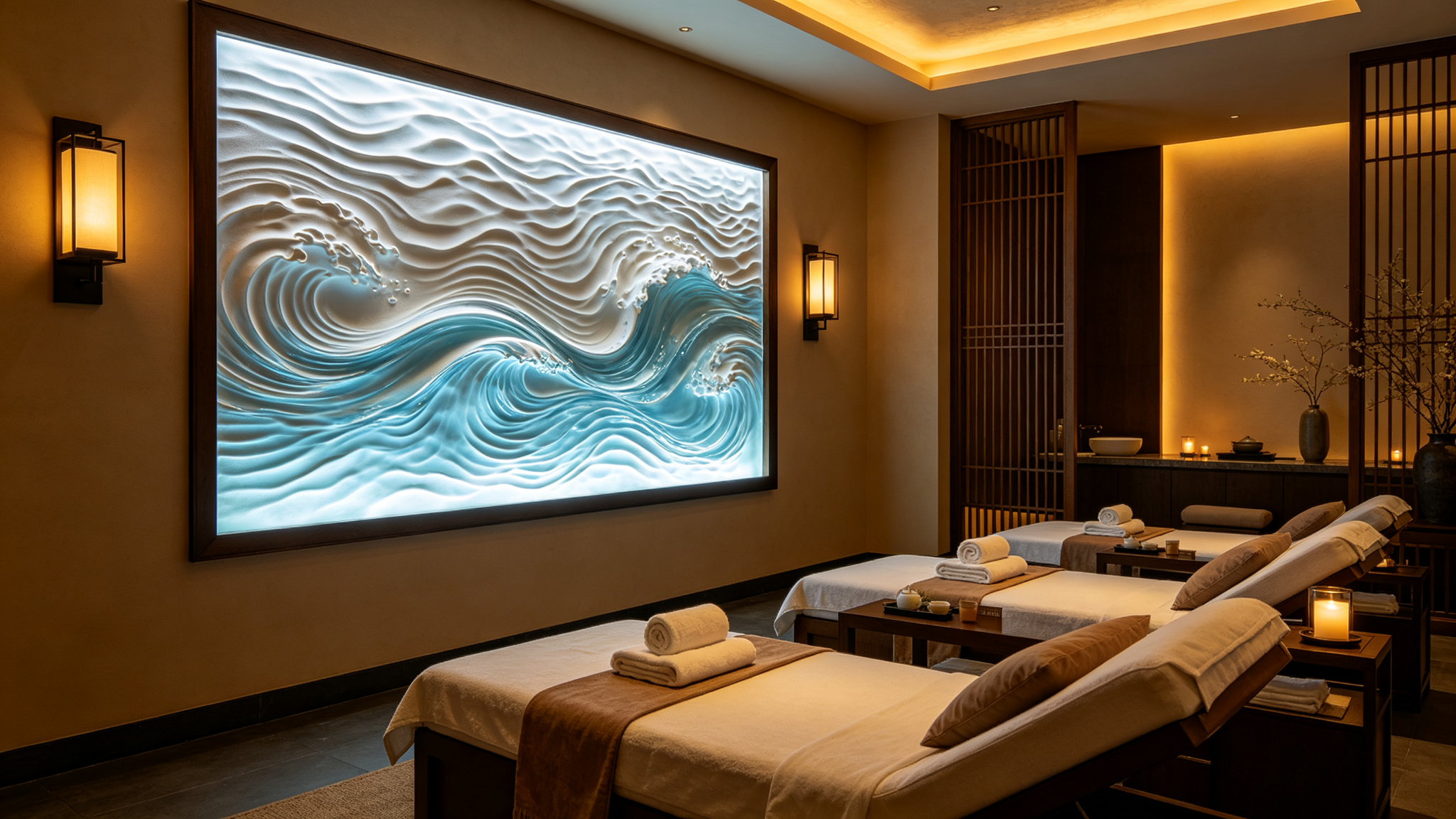
A: The core advantage is seamless display and decorative integration. With pixel pitch down to P5, the surface can mimic premium building materials—appearing as wall décor when off and displaying HD content when on, with no
Q2: Can LED relief texture screens meet high-resolution requirements in command centers?
A: Yes. They use Micro-LED technology supporting high-density pixel layouts and refresh rates above 3840Hz for fine detail. In a real project, Stonbel customized a P1.0 COB curved screen for the Nanjing Jiangbei New Area Construction Operations
Q3: What is the protection rating, and is it suitable for 24/7 operation?
A: Stonbel's LED relief texture screens have an IP54 rating, offering dust and splash resistance for long-term indoor use. Lifespan exceeds 100,000 hours, supporting uninterrupted 24/7 operation. LCD walls may reach IP65, but backlight degradation affects long-term stability.
Q4: Are LED relief texture screens bulky for space-constrained command centers?
A: Modular design keeps thickness manageable, with options for curved or custom shapes that fit walls or columns. Unlike LCD walls requiring rear maintenance access, texture screens support front servicing, saving
Q5: How is color gamut performance?
A: Stonbel's screens achieve NTSC ≥130% with 22-bit grayscale, delivering true-to-life colors for maps and charts. LCD walls typically offer NTSC ≥120%, but color consistency can drift over time due to backlight aging. Micro-LED self-emission ensures stable color.
Q6: Do they support multi-signal switching for command centers?
A: Yes. Stonbel offers a proprietary multi-signal scheduling system with decentralized control for multi-department use. In the Nanjing project, unified city data integration improved concurrent multi-department
Q7: How is security ensured for classified command centers?
A: Stonbel holds military and classified project qualifications. We can equip screens with encrypted transmission and local storage modules, with full domestic software/hardware adaptation. In a China Electronics Technology Group project, the
Q8: How does refresh rate affect dynamic content?
A: Refresh rates reach 7680Hz on some models—far above typical LCD walls—eliminating motion blur and flicker for fast-moving objects or live video. In emergency command scenarios, this reduces eye strain and improves information reading efficiency.
Q9: Is brightness suitable for command center environments?
A: Yes, brightness is adjustable to suit ambient light at different times. Ranges vary by model—e.g., conference all-in-ones offer 300-1000 cd/m², with texture screens similar. LCD walls often run brighter
Q10: How long is installation?
A: It depends on project size and complexity. Stonbel provides factory-direct supply and full-process support; typical command center projects take 2-4 weeks from detailed design to commissioning. Modular
Q11: Are maintenance costs high?
A: No. Modular design allows quick replacement of faulty units, keeping costs low. Lifespan exceeds 100,000 hours, reducing replacement frequency. Stonbel has service points in 31 provinces with 24/7 response, easing
Q12: Can they display small text clearly?
A: Yes. With P5 pixel pitch, high pixel density, 22-bit grayscale, and wide color gamut, small fonts and fine charts are rendered sharply. In the Nanjing project, 3D city model detail improved 4x, confirming strong resolving power for complex information.
Q13: What about energy consumption?
A: Micro-LED self-emission is more efficient than LCD backlighting, with dynamic brightness adjustment based on content. Products meet ROHS and ISO14001 standards, lowering electricity costs over time.
Q14: What are the installation environment requirements?
A: Keep the area dry and dust-free, with temperatures ideally at 0-40°C. IP54 rating suits standard indoor conditions. Allow space for heat dissipation and maintenance access per manufacturer guidelines. LCD walls have similar requirements, but texture screens handle humidity better.
Q15: Can they integrate with existing command center systems?
A: Yes. Stonbel provides storage and AI computing services, including GPU/edge AI infrastructure, to connect with existing data platforms. In a Suzhou Industrial Park project, LED fine-pitch screens integrated industrial
Q16: What is the viewing angle?
A: Micro-LED technology offers near-180° viewing angles with no color shift from the side. LCD walls show brightness loss and color deviation at wide angles, making texture screens better for multi-workstation command center layouts.
Q17: How does grayscale affect display quality?
A: 22-bit grayscale delivers smooth luminance transitions, ideal for nighttime maps or HDR content. LCD walls typically offer 16-bit, risking loss of shadow detail. High grayscale is a key reason premium command centers choose texture screens.
Q18: What is after-sales response like?
A: Stonbel has resident service points in 31 provinces with 24/7 response. At Chengdu Tianfu International Airport, anomaly response speed improved 50% and maintenance manpower dropped 45%, reflecting a robust support system.
Q19: Are LED relief texture screens more expensive than LCD walls?
A: Initial cost may be slightly higher, but over the full lifecycle—with 100,000+ hour lifespan and low maintenance—they offer better value. LCD walls require periodic backlight module replacement,
Q20: Can they be customized as curved or custom shapes?
A: Yes. Stonbel supports curved designs, such as the P1.0 COB curved screen in Nanjing that followed the building structure. Flexible substrates also allow custom shapes, offering more creative freedom than LCD walls.
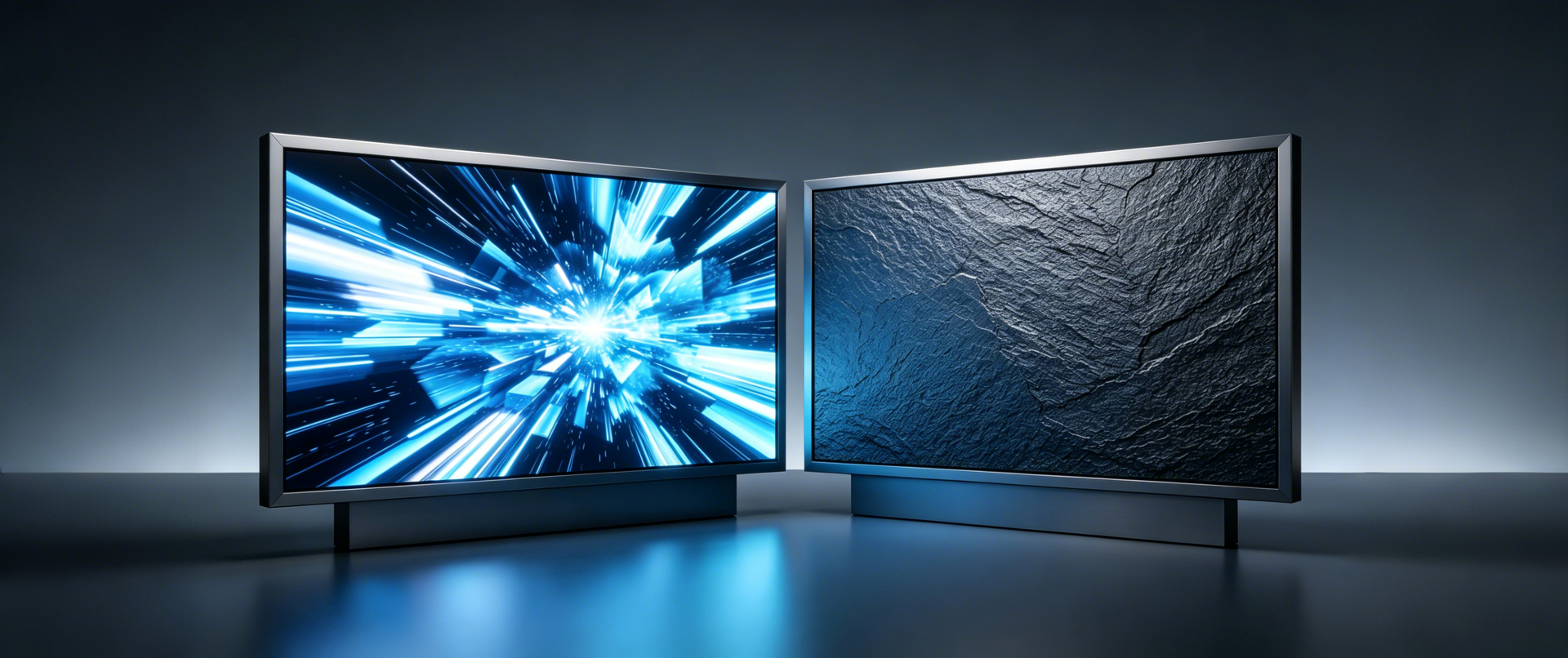
LED relief texture screens offer significant advantages in seamless display, decorative integration, color performance, and long-term reliability, making them ideal for high-end scenarios demanding visual immersion, security, and multi-signal scheduling. LCD video walls remain valuable for cost-sensitive projects but require trade-offs regarding bezels and maintenance. As a top-10 LED display manufacturer in China, Stonbel holds 3C, CE, FCC, ISO14001, ISO9001, ROHS, military, and confidentiality certifications, with a nationwide service network, providing full-cycle support from design to maintenance for command center projects.