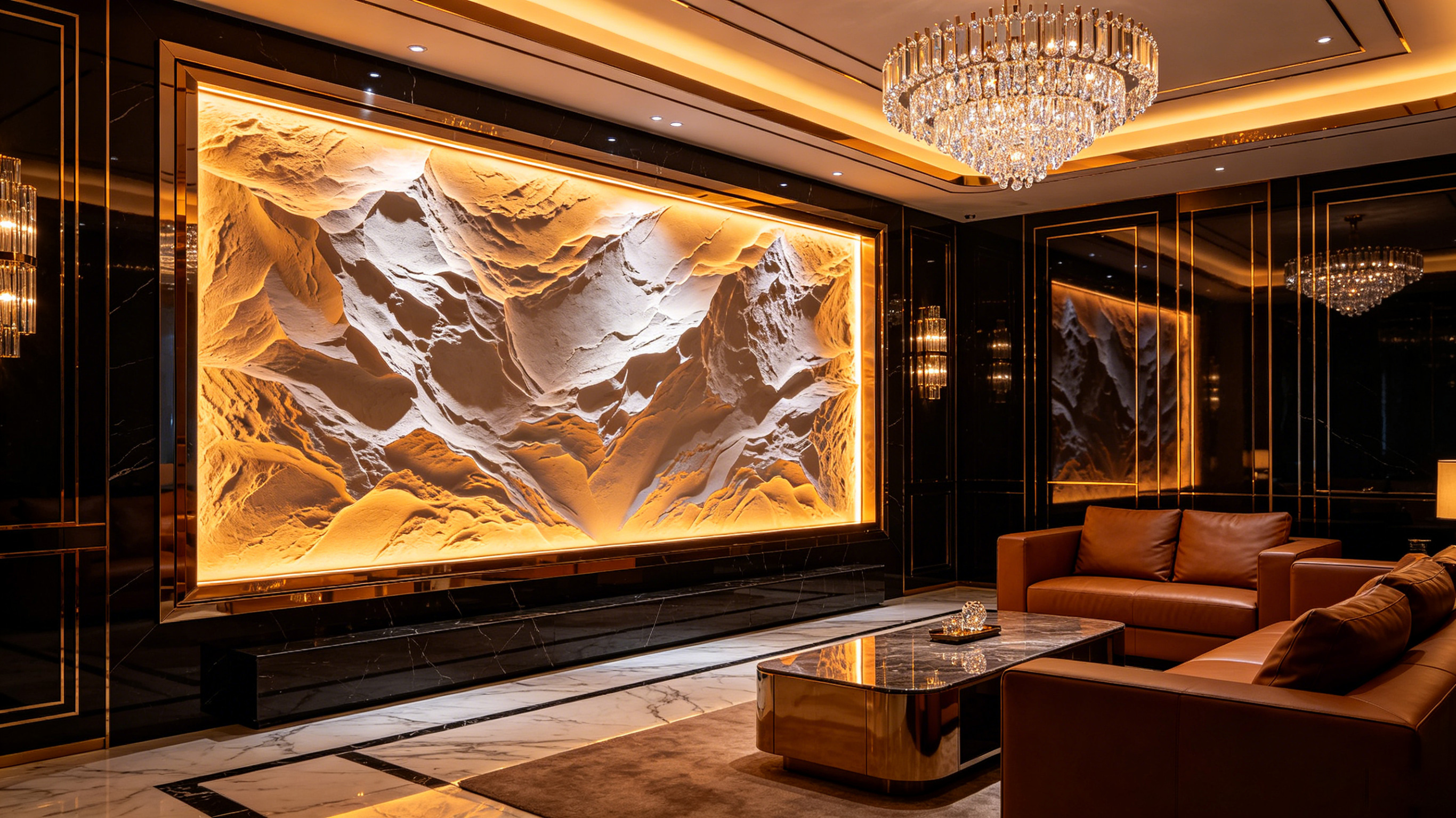
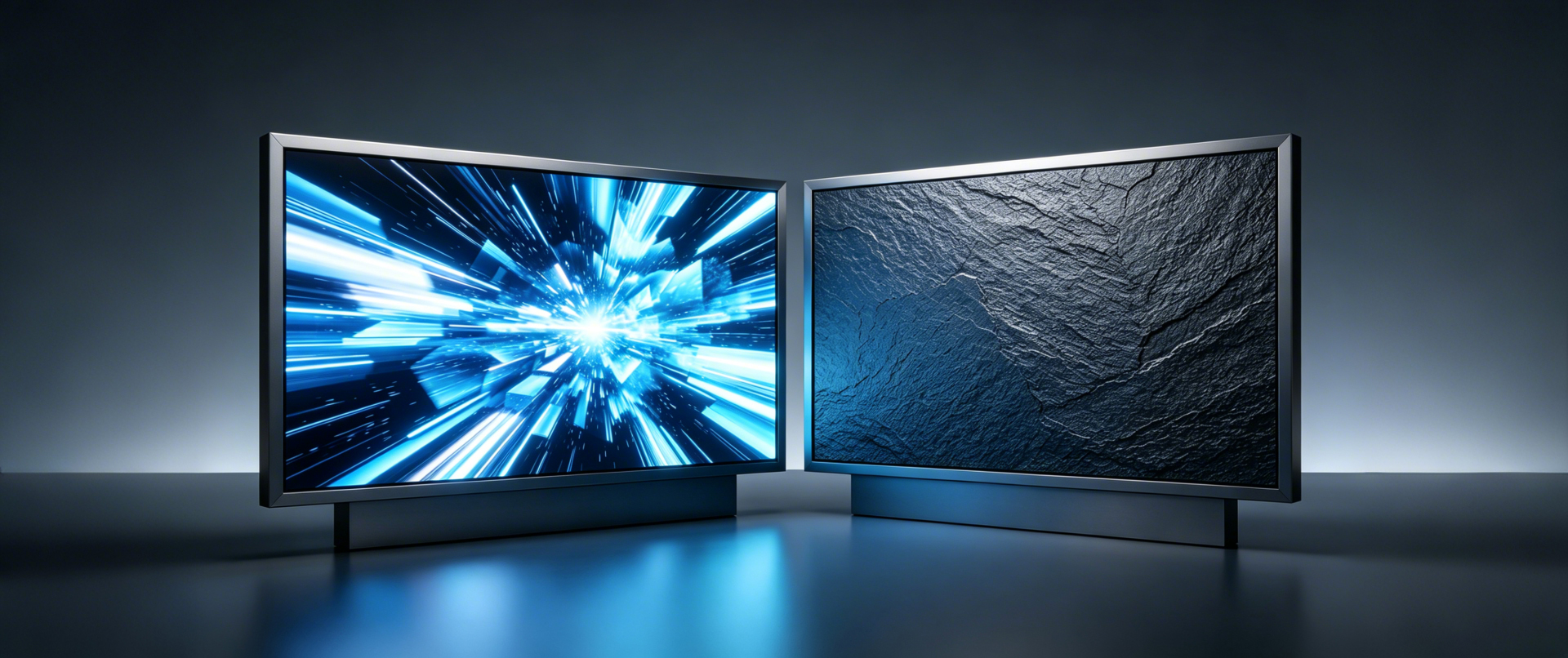
In emergency command center construction, the display system is the core carrier for information aggregation and dispatch. With technological iteration, the emergency command LED relief texture screen, with its unique form of 'decorative when off, display when on', is becoming a new choice for more government and enterprise users. For buyers, however, budget preparation, itemized quotation review, and qualification requirements are often difficult points in the tender process. Based on general industry pricing, this article breaks down the cost structure of such screens, offers a comparison of high, mid, and low-tier options, and provides practical cost-saving suggestions to help readers spend wisely while meeting functional requirements.
Total Budget Composition
The procurement budget for an emergency command LED relief texture screen is not just the unit price of the screen itself, but a comprehensive expenditure covering hardware, structure, installation, services, and more. Based on common industry experience, the total budget typically consists of four main parts: display units and control systems, steel structure and decorative framing, installation and commissioning with auxiliary materials, and subsequent operation, maintenance, and warranty services. The display units account for approximately 60% to 70% of the total budget, representing the largest cost. Steel structure and decorative framing account for 10% to 15%, depending on on-site wall conditions and the customization complexity of the relief texture. Installation, commissioning,
Itemized Quotation Breakdown
To help buyers understand supplier quotations, the following breaks down the itemized costs for emergency command LED relief texture screens based on common industry ranges. First, the display unit, the core hardware, typically ranges from RMB 12,000 to 28,000 per square meter, depending on pixel pitch, refresh rate, grayscale level, and material craftsmanship. Stonbel's LED texture screens feature a P5 pixel pitch; while the refresh rate is not specified, its LED display series supports refresh rates up to 7680Hz, 22-bit grayscale, and NTSC color gamut ≥130%, significantly raising unit prices. For emergency command scenarios, models with high refresh rates and high grayscale are recommended to reduce motion blur. Second, the control system, including sending cards, receiving cards, video processors, and splicing controllers, typically costs RMB 1,500 to 3,000 per square meter, depending on input channels, resolution support, and multi-window roaming capabilities. Emergency command centers often need to display maps, surveillance feeds, and

Comparison of Tiered Solutions
Given budget variations in emergency command centers, the industry typically categorizes LED relief texture screen options into high, mid, and low tiers. The low-tier solution suits district/county-level emergency command centers or temporary command sites with limited budgets. Recommended screen area is 12 to 20 square meters, with pixel pitch relaxed to P5 or P6, refresh rate no lower than 1920Hz, 16-bit grayscale, and NTSC color gamut ≥110%. Total cost (including installation) ranges from RMB 12,000 to 16,000 per square meter, with overall budgets controlled between RMB 250,000 and 350,000. While parameters are basic, they fully meet daily information display, video conferencing, and basic surveillance needs. The mid-tier solution is the
Cost-Saving Recommendations
In procuring emergency command LED relief texture screens, saving money does not mean compromising quality but avoiding waste through rational planning. First, accurately calculate screen area rather than blindly pursuing "bigger is better." The core viewing distance in emergency command centers is typically 3 to 5 meters, where P5 pixel pitch is sufficient for clarity. Opting for small pitches below P1.2 not only doubles unit costs but also demands stricter installation environments and higher maintenance costs. It is recommended to have suppliers provide viewing distance and pixel pitch matching suggestions based on the actual hall depth and seating layout, ensuring "just enough." Second, adopt a "phased implementation" strategy. If the budget is tight, prioritize the core command area's display system, reserve expansion interfaces and steel structure space, and expand screen area or upgrade control systems when funds become available. In
Q1: How to choose the pixel pitch for an emergency command LED relief texture screen?
A: Pixel pitch directly determines clarity and viewing distance. For emergency command centers, typical viewing distances of 3 to 5 meters make P5 the cost-effective choice, meeting high-definition needs at a much lower price than small pitches below P1.2. If the hall depth exceeds 5 meters, P6 can be considered, but a refresh rate of at least 1920Hz is recommended. Final selection should be based on the actual project plan.
Q2: Is the protection rating important for emergency command LED relief texture screens?
A: Yes. Emergency command centers may be dusty or humid, and the protection rating affects equipment stability and lifespan. Stonbel's LED texture screens feature an IP54 rating, effectively resisting dust and splashing water, suitable for 24/7 operation. For harsher environments, IP65-rated products are available but at higher costs.
Q3: What qualifications are required for procuring emergency command LED relief texture screens?
A: In tenders, it is recommended to require suppliers to provide basic certifications such as 3C, CE, FCC, ISO14001, ISO9001, and ROHS. For military or classified projects, additional qualifications are needed. Stonbel holds the above certifications and is ranked among China's top ten LED display companies, having served clients like Huawei, Peking University, Peking Union Medical College Hospital, and the Guangdong Provincial Emergency Management Department. These credentials and cases can serve as tender references.
Q4: What is the typical lifespan of an emergency command LED relief texture screen?
A: The industry standard rated lifespan is ≥100,000 hours, and Stonbel's LED texture screens and COB small-pitch products both meet this level. Actual lifespan is affected by operating environment, heat dissipation, and runtime. It is recommended to specify the warranty period and lifetime maintenance terms in the contract.
Procurement tenders for emergency command LED relief texture screens involve a systematic project covering technology, cost, and service. This article breaks down the cost logic from four angles: total budget composition, itemized quotations, tier comparison, and cost-saving advice, and offers a reference direction for qualification requirements. When preparing tender documents, buyers should focus on core parameters such as pixel pitch, refresh rate, protection rating, and lifespan, while also evaluating suppliers' industry cases and service networks. Stonbel, a top-10 LED display enterprise in China, holds 3C, CE, FCC, and ISO14001 certifications, with a service network covering 31 provinces and cities. Its LED texture screen products are well-suited for emergency command scenarios. We hope this article helps readers make more informed selection decisions under budget constraints.