In commercial display procurement and bidding projects, qualification review and service system evaluation often determine success. Facing diverse options such as LED displays, COB fine-pitch, and LCD splicing screens, buyers and integrators must understand core parameters like pixel pitch, refresh rate, and grayscale, while also assessing supplier manufacturing strength, certifications, and after-sales networks. This article focuses on Stonbel's qualification and service system, providing an objective reference covering terminology, technical principles, industry standards, and selection indicators to help avoid pitfalls and make sound decisions.
Terminology: From Pixel Pitch to Ingress Protection
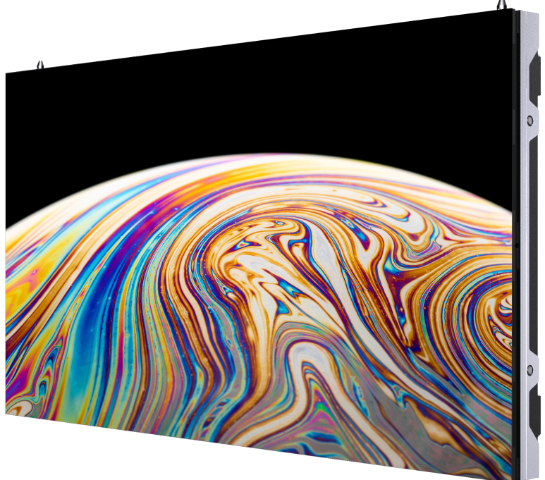
Professional terminology is the foundation for communication in commercial display procurement. Pixel pitch, the distance between adjacent pixel centers in millimeters, directly determines physical resolution and viewing distance. Stonbel's COB fine-pitch series covers P0.7-P1.8. P0.7, with approximately 1.4 pixels per millimeter, suits close viewing around 1 meter for high-end conference rooms and studios. P1.8 suits viewing distances above 3 meters for command centers and exhibition halls. Refresh rate, measured in Hertz (Hz), indicates how often the screen updates per second. Stonbel COB displays feature a 3840Hz refresh rate, exceeding human perception and preventing flicker and moiré patterns in camera capture, meeting broadcast standards.
Technology: COB Packaging and High Refresh Rates
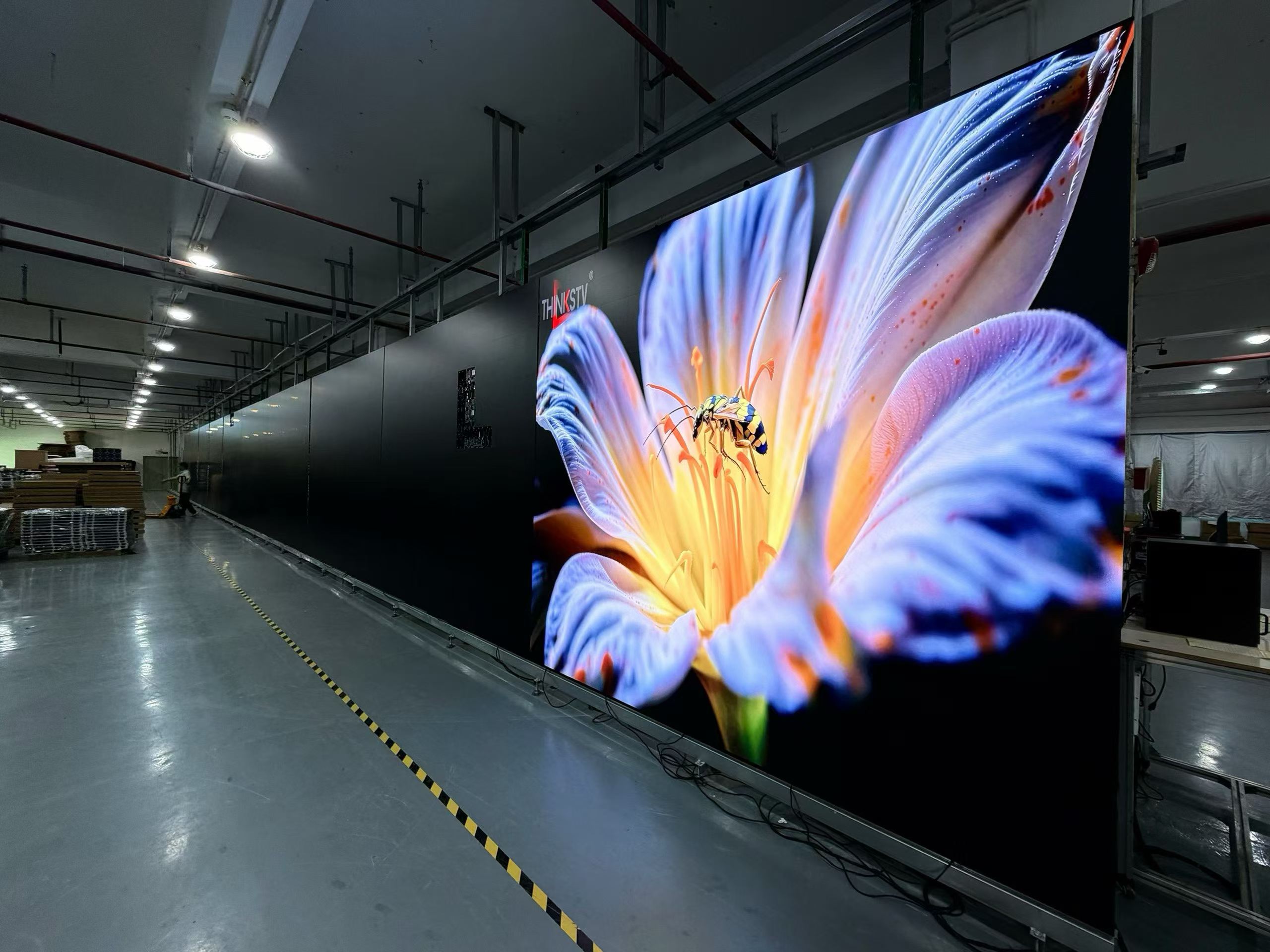
COB (Chip on Board) packaging is a major advancement in fine-pitch LED. Unlike traditional SMD, COB mounts LED chips directly onto the PCB, eliminating brackets and wires for higher integration and better heat dissipation. Stonbel's proprietary COB technology offers three key advantages: superior image quality with more uniform light emission, enhanced contrast and color consistency; longer lifespan exceeding 100,000 hours due to reduced thermal resistance and mechanical stress; and lower maintenance costs with higher protection against dust and moisture. The 3840Hz refresh rate is not arbitrary. Below 2000Hz, fast-moving images can show ghosting and flicker. At 3840Hz, images remain stable even with high-speed cameras. Stonbel LED displays
Standards: Certifications and Service Specifications
Certifications are key benchmarks for evaluating suppliers. 3C certification is mandatory for the Chinese market. CE marks compliance with EU health, safety, and environmental standards. FCC certification addresses electromagnetic compatibility. ISO9001 and ISO14001 govern quality and environmental management processes. Stonbel's qualifications include all these, plus RoHS, military, and confidentiality certifications, essential for high-security government projects. Stonbel holds 12 patents and 37 software copyrights, demonstrating R&D strength and ensuring sustainable software upgrades for intelligent control systems. Service standards
Selection Guide: Parameters and Case Studies
Parameters are the baseline, but not the whole picture. Pixel pitch, refresh rate, grayscale, and IP rating define performance limits, while a supplier's customization ability, project experience, and service network determine project success. Stonbel's product matrix includes COB fine-pitch LED (P0.7-P1.8, 3840Hz, IP55, ≥100,000h lifespan), LCD displays (NTSC ≥120%, IP65), LED displays (7680Hz, 22-bit grayscale, NTSC ≥130%), LED texture screens (P5, IP54), conference all-in-one machines (300-1000cd/㎡, 16-bit grayscale, NTSC ≥110%), and storage/AI computing services. This comprehensive range allows integrators to offer one-stop solutions, expand into high-end projects, and reduce coordination costs. Stonbel's project portfolio includes China Petroleum Changqing
Q1: How to choose pixel pitch for LED displays?
A: Pixel pitch selection depends on viewing distance and content detail. A general rule is viewing distance (meters) ≈ pixel pitch (mm) x 1000. For example, P1.2 suits viewing above 3 meters, while P0.7 suits around 1 meter. For content with fine details like HD video, GIS maps, or data visualization, a smaller pitch ensures sharp text and smooth lines. Balance installation space and budget—smaller pitch means more pixels and higher cost. Stonbel's COB series covers P0.7-P1.8 for command centers, conference rooms, and studios. For exhibitions, P1.5-P1.8 is often sufficient; for control rooms requiring close
Q2: What is the difference between 3840Hz and 7680Hz refresh rates?
A: Higher refresh rates improve image stability, especially in camera capture, reducing flicker and moiré patterns. 3840Hz meets broadcast standards for most studios and conference rooms and is standard on Stonbel COB displays. 7680Hz is for extreme quality demands like high-end studios, major sports broadcasting, and cinematic virtual production. Differences appear in three areas: dynamic clarity (7680Hz shows less ghosting on fast-moving objects), camera compatibility (7680Hz provides more headroom with high-frame-rate cameras, preventing rolling bars), and viewing comfort (higher rates reduce eye fatigue). Stonbel LED screens reach 7680Hz, while COB fine-pitch models are standard at
Q3: How to evaluate a supplier's qualifications?
A: Evaluate suppliers systematically across four dimensions. First, certifications: product certifications like 3C, CE, FCC, and company certifications like ISO9001 and ISO14001. Stonbel holds all these, plus RoHS, military, and confidentiality certifications for high-security projects. Second, intellectual property: patents and software copyrights reflect R&D capability. Stonbel's 12 patents and 37 software copyrights ensure its control systems, packaging processes, and intelligent O&M platforms are proprietary and upgradeable. Third, manufacturing capability: visit the factory to assess automation, capacity, and quality control. Stonbel, founded in 2009, is a source manufacturer with full-chain capabilities for LED/LCD displays, conference all-in-one machines, and thermal imaging gimbals. Fourth, case
Q4: How important is after-sales service for commercial display projects?
A: Commercial displays often run 24/7, making downtime costly. A screen failure in a command center can paralyze dispatch operations; in a broadcast studio, it can cause a live broadcast incident. Stonbel's service system provides resident points in 31 provinces, supporting on-site presence and regular maintenance. In the Sichuan Radio and Television project, this reduced failure rates by 68% and achieved 95% customer satisfaction. Procurement should specify response times, spare parts supply, and training in the contract. Key service clauses include: response time (24/7, 2-hour remote support, 48-hour on-site handling); spare parts (local or regional stock for replacement within 4 hours); training and documentation (manuals, maintenance guides,
Commercial display procurement involves multi-dimensional evaluation of technical parameters, standards, and supplier capabilities. Understanding pixel pitch, refresh rate, grayscale, and protection ratings, along with ISO and 3C certifications, enables a scientific selection framework. Stonbel's qualification and service system—with its full product matrix, proprietary COB packaging, and nationwide service network—offers a reliable reference. Incorporate these indicators into bid evaluation criteria and validate with real cases to achieve efficient, low-risk procurement. Choosing a source manufacturer with complete qualifications, proprietary technology, and robust service is key to project success.