Monitoring centers operate around the clock, making display performance critical for operator efficiency and eye comfort. With COB technology maturing, COB fine-pitch displays are replacing traditional SMD units, offering high reliability, long lifespan, and seamless images. However, selecting optimal brightness and color temperature under varying ambient light remains a challenge. This article provides a comparative analysis of key parameters, supported by real project cases, to guide integrators and users in making informed choices.
Comparison Dimensions Overview
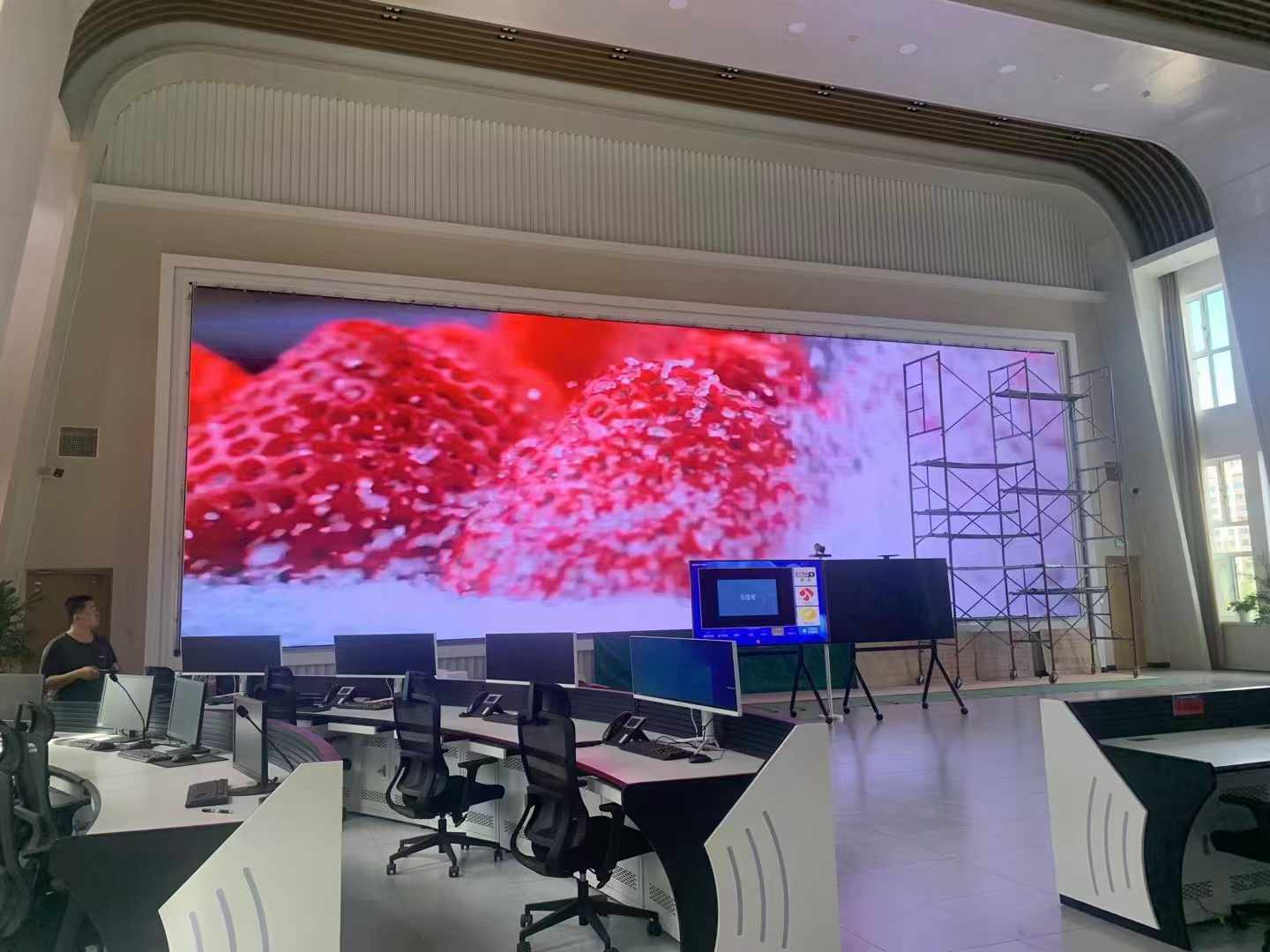
Selecting a COB fine-pitch display for a monitoring center is not about stacking specs, but about adapting to the optical characteristics of the actual application environment. Monitoring halls typically have multiple light sources, including overhead linear light strips, natural light from windows, and reflections from work surfaces. These ambient lights directly affect screen visibility. If the display is not bright enough, details are lost in the ambient light; if too bright, it causes operator fatigue. Therefore, evaluating a COB fine-pitch display requires a unified framework covering brightness, color temperature, refresh rate, and protection rating. Human perception of brightness is non-linear; the stronger the ambient light, the higher the required screen brightness. Generally, monitoring center ambient illuminance is 200-500 lux, suggesting a screen brightness of 800-1000 cd/㎡ for clear detail. At night or during low-light drills, illuminance may drop below 50 lux. Maintaining high brightness
Core Parameter Comparison
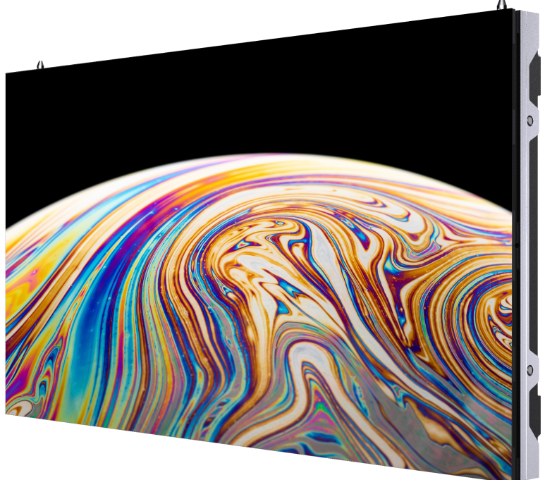
To illustrate differences, we compare two representative Stonbel models: the P0.9 Curved and the P1.2 Anti-EMI. Both use COB chip-level packaging, offering high reliability, long life, and seamless display, but differ in specs and suitable environments.
| Dimension | P0.9 Curved | P1.2 Anti-EMI |
|-----------|-------------|---------------|
| Pixel Pitch | P0.9 | P1.2 |
| Refresh Rate | 3840Hz | 3840Hz |
| Protection | IP55 | IP55 |
| Lifespan | ≥100,000h | ≥100,000h |
| Key Advantage | Seamless curved splicing, flatness ≤0.1mm | Passed GJB 151B military EMI test |
| Ideal Use | Curved command halls, immersive analysis areas | Secure sites with strong EMI |
The P0.9 offers more pixels per area, ideal for viewing distances of 2-3 meters, clearly rendering map networks, text, and vehicle tracks. The P1.2 provides better value at viewing distances over 4 meters, with sufficient pixel density for standard monitoring. Both have IP55 protection. The P1.2 Anti-EMI model features full metal shielding to withstand strong electromagnetic interference,
Selection Recommendations
Selecting a COB fine-pitch display should be based on comprehensive project needs, not just high specs. Recommendations for integrators, AV engineers, and end-users:
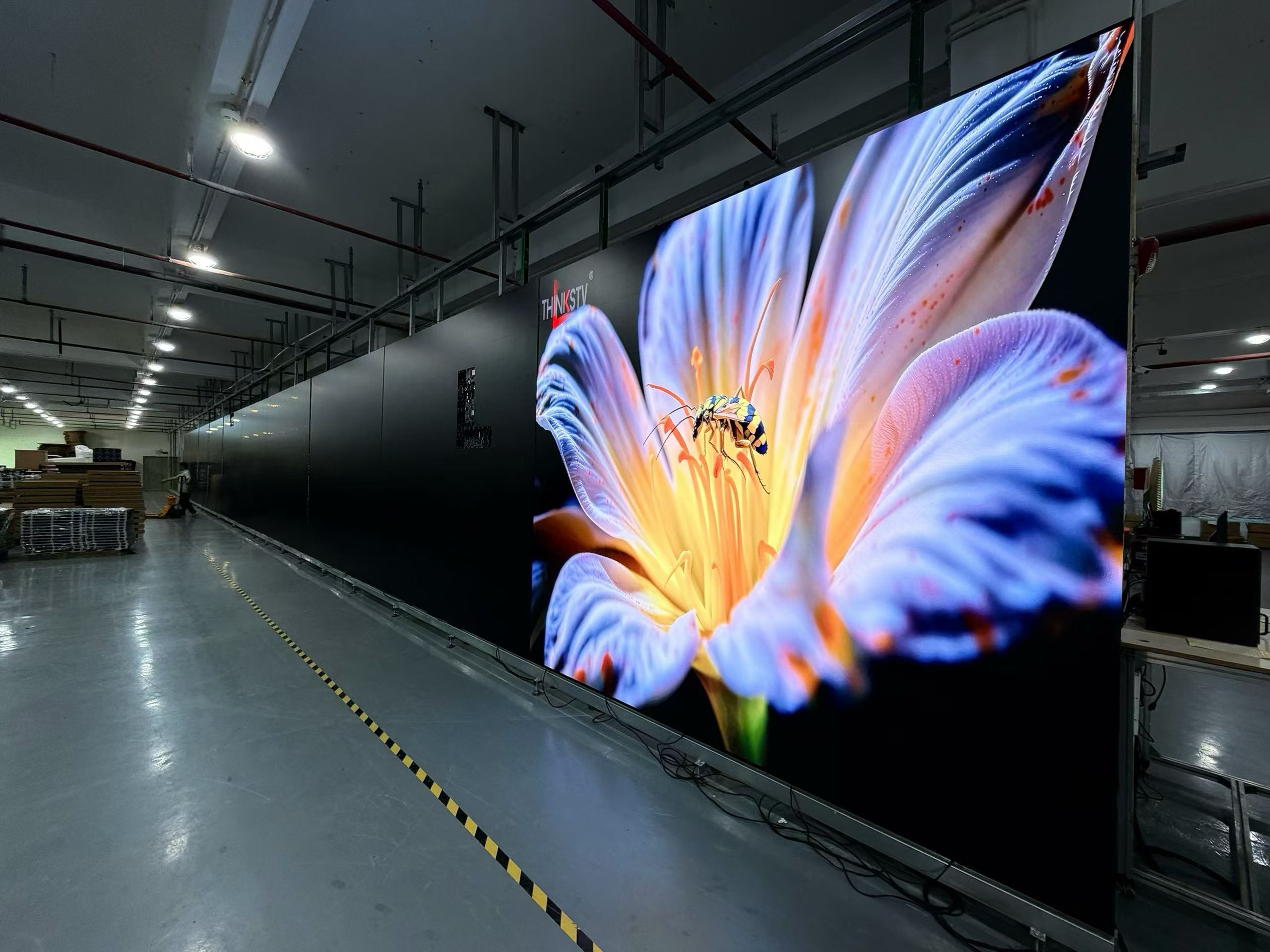
First, determine viewing distance and ambient light. For a 2-3 meter viewing distance with multiple light sources, prioritize the P0.9 model for its high pixel density and auto-brightness. For distances over 4 meters with budget constraints, the P1.2 offers better value with its 3840Hz refresh rate. Second, assess special environmental needs. For high-humidity, salt-spray, or strong EMI environments, choose specialized models with anti-corrosion coatings or EMI shielding. For example, Stonbel's custom P1.25mm anti-salt-spray display ran 18 months without corrosion failure on an island, reducing failure rates by 89%. For curved walls, the P0.9 Curved model provides seamless curved display with ≤0.1mm flatness. Third, consider maintenance and support. Choose products with front-access modular design for easy module replacement. Ensure the manufacturer offers local service and
Q1: Is higher brightness always better for a monitoring center COB display?
A: No. Monitoring centers have complex ambient light. Too high brightness causes glare and fatigue; too low hides details. Perception is non-linear. With ambient illuminance of 200-500 lux, recommended brightness is 800-1000 cd/㎡. At night, lower it to 300-400 cd/㎡ to avoid glare. Choose a display with auto-brightness, like Stonbel's, which adjusts in real-time (800-1000 cd/㎡ day, 300-400 cd/㎡ night), saving over 30% energy. Excessive brightness also accelerates LED aging, shortening lifespan. Match brightness to actual conditions.
Q2: How to choose between P0.9 and P1.2 based on viewing distance?
A: Smaller pitch means more pixels, suitable for closer viewing. For a 2-3 meter distance, choose P0.9 for clear rendering of maps and text. For distances over 4 meters, P1.2 offers better value. Both support 3840Hz refresh rate. Consider budget and space. For example, in a launch base command center, Stonbel's custom P1.0mm military-grade display at a 3-meter distance improved detail recognition by 65%. For curved walls, the P0.9 Curved model provides seamless curved display with ≤0.1mm flatness.
Q3: How does a COB display maintain stability in humid or dusty environments?
A: COB packaging fully covers LEDs with no exposed pins, offering inherent dust and moisture resistance. Stonbel displays have IP55 protection. For coastal or underground sites, custom anti-salt-spray and anti-UV coatings are available. A custom P1.25mm anti-salt-spray model ran 18 months without corrosion failure on an island, reducing failures by 89%. In an underground defense command center, a P0.9 Curved model with high-thermal-conductivity silicone packaging and silent cooling ran 24/7 for a year with zero downtime, improving stability by 94%. Front-access modular design allows maintenance without entering secure areas.
Q4: Does color temperature adjustment significantly impact visual comfort?
A: Yes, significantly. Prolonged exposure to 6500K cool white light can cause tension and fatigue by suppressing melatonin. It's recommended to use 6500K during the day and switch to 5000K warm tones at night. Stonbel displays support intelligent brightness and color temperature linkage, automatically adjusting based on time and light. In a provincial emergency management project, this feature notably reduced fatigue complaints during night shifts. Coordinate color temperature with brightness: lowering both at night reduces glare and improves comfort.
Selecting a COB fine-pitch display for monitoring centers requires balancing ambient light, viewing distance, and maintenance costs. Both the Stonbel P0.9 and P1.2 models offer consistent high standards in refresh rate, protection rating, and lifespan, differing mainly in pixel pitch and adaptability to special environments. For most urban monitoring centers, P1.2 suffices; for command centers with curved walls or extreme image quality demands, the P0.9 curved model is ideal. Both feature smart brightness adaptation, front maintenance, and full-service support, ensuring 24/7 stable operation. Integrators should assess site conditions and choose vendors with comprehensive certifications and local service networks. Stonbel, a top-10 LED display manufacturer in China, serves clients like Huawei and Peking University, offering customized delivery and lifetime after-sales support, reducing project risk and ensuring long-term reliability.