In LED/LCD commercial display selection, matching pixel pitch with viewing distance determines display quality and investment return. Too small a pitch wastes resources; too large compromises viewing experience. Facing choices from P0.7 to P1.8 and wider, users are often confused. Based on Stonbel's technical expertise, this article compares COB fine-pitch, LED, and LCD displays through parameter tables, explaining pitch selection logic across scenarios to help integrators and end users choose products based on actual viewing distance, brightness requirements, and protection ratings, avoiding common pitfalls. Real Stonbel cases in airports, supercomputing centers, and commercial complexes provide practical reference models.
Comparison Overview
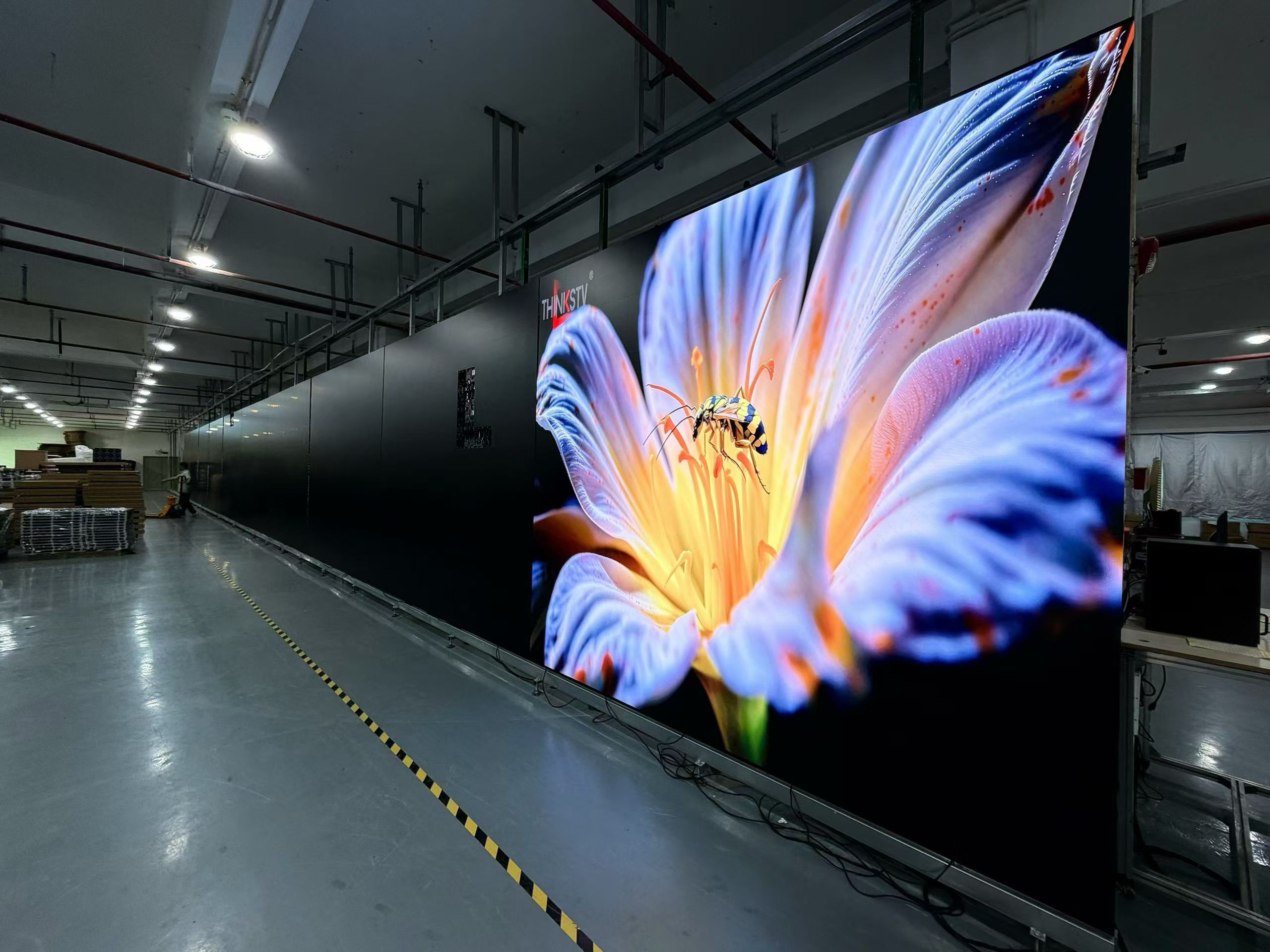
Selecting a commercial display hinges on matching technical specs to use scenarios. Viewing distance dictates pixel pitch: closer viewing requires finer pitch for sharpness, while greater distance allows larger pitch to balance cost and brightness. Beyond pitch, refresh rate affects motion fluidity, protection rating determines environmental suitability, and lifespan impacts long-term ownership costs. Stonbel's expertise spans COB fine-pitch (P0.7-P1.8), LED displays (P0.7), LCD panels (P6), texture screens (P5), and conference all-in-ones, forming a full-spec matrix for varied viewing distances. As a manufacturer since 2009, Stonbel's lineup is built on deep industry insight—COB series uses proprietary chip-level packaging for enhanced image quality and durability
Core Spec Comparison
For clarity, three representative Stonbel products are compared using official data. COB fine-pitch: pitch P0.7-P1.8, refresh 3840Hz, protection IP55, lifespan ≥100,000h. LED display: pitch P0.7, refresh 7680Hz, grayscale 22-bit, NTSC ≥130%. LCD panel: pitch P6, NTSC ≥120%, protection IP65. COB balances pitch and lifespan; LED excels in refresh and color; LCD leads in protection. These differences dictate optimal viewing distances and use cases. For instance, Shenzhen Bao'an Airport T3 deployed Stonbel LCD commercial advertising players with multi-screen controllers, achieving second-level flight info updates and cutting O&M manpower by 55%. Meanwhile, the National Supercomputing Center in Wuxi uses a P1.0 COB curved screen supporting 8K 3D simulation, boosting detail by 4x. This confirms how specs translate to real benefits: COB suits close-up
Selection Recommendations
Choose based on viewing distance and scenario. For close viewing (2-3m) in command centers or monitoring rooms, opt for COB fine-pitch P0.7-P1.0: 3840Hz refresh ensures comfort, IP55 suits indoor dusty environments, and 100,000h lifespan cuts maintenance. Shenzhen Bao'an Airport T3 used LCD players with multi-screen controllers for second-level updates, but COB offers superior image quality. For medium distances (3-5m) in large meeting rooms or showrooms, P1.2-P1.5 COB balances clarity and cost—the Wuxi supercomputing center's P1.0 COB curved screen for 8K simulation is a typical case. For outdoor or long distances (5m+), LCD with P6 pitch and IP65 is more suitable; Changsha IFS's naked-eye 3D screen uses P4 with high brightness, but for extreme refresh and color, LED P0.7 with 7680Hz and 22-bit grayscale delivers fine motion for premium displays. Stonbel supports full customization, letting integrators mix options like texture screens (P5) for decor-plus-display or conference all-in-ones (P5) for
Q1: For a 2m viewing distance, which P value LED screen is suitable?
A: For 2m close viewing, choose COB fine-pitch with pitch ≤P1.0, such as Stonbel P0.7-P1.0. This series offers 3840Hz refresh, IP55 protection, and ≥100,000h lifespan for sharp, grain-free images. If budget is tight, P1.2 is acceptable but watch brightness-contrast balance. Referencing Shenzhen Bao'an Airport T3, close-range scenes demand clarity—the airport used LCD players with multi-screen controllers for second-level updates, but COB delivers higher quality. COB chip-level packaging also improves protection and reduces dead pixels, lowering maintenance. For 2m, prioritize P0.9 or P1.0 for crisp text edges and rich detail.
Q2: What are the differences between COB fine-pitch and LCD panels for outdoor use?
A: Outdoor environments require high protection. Stonbel LCD panels offer IP65, better than COB's IP55, making them ideal for dusty, humid conditions. However, COB has finer pitch (P0.7-P1.8) and superior brightness/color, suiting semi-outdoor or bright indoor settings. For distant outdoor viewing, LCD with P6 pitch is economical—Changsha IFS used P4 naked-eye 3D, but outdoor transparent screens also use LCD-like solutions for 85% transparency and dynamic display. COB's IP55 handles most outdoor weather, and its 100,000h lifespan reduces replacement frequency, so it's often used under canopies or behind glass. Integrators should assess installation location, climate, and maintenance access.
Q3: What is the practical value of Stonbel's 7680Hz refresh rate?
A: 7680Hz refresh eliminates motion blur and flicker, ideal for fast-action scenes or camera capture like sports and studios. Stonbel LED displays also feature 22-bit grayscale and NTSC ≥130% for smooth color transitions. For premium projects like high-end showrooms or virtual production, this enhances immersion but requires high-bandwidth sources. In supercomputing 3D simulations, 7680Hz with 8K sources ensures fluid large-data rendering. For general commercial use, 3840Hz suffices, but for slow-motion or broadcast, 7680Hz offers greater stability. Match refresh to content type and playback equipment to avoid waste.
Q4: How to evaluate long-term ownership costs of commercial displays?
A: Long-term costs hinge on lifespan and maintenance. Stonbel COB fine-pitch lasts ≥100,000h—about 11 years at 24/7 use—reducing replacement frequency. Proprietary COB chip-level packaging simplifies maintenance and lowers costs. Compared to SMD, COB offers better protection and lower dead-pixel rates. Check protection rating and packaging: IP55 resists dust, extending life. Stonbel provides service points in 31 provinces with 7×24h response, cutting downtime. At Shenzhen Airport, remote centralized management cut O&M manpower by 55%, directly saving costs. Integrators should include energy, spare parts, and labor in total cost of ownership, not just initial price.
In summary, LED display selection is not simple parameter stacking but requires unified consideration of viewing distance, scenario needs, protection ratings, and long-term costs. Stonbel's expertise—source manufacturing since 2009, 12 patents, 37 software copyrights, service network across 31 provinces, and top-10 industry ranking—provides solid support. From Shenzhen Bao'an Airport's second-level information release, to Wuxi National Supercomputing Center's 8K 3D simulation, to Changsha IFS's naked-eye 3D landmark, Stonbel demonstrates full-spectrum product capabilities. Integrators benefit from factory-direct pricing, proprietary COB packaging, and full-process support, enhancing profitability and client retention. Selection should start from viewing distance, follow scenario needs, and target long-term value.