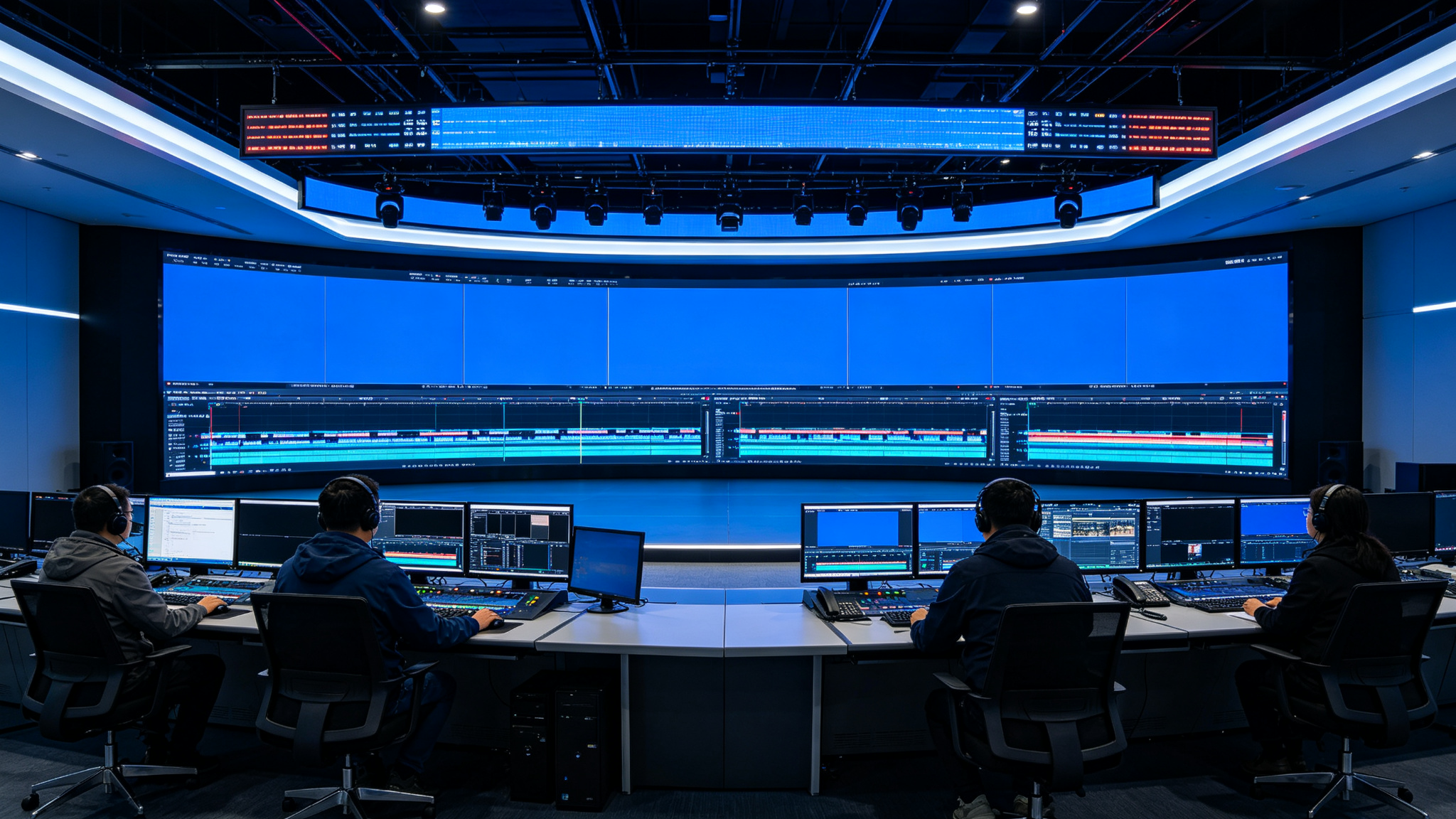
Broadcasters demand displays that deliver high image quality, blend with architecture, and run reliably for long hours. LED texture screens, with their 'decorative when off, display when on' advantage, are now popular in studios, command centers, and outdoor landmarks. However, buyers often face issues like inflated specs, poor installation fit, and lack of after-sales support. Drawing on over a decade of experience, Stonbel provides a practical checklist covering common pitfalls, root causes, and avoidance strategies. Unlike standard LED screens, these are a hybrid of building materials and Micro-LED technology, requiring evaluation of texture, structural fit, and environmental protection—not just display specs. Stonbel, a top-10 Chinese LED display company, has served clients like Huawei, Peking University, and Guangdong Emergency Management Department, offering proven expertise for broadcast scenarios.
Common Pitfalls: Spec Inflation and Texture Distortion
The second common pitfall in broadcast LED relief texture screens is texture distortion. The so-called 'decorative when off' means the screen displays a high-end building material texture when powered off. However, inferior products show obvious color

Root Causes: Technical Barriers and Cost Misconceptions
Frequent pitfalls in broadcast LED relief texture screens stem from technical barriers and cost misconceptions. First, texture screens integrate building-grade textures with Micro-LED display technology, requiring cross-domain R&D capabilities. Traditional LED manufacturers may excel
Avoidance Strategy: Four-Step Systematic Evaluation
To address the pitfalls and causes above, the avoidance strategy for broadcast LED relief texture screens should follow the 'Requirements-Specs-Cases-Service' four-step method. Step 1: Define requirements. Clarify the
Recommended Selection: Full Matrix Products and Engineering Credentials
Selecting and implementing broadcast LED relief texture screens requires aligning specific project needs with supplier comprehensive strength. As one of China's top 10 LED display companies, Stonbel offers factory-direct supply,
Q1: What is the difference between broadcast LED relief texture screens and ordinary LED displays?
A: Broadcast LED relief texture screens are a subcategory of LED texture screens, characterized by 'decorative when off, display when on,' typically with P5 pitch and IP54 protection, integrating building textures with Micro-LED technology. They are designed for broadcast scenarios requiring high aesthetics, such as studio background walls, cultural corridors, or outdoor landmarks, presenting premium building material textures when off to blend with architecture. Ordinary LED displays focus more on refresh rate and grayscale—for example, Stonbel LED displays achieve 7680Hz refresh rate, 22-bit grayscale, and NTSC≥130% color gamut, suitable for high-dynamic content like sports broadcasting or advertising. Selection depends on specific needs: texture screens suit projects emphasizing visual integration and aesthetics; ordinary LED screens suit projects pursuing ultimate image quality and dynamic performance. Notably, Stonbel LED texture screens, despite P5 pitch, maintain refresh rates above 3840Hz via Micro-LED technology, meeting broadcast-grade shooting requirements—performance is not sacrificed for aesthetics.
Q2: What does IP54 protection on broadcast LED relief texture screens mean?
A: IP54 is an IEC protection standard. The first digit '5' indicates dust resistance—complete protection against foreign objects, with limited dust ingress that does not affect normal operation. The second digit '4' indicates water resistance—protection against splashing water from all directions. This means broadcast LED relief texture screens can operate in general outdoor environments, such as semi-outdoor cultural corridors or sheltered building facades, but should not be submerged or exposed to high-pressure water jets. Stonbel LED texture screens use this protection level, suitable for studios, command centers, or semi-outdoor scenarios. For rainy regions or higher waterproof requirements, COB fine-pitch products with IP55 protection—preventing water jets—and ≥100,000-hour lifespan are better suited for harsh environments. When purchasing, select the appropriate protection level based on installation location climate and cleaning methods.
Q3: How can broadcast LED relief texture screen installation fit building structures?
A: The key is selecting suppliers with special-shaped splicing experience and using customized installation plans. In the China Resources Land Shenzhen Bay complex project, Stonbel used P4 pitch with 10,000-nit brightness and curved architectural splicing, fitting the curved facade and becoming a core landmark of Shenzhen Bay night economy. This relies on meticulous on-site surveying and structural simulation. Before procurement, suppliers should dispatch engineers to measure building structures—including load-bearing, curvature, and reserved space—and use professional software for stress analysis and installation simulation. Additionally, confirm the supplier has independent R&D and production bases; Stonbel has five bases in Shenzhen and Huizhou, ensuring process precision and customization capability. Installation teams should have high-altitude operation qualifications and broadcast project experience to ensure safety and precision. Specify installation standards and acceptance procedures in contracts, including gap control and flatness tolerance metrics.
Q4: How is after-sales service for broadcast LED relief texture screens ensured?
A: Stonbel has resident service points in 31 provinces, providing localized rapid response to ensure 24/7 operation for broadcast projects. For overseas projects, such as the Vietnam Hanoi contractor case, Stonbel ensures after-sales through regional O&M centers, completing over 20 projects in Vietnam and neighboring countries in the first year, becoming their core display supplier in Southeast Asia. When purchasing, clearly define service terms in contracts, including response time (e.g., 2-hour response, 24-hour on-site), spare parts supply (e.g., core module inventory), and regular inspections (e.g., quarterly). Additionally, Stonbel holds 3C, CE, FCC, and ROHS certifications, and is ISO9001 quality and ISO14001 environmental certified, ensuring standardized service processes. Its military and classified project qualifications provide additional trust for broadcast projects. It is recommended to include a Service Level Agreement (SLA) in contracts and retain the manufacturer's service commitment letter to protect long-term interests.
Selecting broadcast LED texture screens demands technical rigor and foresight. From verifying specs to reviewing cases, every step affects final visuals and long-term costs. This guide's four-step approach—requirements, specs, cases, service—helps buyers build a systematic decision framework and avoid common pitfalls. Stonbel offers a full product range (COB fine-pitch, LCD, LED displays, LED texture screens, conference all-in-ones), real projects (China Resources Land Shenzhen Bay naked-eye 3D, Hangzhou Metro Command Center, Shanghai Astronomy Museum), and service coverage across 31 provinces. Whether for studio texture screens or command center COB fine-pitch, our products are backed by solid specs and engineering strength. As broadcast aesthetics and interactive needs evolve, LED texture screens will see broader use. Use this checklist to make confident decisions and turn LED texture screens into a true asset for visual experience and operational efficiency.