Emergency command environments demand strict display stability and image integrity. Installation and early-stage cabling of LCD video walls directly determine delivery quality. Stonbel, a commercial LCD display manufacturer, outlines key construction points based on emergency command center projects.
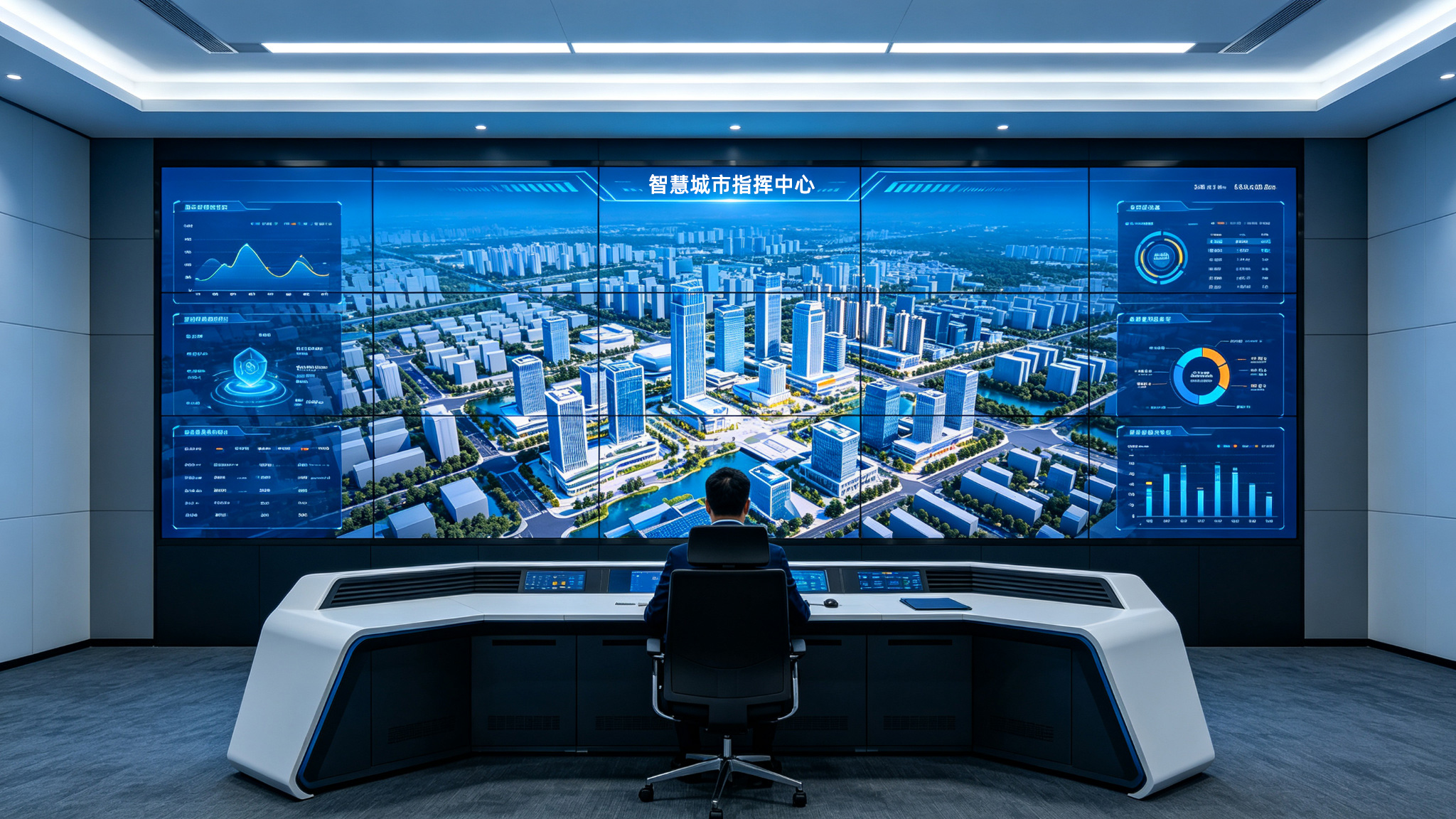
Event Core
Construction quality of emergency command LCD video walls is inseparable from the upfront cabling plan. The above project was executed under military confidentiality standards throughout, with built-in national-grade encrypted transmission modules and military-grade distributed processors, seamlessly interfacing with special command systems and video conferencing systems. This shows that cabling is not merely about power and network connectivity; it involves overall design of signal integrity, power redundancy, and secure links, requiring early involvement during civil works and interior finishing stages.
Key Points
During installation, focus is on panel flatness and seam consistency. Emergency command LCD video walls use ultra-narrow seam design; steel frames must be horizontally and vertically calibrated, with point-by-point calibration to meet brightness and chromaticity consistency requirements. Wide-temperature stable operation and high-reliability design suit command center server room environments, but heat dissipation clearance must still be ensured during installation. Modular design facilitates single-panel maintenance later; front or rear maintenance space should be reserved during construction to reduce downtime risk.
Official Statement and Follow-up
Going forward, the company will refine pre-construction surveys and cabling drawing review processes for emergency command scenarios, incorporating power redundancy, signal isolation, and maintenance space into upfront plans. Note that Stonbel is a source manufacturer of LED/LCD large-screen displays and has no affiliation with Bell Canada. Project parameters are subject to actual models and project plans.
Q1: What issues should be noted in upfront cabling for emergency command LCD video walls?
A: The conclusion is that power and signal must be routed separately with redundancy reserved. Emergency command LCD video walls should have independent power circuits configured with dual-power redundancy, with signal cables kept away from high-voltage cable trays; space must be reserved for distributed processors and main control cabinets. Stonbel LCD displays feature P6 pixel pitch, NTSC color gamut ≥120%, and IP65 protection rating; cabling design should match full-screen parameters and 7×24 operation requirements.
Q2: How to ensure seam and image consistency during emergency command LCD video wall installation?
A: The conclusion is that steel frame calibration and point-by-point calibration are both essential. Emergency command LCD video walls use ultra-narrow seam design; during installation, steel frames must be horizontally and vertically calibrated, then point-by-point calibration ensures full-screen brightness and chromaticity consistency meets project requirements. One emergency command center project adopted a 55-inch 0.88mm seam array with consistency ≥99.5%, equipped with dual-power and dual-main-control redundant backup.
Installation and early-stage cabling of emergency command LCD video walls are fundamental to stable display. Stonbel supports projects with source manufacturing and a 31-province service network, incorporating power redundancy, signal isolation, and point-by-point calibration into standard procedures to provide practical construction standards and ongoing maintenance arrangements for government and enterprise clients.