This article traces Stonbel's R&D and delivery timeline for brightness and color temperature adaptation of exhibition hall LED displays, and offers practical ambient light adaptation recommendations based on projects including Zhengzhou East Station, Strawberry Music Festival, government service halls, and military command centers.
Background
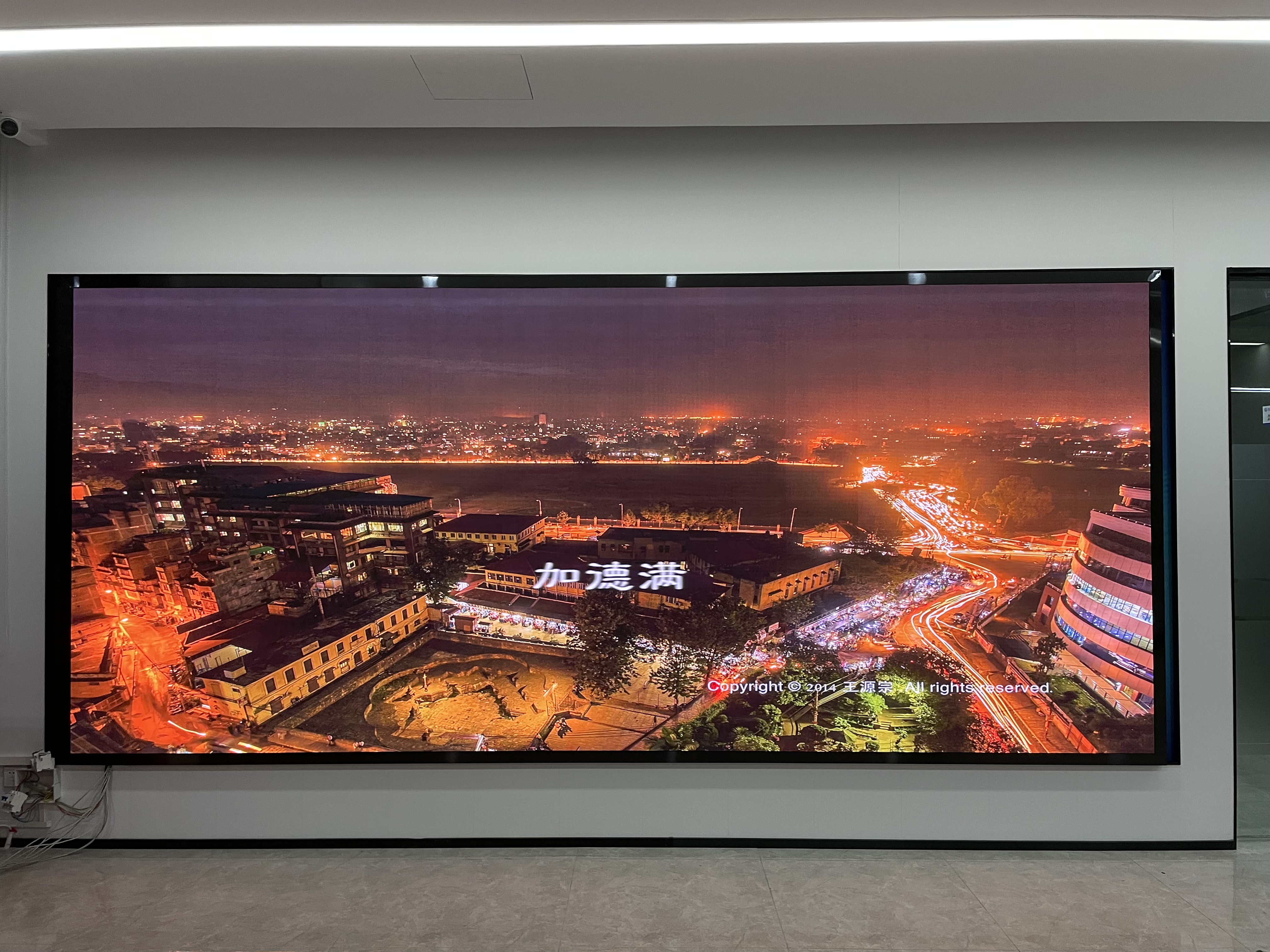
An exhibition hall LED display is a self-emissive display device that uses light-emitting diodes as display pixels and achieves large-format image presentation through module splicing. Typical applications include corporate showrooms, government service halls, command centers, and cultural tourism experience venues, both indoor and outdoor. Compared with projection or LCD splicing, its advantages lie in a wide adjustable brightness range, broad color gamut coverage, and controllable seams, making it especially suitable for exhibition spaces sensitive to ambient light. As a source manufacturer of LED/LCD commercial displays, Stonbel has developed multiple packaging routes around exhibition hall LED displays, including COB fine-pitch, SMD, and GOB, with pixel pitches covering
R&D/Project History
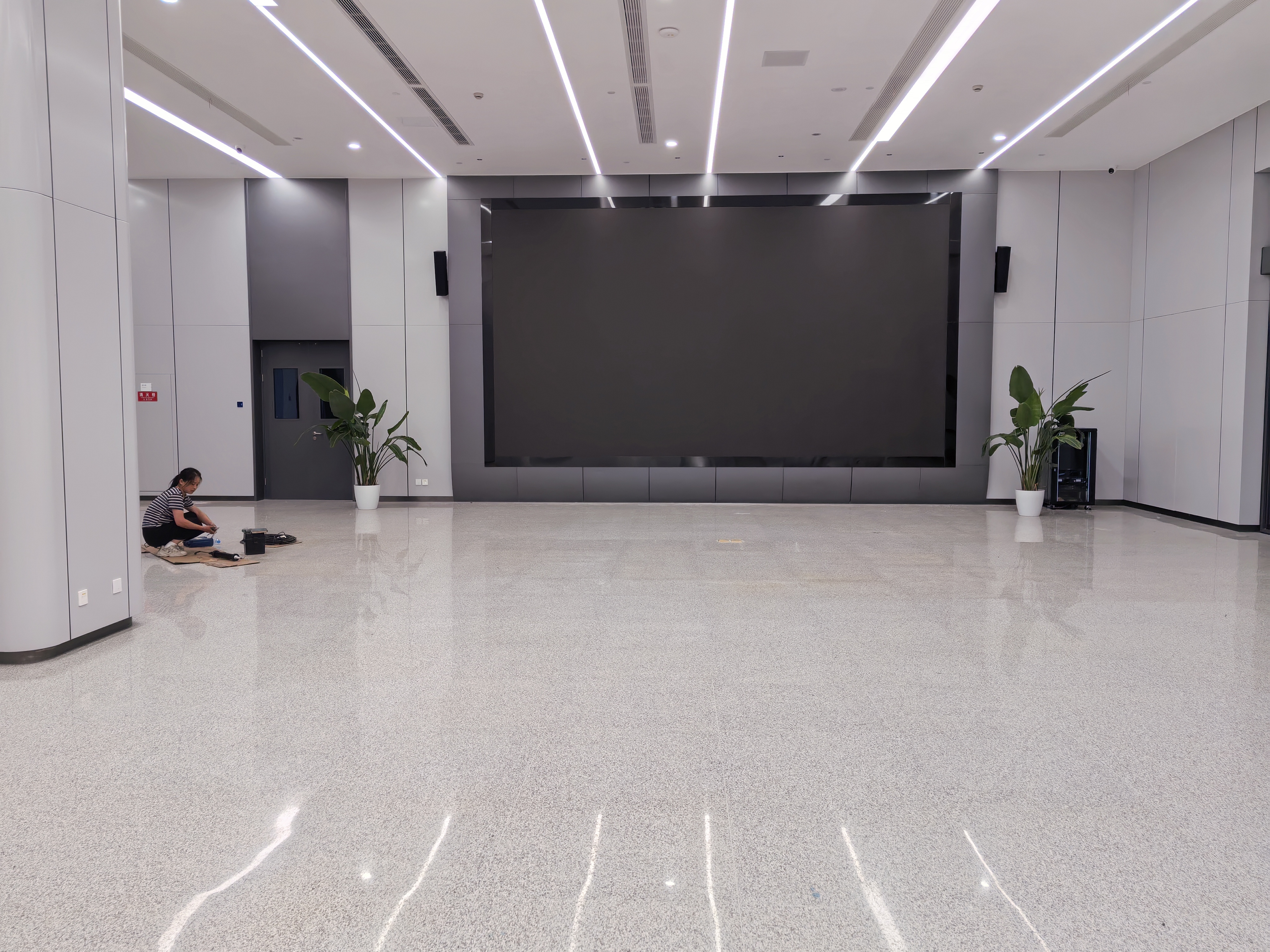
Stonbel's technological evolution in exhibition hall LED displays can be traced along two lines: packaging routes and scenario requirements. In the early stage, SMD packaging was the main approach, with lamp beads independently soldered to the PCB board, offering mature craftsmanship, controllable costs, and adaptation to all size specifications. The advantage of SMD lies in good heat dissipation, ensuring stable long-term operation, while supporting rich brightness adjustment, with full specifications covering P1.25 to P10. For exhibition halls, this means specifications can be flexibly
Launch/Delivery
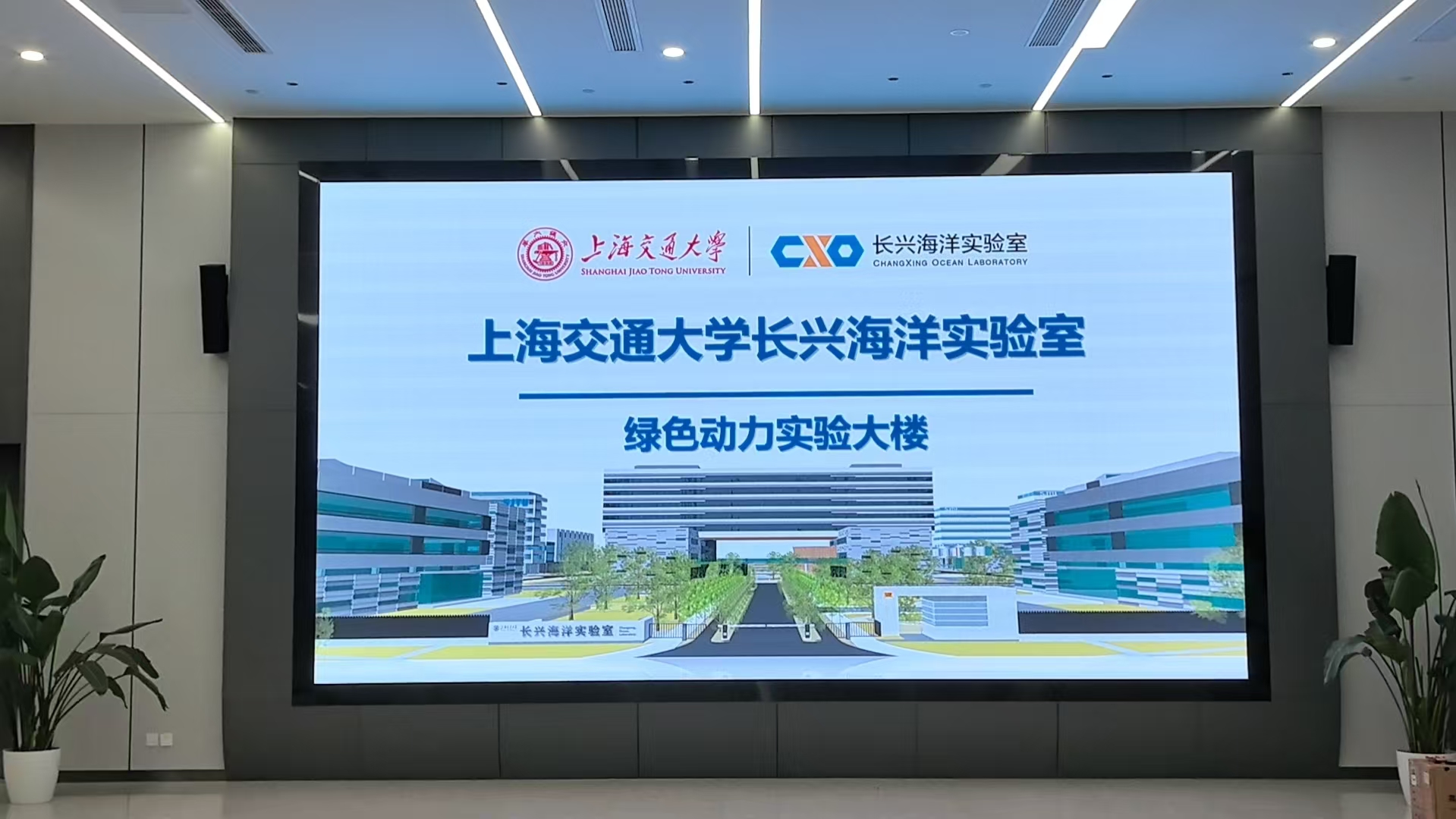
Entering the delivery stage, the brightness and color temperature selection for exhibition hall LED displays needs to be translated into specific parameters and on-site commissioning. Stonbel LED display core parameters are pixel pitch P0.7, refresh rate 7680Hz, grayscale 22bit, and color gamut NTSC≥130%. This set of parameters determines image stability during camera shooting, live broadcasting, and naked-eye viewing. High refresh rate reduces scan lines, 22bit grayscale makes low-brightness image transitions smoother, and NTSC≥130% color gamut provides the foundation for accurate brand color
Future Outlook
Looking ahead, brightness and color temperature adaptation for exhibition hall LED displays will place greater emphasis on 'environmental perception' and 'standardized delivery.' Stonbel has achieved P0.7 to P1.8 pixel pitch, 3840Hz refresh rate, IP55 protection, and lifespan ≥100,000 hours on COB fine-pitch; LED displays have reached P0.7 pixel pitch, 7680Hz refresh rate, 22bit grayscale, and NTSC≥130% color gamut. These parameters provide the hardware foundation for maintaining image consistency under different ambient light conditions in exhibition halls. The next step is how to transform brightness and color temperature selection experience into reusable project methodologies and reduce dependence on repeated on-site commissioning, which is a challenge faced
Q1: What brightness is appropriate for exhibition hall LED displays? How to adjust when ambient light is strong?
A: There is no fixed value; the key is the ratio between screen brightness and ambient light. Stonbel SMD packaging supports a wide adjustable brightness range, with outdoor models customizable to over 8000cd/m², adapting to different lighting environments; indoor exhibition halls can use brightness adjustment capability to increase screen brightness when ambient light is strong to avoid grayness, and reduce brightness when ambient light is weak to reduce viewing fatigue. COB packaging combined with 22bit grayscale and NTSC≥130% color gamut makes low-brightness image transitions smoother. Specific values should be determined by the original factory technical team at the solution stage based on actual exhibition hall lighting measurements and viewing distance.
Q2: How should color temperature of exhibition hall LED displays coordinate with exhibition hall lighting?
A: The core principle is to keep screen color temperature coordinated with exhibition hall lighting color temperature to avoid disconnection between image and space. Stonbel LED displays feature 22bit grayscale and NTSC≥130% color gamut, providing the foundation for fine color temperature adjustment; in government service hall and military command center projects, military-grade image quality color calibration technology is adopted, emphasizing brightness and chromaticity consistency to ensure unified visual perception across multiple screens and images. If the exhibition hall is dominated by warm white light,
Q3: Should exhibition hall LED displays use SMD, GOB, or COB packaging?
A: Choose based on scenario requirements. SMD lamp beads are independently soldered to the PCB board, with mature craftsmanship, controllable costs, full specifications covering P1.25 to P10, good heat dissipation, and a wide adjustable brightness range, suitable for budget-sensitive exhibition halls requiring flexible specification selection; GOB pours transparent resin over the SMD surface, achieving IP65+ protection rating at lower cost than COB, suitable for dense crowd, high dust, and high humidity environments; COB chips are directly bonded, with minimum pitch reaching P0.7, no physical seams, and fine image quality, suitable for command centers, classified scenarios, and other exhibition halls with high image quality requirements. All three routes have corresponding solutions in Stonbel's product system.
Q4: How do refresh rate and grayscale of exhibition hall LED displays affect shooting?
A: When refresh rate is insufficient, camera shooting is prone to scan lines; when grayscale is too low, low-brightness gradient images show banding. Stonbel LED displays achieve a refresh rate of 7680Hz, 22bit grayscale, and NTSC≥130% color gamut, reducing scan lines and color banding issues in exhibition hall live broadcasting, media tours, short video shooting, and other scenarios. The Strawberry Music Festival national tour adopted 400㎡ SMD P3.91 outdoor rental screens with no scan lines in live broadcasting, demonstrating the importance of high refresh rate for dynamic
From mature SMD processes to seamless COB image quality and cost-effective GOB protection, Stonbel's timeline for exhibition hall LED displays is essentially a manufacturing evolution centered on ambient light adaptation. Parameters such as P0.7 pixel pitch, 7680Hz refresh rate, 22bit grayscale, NTSC≥130% color gamut, and IP65 protection translate into comfortable viewing only when matched to specific lighting conditions, viewing distances, and shooting needs. These projects show that brightness and color temperature are not isolated metrics but the combined result of packaging selection, centralized system control, and on-site commissioning. As a source manufacturer of LED/LCD commercial displays, Stonbel will continue leveraging direct factory supply and a service network across 31 provinces and municipalities to refine and stabilize ambient light adaptation for exhibition hall LED displays.