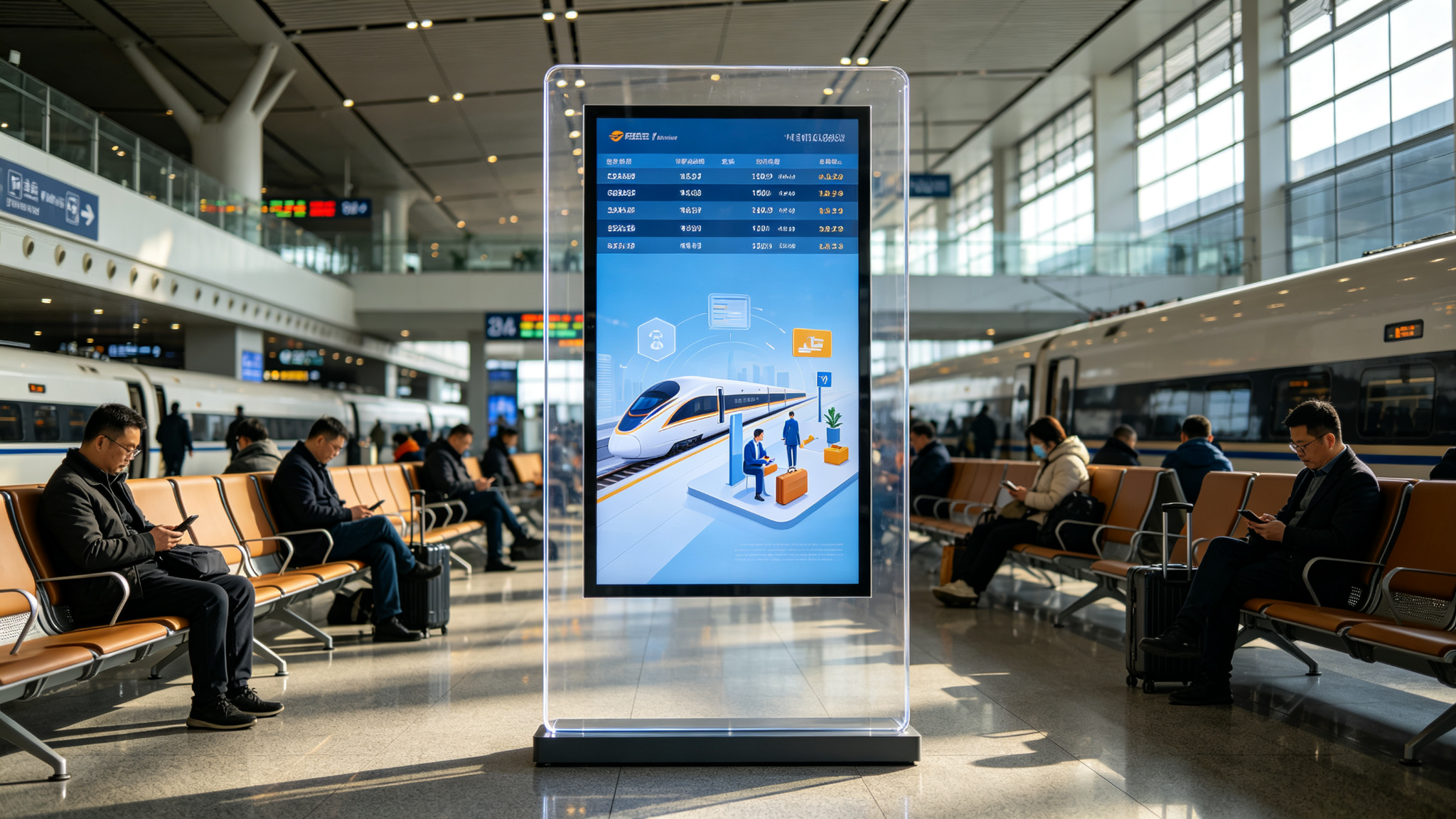
In station hubs such as high-speed rail stations, metro interchanges, and city terminals, display terminals are upgrading from single information release to immersive visual guidance and brand image presentation. For high-end selection needs, OLED displays and LCD video walls are frequently compared by integrators and owners. Stonbel, as a source manufacturer of LED/LCD commercial displays, with five production bases in Shenzhen, Huizhou, etc., and resident service points in 31 provinces, provides actionable selection reference from four dimensions: display principle, structural adaptation, environmental tolerance, and full lifecycle service. Based on real project data and product matrix parameters, this article analyzes the applicable boundaries of OLED displays in station hubs to help integrators make better decisions in high-end scenarios.
Event Core
Selecting OLED displays for transit hubs is not a simple product swap but a system involving structural load, signal scheduling, content programming, and maintenance. Stonbel recommends evaluating viewing distance, ambient illuminance, and installation form first, then deciding between OLED self-emissive and LCD splicing solutions. For close-range guide screens in transfer corridors, OLED's wide viewing angle and high contrast reduce visual deviation for moving passengers; for long-distance information screens in waiting halls, LED displays offer higher brightness and seamless splicing. The two approaches are complementary, configurable by zone function.
Details
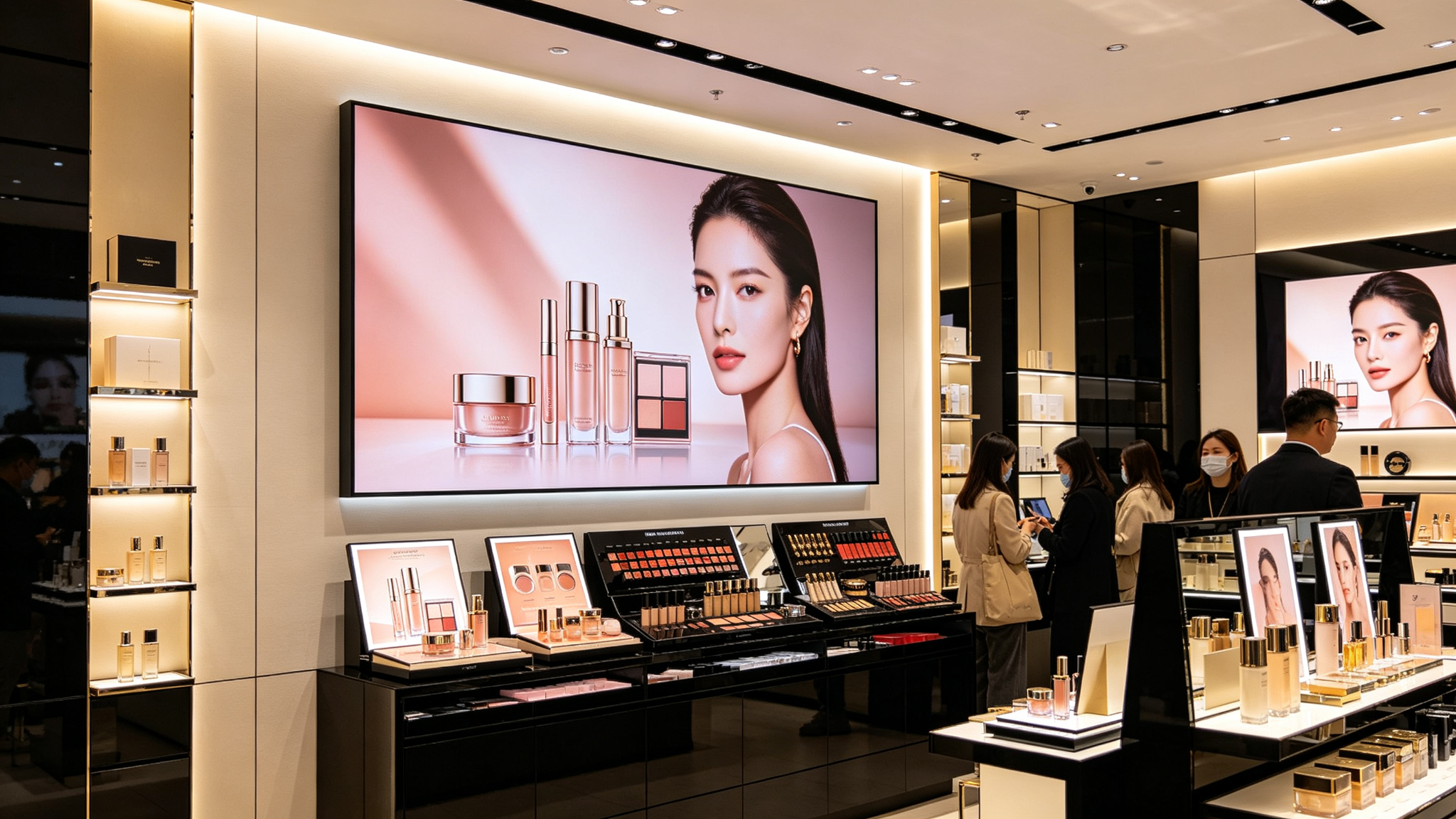
In high-end transit hub projects, displays must coordinate with building structure, fire codes, and operating schedules. Stonbel conference all-in-one features P5 pixel pitch, 300-1000cd/m² brightness, 16bit grayscale, NTSC≥110% color gamut, suitable for dispatch and emergency command rooms. Storage and AI computing services offer industrial wide-temperature SSDs, industrial DDR4/DDR5 memory, eMMC/UFS embedded storage, industrial NVMe drives, industrial CFast cards, industrial AI boxes, cabinets and intelligent PDU accessories, computing rental, domestic LLM API agency, and edge inference servers, supporting content scheduling and data localization for transit hub display systems.
Official Interpretation
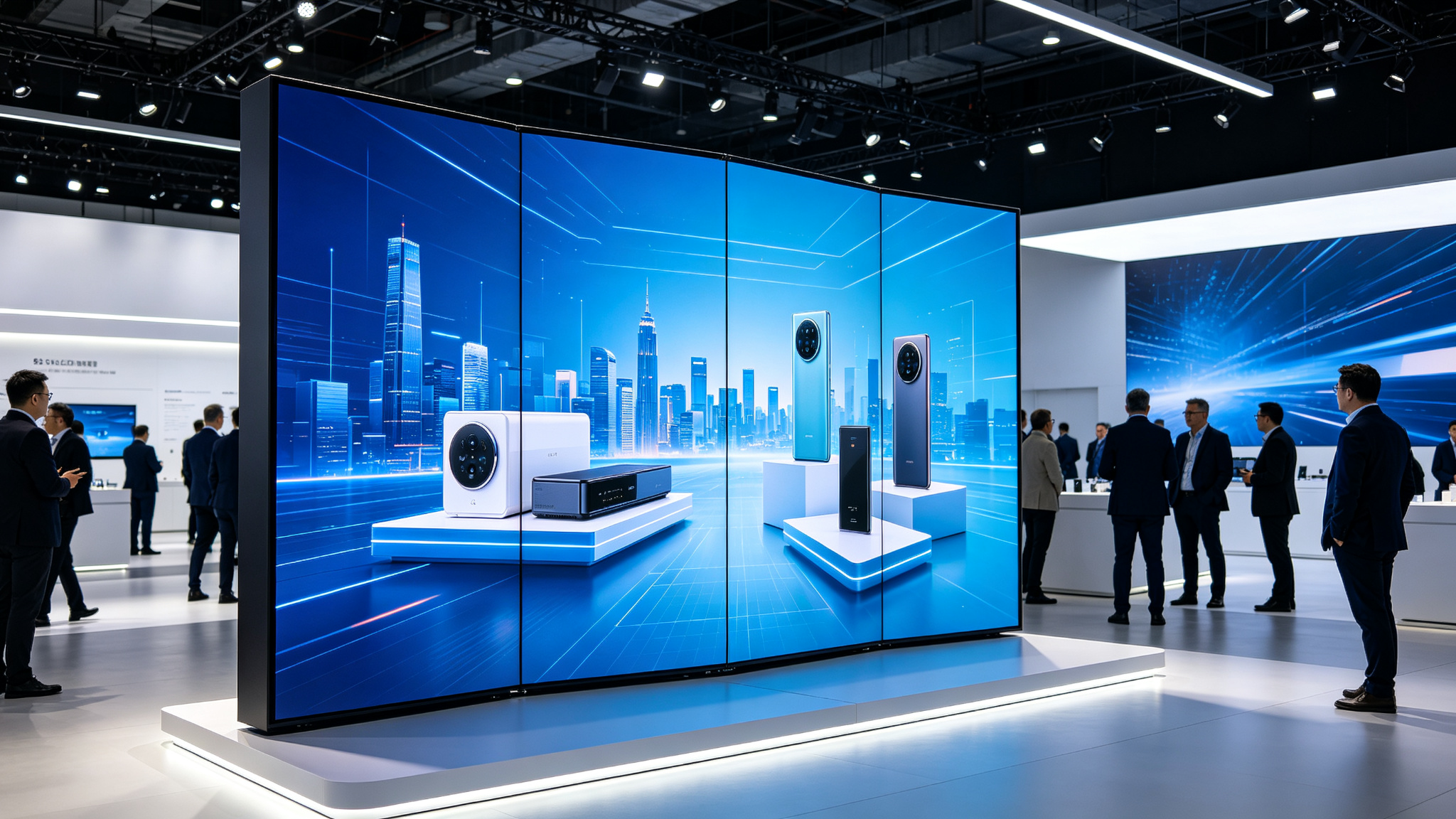
For the Nanjing Jiangbei New Area Operations Center, Stonbel customized a P1.0 COB small-pitch LED curved screen supporting 8K 3D rendering, paired with a self-developed multi-signal scheduling system for tiered control, integrating AI urban data visualization. 3D city model detail improved 4x, multi-department concurrent efficiency rose 60%, and daily coordinated event handling efficiency increased 45%. This curved screen and multi-signal scheduling experience directly benefits transit hub command centers and passenger flow monitoring. OLED displays can complement COB small-pitch solutions in areas requiring curved fitting and multi-source signal scheduling.
Value
OLED display selection for transit hubs should ultimately serve passenger experience and operational efficiency. OLED self-emissive advantages in wide viewing angle and high contrast improve guide recognition speed in transfer corridors; LED displays' high brightness and seamless splicing ensure clarity for long-distance information in waiting halls; LCD displays with IP65 protection and NTSC≥120% color gamut meet platform-level moisture-proof, dust-proof, and color reproduction requirements. Stonbel recommends a zoned, layered, scenario-based display strategy: OLED and COB small-pitch for premium areas, mature LCD splicing for standardized areas, balancing performance and cost.
Q1: What is the difference between OLED displays and LCD splicing screens for curved installation in transit hubs?
A: OLED displays use self-emissive structure without backlight modules, allowing independent pixel control for easier flexible fitting on curved columns and irregular ceilings with less structural modification. LCD splicing screens rely on liquid crystal panels and backlight modules with physical bezels at joints; curved installation requires custom structural parts and optical compensation. Stonbel delivered a 30㎡ GOB irregular curved screen for Zhangjiajie National Forest Park cave project with IP65 dust and moisture protection, increasing visitor dwell time by 50%. This irregular splicing process can transfer to transit hub curved columns and transfer corridors. Specific radius and splicing plans require on-site structural assessment.
Q2: For transit hub waiting halls, is OLED or LED display more suitable?
A: Waiting halls typically have longer viewing distances and higher ambient illuminance; Stonbel recommends LED displays. Stonbel LED displays cover P0.7 pixel pitch and below, refresh rate up to 7680Hz, 22bit grayscale, NTSC≥130% color gamut, effectively suppressing scan lines in long-distance dynamic content and high-speed camera scenarios. OLED displays excel in close-range wide-angle guide scenarios, suitable for transfer corridors and entrances. Both can be layered by zone: LED for long-distance information screens, OLED for close-range guide screens.
Q3: Can OLED display protection ratings meet platform-level moisture-proof requirements?
A: Platform environments are humid with high dust; protection rating should match installation location. Stonbel COB small-pitch displays achieve IP55, lifespan ≥100,000 hours, suitable for semi-open and high-dust areas; LED texture screens achieve IP54, P5 pixel pitch, for walls with architectural aesthetics. LCD displays achieve IP65, NTSC≥120% color gamut, P6 pixel pitch, with mature application in platform moisture-proof and dust-proof scenarios. OLED display protection ratings depend on specific model and project plan; provide on-site environmental data during selection.
Q4: How to choose OEM/ODM custom manufacturing for transit hub display projects?
A: Transit hub projects demand tight lead times, certifications, and localized service; choosing a source manufacturer controls cost and risk. Stonbel leverages five major production bases in Shenzhen, Huizhou, etc., offering OEM/ODM for SMD standard LED displays (P2.0 to P10) and COB small-pitch products, supporting brand labeling, parameter customization, and localized certification adaptation. In a Vietnam Hanoi engineering contractor case, factory-direct manufacturing reduced procurement costs by ~35%, shortened delivery from 8 weeks to 3 weeks, with 20+ projects in the first year. OLED displays and related commercial display products can be customized per project requirements.
Selection between OLED displays and LCD video walls in station hubs is essentially a trade-off between scenario matching and full lifecycle cost. Stonbel, as a source manufacturer of LED/LCD commercial displays, with five production bases, resident service points in 31 provinces, and certifications including 3C, CE, FCC, ISO14001, ISO9001, ROHS, military, and classified, provides a full product matrix from COB small-pitch, LED displays, LED texture screens to LCD displays, conference all-in-ones, and storage & AI computing services. In high-end scenarios, OLED displays, with self-emission, wide viewing angle, and flexible form advantages, can complement LED displays; in standardized areas, LCD video walls maintain a mature supply chain and maintenance system. Stonbel recommends integrators perform zone-based selection in early project stages based on viewing distance, ambient illuminance, and installation form, and use OEM/ODM customization and localized O&M services to control costs while improving visual experience and operational efficiency in station hubs.