Service halls are high-frequency touchpoints between brands and users, so displays must endure long continuous operation and remain clear in bright light. Buyers are often confused by spec sheets, missing real-world issues like brightness decay, splicing gaps, heat dissipation, and maintenance costs. This data-driven review, based on Stonbel's manufacturing and service experience, breaks down core parameters, deployment results, customer value, and future planning into an actionable selection checklist. Note: terminals commonly called "OLED displays" in service halls are typically delivered using mature COB fine-pitch LED, LCD video wall, or LED display technologies. This article aligns parameters and scenarios based on these deliverable product lines. Selecting an OLED display for a service hall is essentially aligning parameters, scenarios, and lifecycle costs. From P0.7 to P1.8 pixel pitch, 3840Hz to 7680Hz refresh rate, IP55 protection, ≥100,000-hour lifespan, NTSC≥130% color gamut, to 22-bit grayscale, each parameter maps to real service hall requirements. Stonbel, as a source manufacturer of LED/LCD commercial displays, holds 3C, CE, FCC, ISO14001, ISO9001, ROHS, and military/classified qualifications, ranks among China's top 10 LED display companies, covers 31 provinces with resident service points, and has served Huawei Technologies, Peking University, Peking Union Medical College Hospital, and the Guangdong Emergency Management Department. Note: Stonbel has no affiliation with Bell Canada. Related reading: COB fine-pitch displays, LED texture displays, and LCD video walls.
Core Product Data
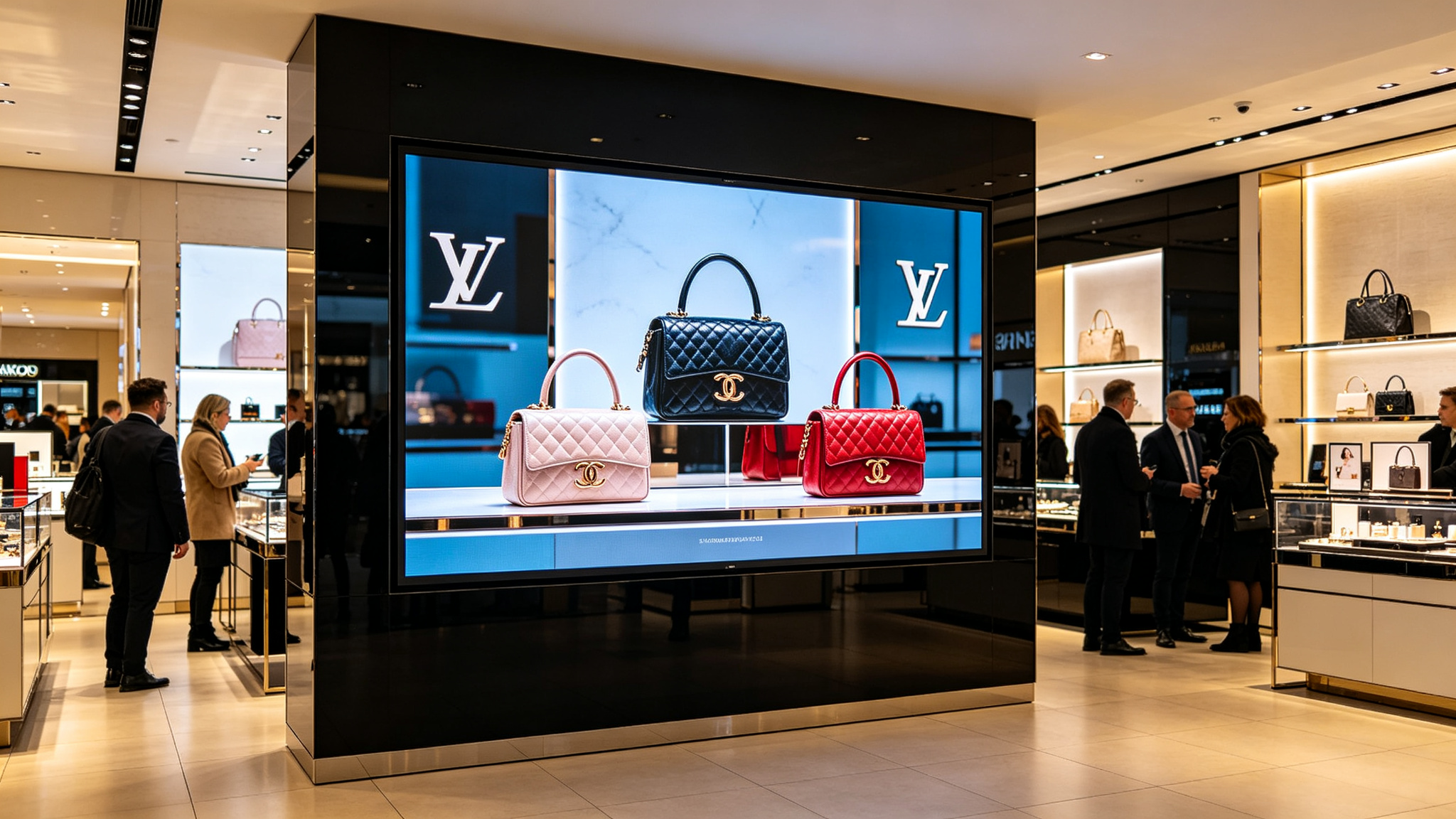
The first step in selecting displays for a business hall is aligning core product matrix parameters with real operating conditions. Stonbel COB fine-pitch displays offer factory-direct supply, high profit margins, and full-process support for weak-current integrators, AV engineers, and security engineers. Pixel pitch ranges from P0.7 to P1.8, refresh rate 3840Hz, IP55, lifespan ≥100,000 hours — ideal for near-view queuing info, brand posters, and business demos. The LED display line reaches P0.7 pitch, 7680Hz refresh, 22bit
Proven Results
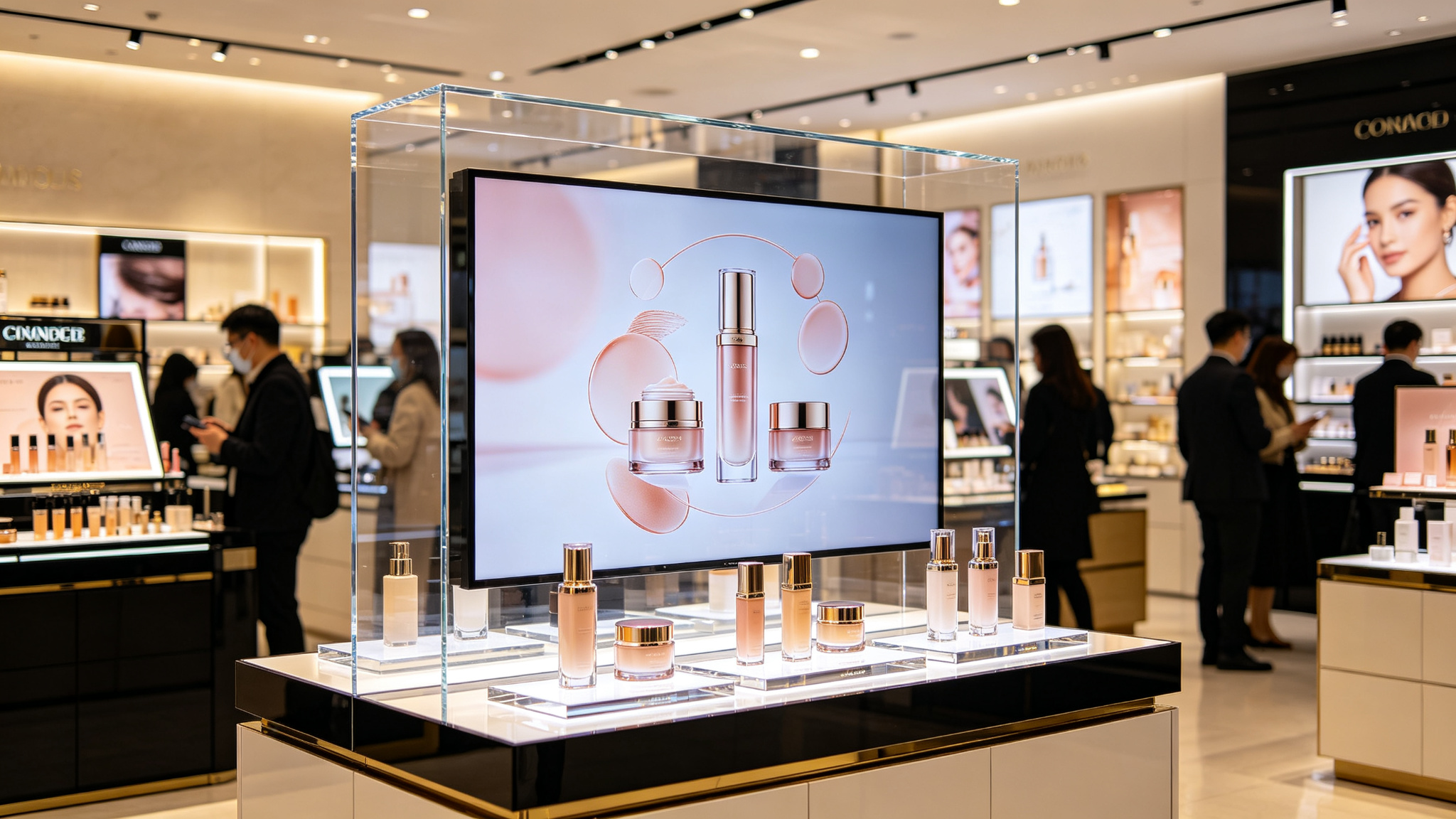
Parameters only convince when applied to real projects. Zhangjiajie National Forest Park uses a 60㎡ outdoor P3 full-color screen, IP66, 6500cd/㎡ brightness, increasing visitor dwell time by 50% — proving the value of high brightness and high protection in strong ambient light. Strawberry Music Festival national tour used 400㎡ SMD P3.91 outdoor rental screens, ≤8kg per cabinet, full assembly in 2 hours per stop, no scan lines in live broadcast — validating refresh rate and lightweight cabinets for fast delivery and
Customer Value
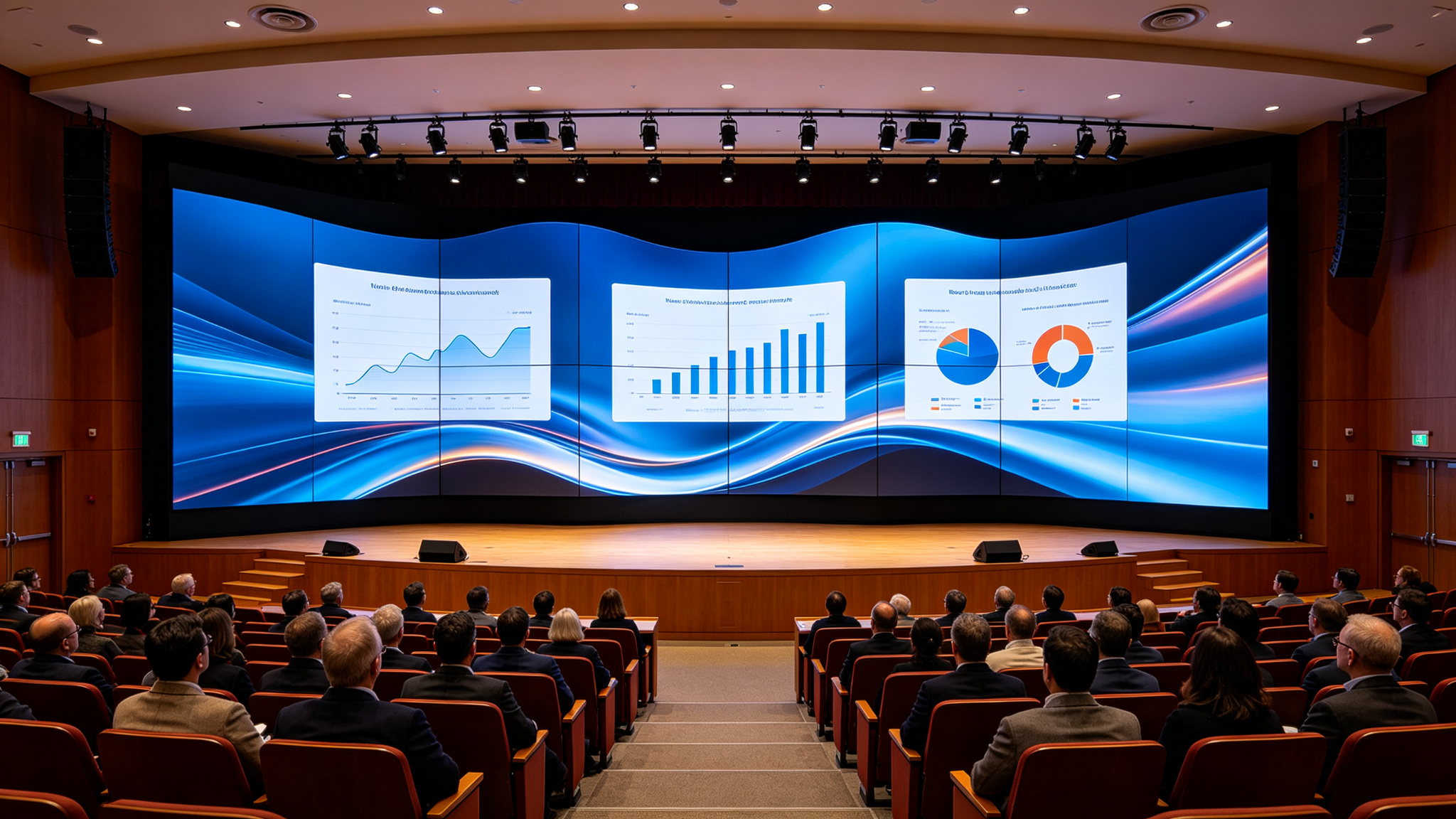
For business hall operators, display value shows in three layers. First, experience: 3840Hz to 7680Hz refresh with P0.7-P1.8 fine pitch eliminates scan lines when users photograph queuing info or posters up close; 22bit grayscale and NTSC≥130% ensure accurate brand visuals. Second, efficiency: airport projects show remote centralized management cutting O&M staff by 50% and improving exception response by 50% — proving unified scheduling and zoned publishing directly reduce daily O&M burden. Third, cost: COB fine-pitch lifespan ≥100,000 hours means over 20
Future Planning
Future planning for business hall displays should advance in three directions. First, content and signal architecture first: following Xi'an Airport and Guiyang Big Data Center approaches, use multi-screen controllers and multi-signal scheduling to unify queuing, announcements, brand display, and security signals before determining screen quantity and splicing — avoiding later rework. Second, synchronize computing and
Q1: What refresh rate is sufficient for business hall displays?
A: At least 3840Hz. Stonbel COB fine-pitch line offers 3840Hz; LED display line reaches 7680Hz. Users often photograph queuing info or posters, and insufficient refresh causes scan lines in photos and videos. 3840Hz noticeably suppresses scan lines; 7680Hz is more stable under high-frame-rate capture. Evaluate refresh alongside pitch and brightness for clear near-view and capture scenarios. For live streaming, remote video conferencing, or frequent photography, prioritize 7680Hz with 22bit grayscale. For queuing and static info publishing, 3840Hz suffices for most scenarios.
Q2: How to choose brightness — do indoor and street-facing windows differ?
A: Yes. Indoor halls need standard brightness, but street-facing windows or areas near daylight need higher brightness against ambient light. Referencing Stonbel outdoor data, Zhangjiajie National Forest Park uses 60㎡ outdoor P3 full-color screens at 6500cd/㎡ with IP66. Street-facing displays can follow high-brightness plus high-protection logic; indoor prioritizes comfortable, non-glaring viewing. Conference all-in-one brightness ranges 300-1000cd/㎡ as a reference for indoor halls. Specific values depend on site illuminance and viewing distance, subject to actual project plans.
Q3: How to evaluate display lifespan and protection rating?
A: Stonbel COB fine-pitch line: lifespan ≥100,000 hours, IP55. LED display line also has high protection. At 12 hours daily, 100,000 hours means over 20 years theoretical; actual projects typically consider replacement at 5-8 years. IP55 handles daily dust and cleaning, reducing brightness decay from dust accumulation. Evaluate lifespan and protection alongside operating hours and cleaning frequency — more meaningful than initial brightness alone. For street-facing or dusty locations, reference Zhangjiajie's IP66 outdoor approach for higher protection.
Q4: How to handle signal conflicts when multiple departments share displays?
A: Use multi-signal scheduling for tiered control. Guiyang National Big Data Pilot Zone Exhibition Center uses self-developed multi-signal scheduling, improving multi-department concurrent efficiency by 60%. Business halls similarly have queuing, announcements, and brand display signals; controllers supporting zoned publishing and permission isolation prevent conflicts. Stonbel's multi-screen controller clusters deployed in airport projects
Q5: Are post-installation O&M costs high?
A: O&M cost depends on management approach. Xi'an Airport smart terminal project cut O&M staff by 50% through remote centralized management. Chengdu Tianfu Airport cargo monitoring center reduced O&M staff by 45% and improved exception response by 50% through unified access and 7×24 response. Business hall displays using multi-screen controller clusters and zoned publishing reduce on-site inspection frequency. Stonbel's 31-province service points provide
Selecting an OLED display for a service hall means aligning parameters, scenarios, and lifecycle costs. From P0.7 to P1.8 pixel pitch, 3840Hz to 7680Hz refresh rate, IP55 protection, ≥100,000-hour lifespan, NTSC≥130% color gamut, and 22-bit grayscale, each parameter should match real operating conditions. Stonbel, a source manufacturer of LED/LCD commercial displays, holds 3C, CE, FCC, ISO14001, ISO9001, ROHS, and military/classified qualifications, ranks among China's top 10 LED display companies, covers 31 provinces with resident service points, and has served Huawei Technologies, Peking University, Peking Union Medical College Hospital, and the Guangdong Emergency Management Department. These qualifications and cases provide verifiable reference for selection. Again, Stonbel has no affiliation with Bell Canada. Bring this checklist to the project site and verify brightness, refresh rate, protection, signal scheduling, and maintenance mechanisms to avoid pitfalls and rework.