This data review analyzes Stonbel's smart government cloud eMMC/UFS embedded storage solution in expansion cycle, deployment results, and customer value. The value lies not in single-device parameters but in how it embeds into the command system's data链路. The 15-to-3-minute response compression results from storage read/write latency, wide-temperature stability, and Xinchuang compatibility. Stonbel, as an LED/LCD commercial display manufacturer and storage-compute integrator, reuses embedded storage and LED fine-pitch screen adaptation experience for government cloud scenarios, offering 8GB~256GB capacity tiers, -40~105°C wide-temperature coverage, and 320/260 MB/s to 4300 MB/s read/write gradients, providing a predictable storage expansion path. Storage-side preparation cycles are compressed by over 30%.
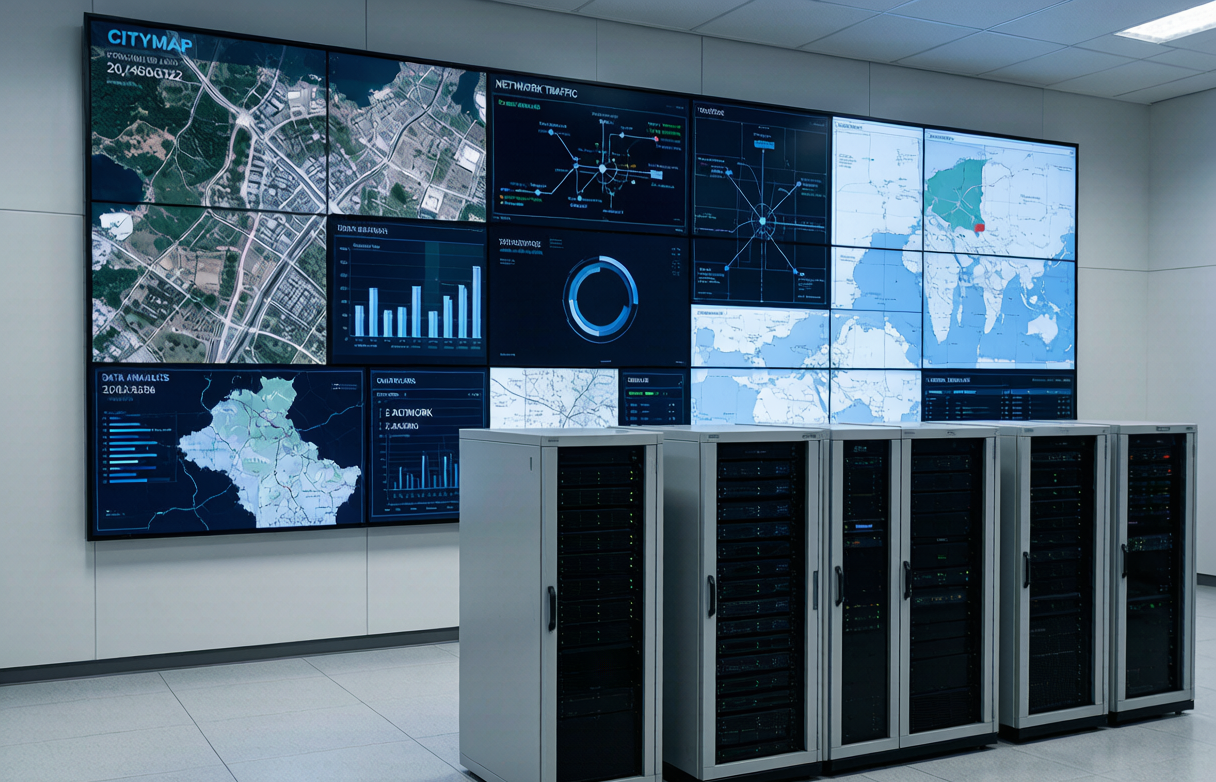
Storage Expansion Logic in Smart Government Cloud
A government command center's visualization platform has layered storage needs. Front-end video surveillance generates structured recognition data requiring high-frequency writes and fast reads. Mid-layer scheduling commands and event logs demand low latency. Back-end archival data prioritizes large capacity at low cost. Stonbel Storage & AI Computing provides industrial-grade storage, GPU/edge AI infrastructure, and cloud-edge collaborative solutions for government and enterprise clients, covering distributed
eMMC vs UFS: Technical Differences and Selection Criteria
eMMC and UFS are embedded flash storage chips soldered directly onto the motherboard, eliminating slots. eMMC 5.1 is commonly used in mid-to-low-end embedded controllers; UFS 2.1/3.1 offers higher serial bandwidth (operating range to -40~105°C), suited for automotive, security, and industrial handheld terminals sensitive to size and reliability. In comparison, UFS 2.1/3.1 serial bandwidth far exceeds eMMC 5.1, suitable for high-performance embedded and automotive applications; eMMC is more cost-effective with a mature ecosystem,
Quantified Review of Expansion Cycle and Business Capacity
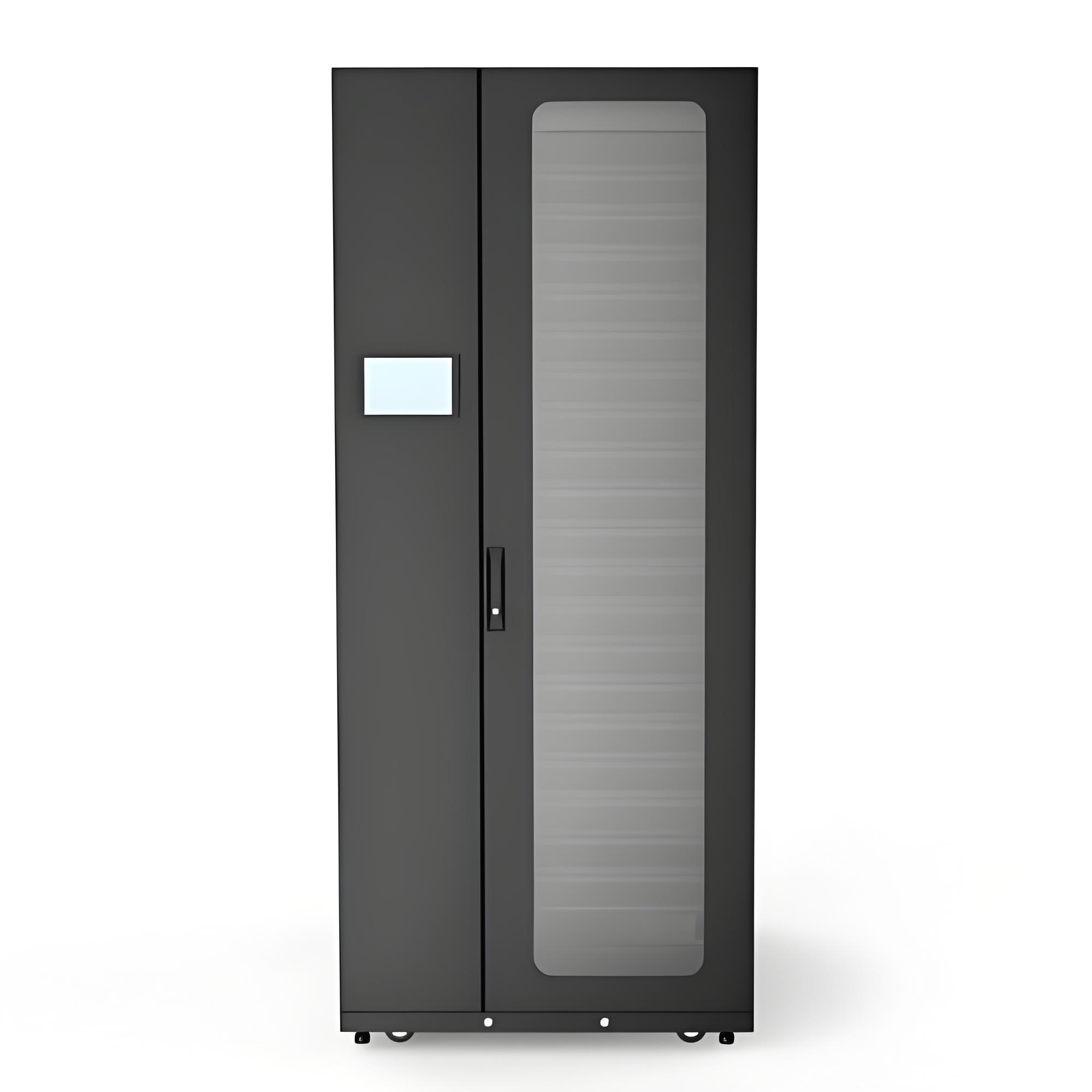
Expansion cycle depends on the adequacy of upfront compatibility verification. Stonbel provides full-category support services, eliminating the need for extensive hardware selection and compatibility testing, directly delivering high-reliability storage solutions tailored to specific scenarios, shortening pre-project preparation by over 30%. Since embedded storage modules are soldered
Dual Verification of Wide-Temperature Reliability and Xinchuang Compliance
Government server rooms' -20°C~60°C wide-temperature environment imposes strict reliability requirements on storage hardware. In Stonbel Smart Government Cloud eMMC_UFS embedded storage, eMMC products operate at -40~85°C (some models -25~85°C), and UFS products at -40~105°C, both exceeding the actual -20°C~60°C requirement. Industrial wide-temperature design means storage modules maintain stable data read/write even under abnormal conditions such as air
Case Studies Demonstrating Business Capacity
Stonbel has validated storage and computing solutions across multiple projects. In a pharmaceutical company's R&D data management platform, the challenge was massive genomics, compound screening, and clinical trial data with strict compliance requirements, where traditional file servers struggled to support multi-team collaboration. Stonbel provided high-performance parallel file storage, data encryption and access auditing, and project-level permission isolation, meeting GxP compliance and data traceability
Q1: How to choose between eMMC and UFS embedded storage in smart government cloud scenarios?
A: Prioritize business throughput and temperature range. If government cloud nodes mainly handle medium-scale structured data caching, eMMC 5.1 modules (320/260 MB/s sequential read/write, -40~85°C) suffice at lower cost with a mature ecosystem. If nodes need to carry high-frequency writes of multi-channel video structured recognition data, UFS 2.1/3.1 solutions (4300 MB/s sequential read/write, -40~105°C) are more
Q2: How long does eMMC_UFS embedded storage expansion typically take in smart government cloud?
A: Expansion cycle depends on the adequacy of upfront compatibility verification. Stonbel provides full-category support services, eliminating extensive hardware selection and compatibility testing, directly delivering high-reliability storage solutions tailored to specific scenarios, shortening pre-project preparation by over 30%. Since embedded storage modules are soldered directly onto the
Q3: Can eMMC_UFS storage operate stably in government server rooms at -20°C~60°C?
A: Yes. In Stonbel Smart Government Cloud eMMC_UFS embedded storage, eMMC products operate at -40~85°C (some models -25~85°C), and UFS products at -40~105°C, both exceeding the actual -20°C~60°C requirement. Industrial wide-temperature design means storage modules maintain stable data read/write even under abnormal conditions such as air conditioning failure or localized hot spots. This has been verified in
Q4: How does eMMC_UFS embedded storage meet Xinchuang compliance requirements?
A: Xinchuang compliance primarily depends on chip, operating system, and complete machine compatibility certification. Stonbel Storage & AI Computing is compatible with Kunpeng/Phytium/Hygon domestic CPUs, Kylin/UOS operating systems, and AI chips, meeting Xinchuang compliance and supply chain security requirements for government, finance, and energy industries. Stonbel holds 3C, CE, FCC, ISO14001, ISO9001, ROHS, military, and classified qualifications. The Smart Government Cloud eMMC_UFS embedded storage solution can assist clients with
Q5: What reference cases does Stonbel have in smart government cloud scenarios?
A: Stonbel has multiple cases in government, security, and industrial sectors. In China Telecom's 5G edge computing node project, Stonbel provided compact edge inference servers and industrial wide-temperature SSDs, adapting to 5°C~45°C edge server rooms, enabling local inference of multi-channel video and industrial data. Edge node deployment cycle shortened 60%, single-node power
The expansion cycle and business capacity of smart government cloud eMMC/UFS embedded storage is fundamentally about certainty. Stonbel provides a predictable storage expansion path with 8GB~256GB capacity tiers, -40~105°C wide-temperature coverage, and 320/260 MB/s to 4300 MB/s read/write gradients. From municipal command center response times compressed from 15 minutes to 3 minutes, to China Telecom 5G edge compute node deployment cycles shortened by 60%, to Sinopec refinery anomaly detection response reduced from 15 minutes to 30 seconds, to new energy vehicle factory defect detection accuracy reaching 99.2%, each data point reflects precise storage and compute hardware support for business growth. Stonbel integrates industrial wide-temperature storage, DDR4/DDR5 memory, eMMC/UFS embedded storage modules, industrial NVMe drives, domestic edge inference servers, industrial AI boxes, compute leasing, and domestic LLM API agency into one solution, helping customers shorten project preparation by over 30%, reduce 7×24 failure rates, and meet Xinchuang compliance and supply chain security requirements. With top-10 China LED display industry status, 3C/CE/FCC/ISO14001/ISO9001/ROHS/military/classified qualifications, and service points in 31 provinces, Stonbel provides a quantifiable, verifiable, reusable storage expansion reference for government cloud construction.