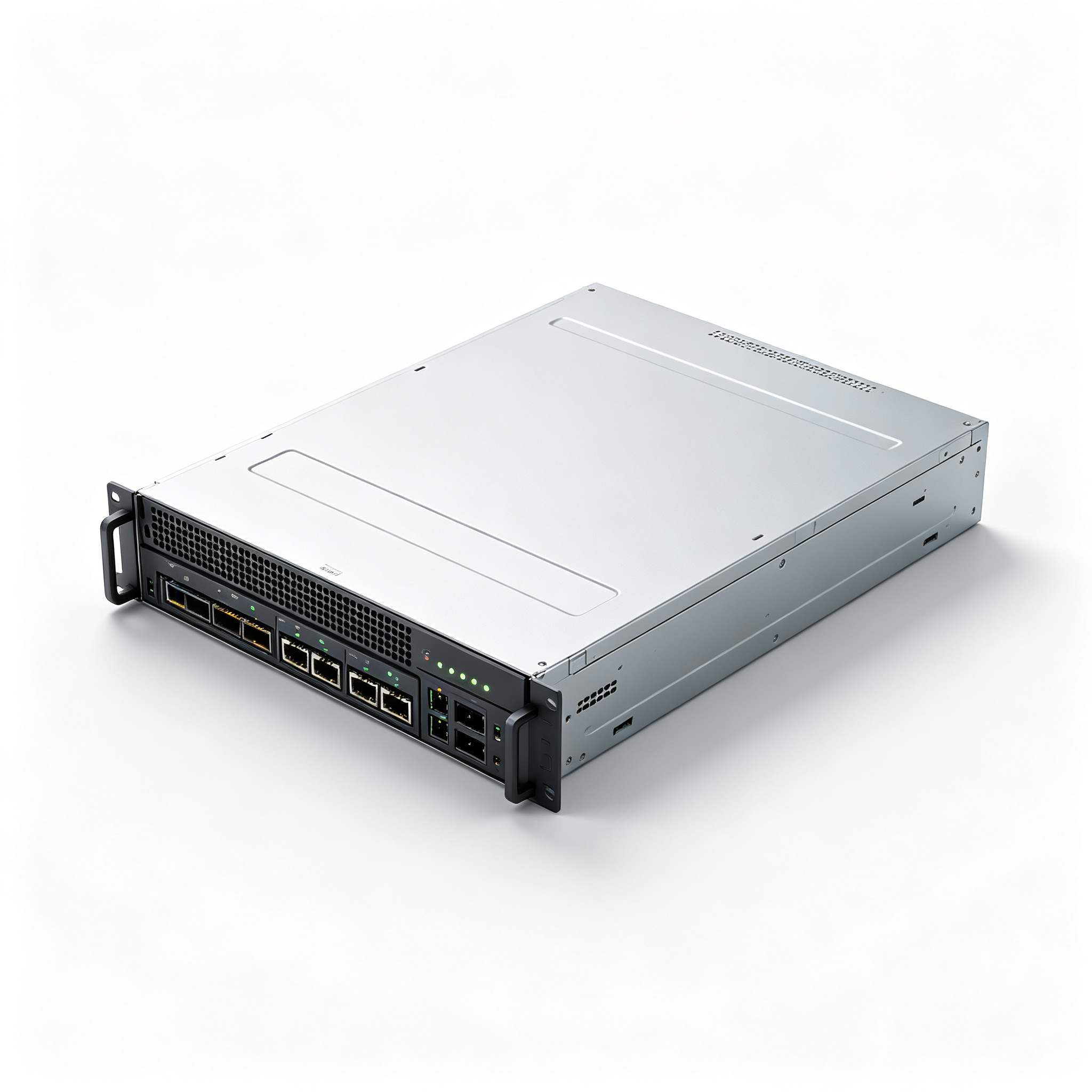
As broadcast media asset libraries move toward intelligent, localized operations, edge inference servers serve as the computing foundation for video analytics, content review, and tagging. A common question during project planning: what is the actual construction cost of an edge inference server for a broadcast media asset library, and why do quotes differ so much? Based on Stonbel's project experience in storage and AI computing services, this article breaks down key pricing factors across compute configuration, wide-temperature design, storage support, and deployment scale to help readers build a clear budget framework.
Key Facts
In practice, the cost of edge inference servers for broadcast media asset libraries also depends on deployment scale and cloud-edge collaboration needs. Stonbel storage and AI computing services provide unified cloud-edge management. HQ private cloud and branch edge nodes work through one platform, with policy delivery, firmware upgrades, and alarm convergence completed in one place. If a media asset library needs to bring multiple edge nodes into unified
Official FAQ
Before the Q&A, one premise must be clear: quote differences for edge inference servers in broadcast media asset libraries often come from two parts—visible hardware and invisible adaptation services. Hardware includes computing chips, memory, storage, and structural parts; adaptation services include wide-temperature testing, domestic certification, cloud-edge platform integration, and on-site deployment support. As a source manufacturer and computing solution integrator, Stonbel can package both into one delivery, reducing the communication cost of multi-vendor procurement. For broadcast

Customers and Scenarios
The first customer group for edge inference servers in broadcast media asset libraries is media asset management and content operations teams in broadcasting. Media asset libraries usually need cataloging, review, tagging, and retrieval of incoming audio and video. Manual cataloging is limited in efficiency, while cloud analysis faces bandwidth and latency pressure. By deploying edge inference servers for broadcast media asset libraries, 16-channel 1080P codec and preliminary intelligent analysis can be completed locally, significantly
Get a Quote
If you are planning selection and budgeting for edge inference servers in a broadcast media asset library, first clarify three basics: how many 1080P video channels need processing, the equipment room temperature range, and whether domestic compliance is required. These three answers directly affect computing tier, wide-temperature configuration, and software adaptation, and are the premise for Stonbel technical team to provide quote recommendations. Stonbel storage and AI computing services
Q1: — Selection — How to choose between edge inference servers for broadcast media asset libraries and general GPU edge servers?
A: If the core need is video intelligent analysis, prioritize edge inference servers for broadcast media asset libraries. They provide INT8 computing of 22/16 TOPS, FP16 computing of 11/8 TFLOPS, support 16-channel 1080P codec, and consume only 25W (diskless) or 40W (with disk), suitable for local processing of multiple video channels in media asset libraries. General GPU edge servers have a broader ecosystem and suit general AI inference, but
Q2: — Selection — How to determine the computing tier of edge inference servers for broadcast media asset libraries?
A: The computing tier depends on the number of parallel video channels and analysis complexity. The device offers two tiers: INT8 computing of 22 TOPS and 16 TOPS, with FP16 computing of 11 TFLOPS and 8 TFLOPS, and memory of LPDDR4X 8GB or 4GB. If the media asset library needs to process close to 16 channels of 1080P video simultaneously and run multiple analysis models, choose the higher computing tier; if only lightweight pre-screening and tag generation are needed, the lower tier is sufficient. The specific choice depends on actual video channels and model load.
Q3: — Cost — What are the key factors affecting the quote for edge inference servers in broadcast media asset libraries?
A: Main factors include: computing tier and memory capacity, codec channels, wide-temperature rating (-40~70°C diskless or -40~60°C with disk), whether industrial wide-temperature SSDs and other storage are included, whether a unified cloud-edge management platform is needed, and domestic adaptation and compliance certification requirements. In addition, the number of deployment nodes and on-site service scope also affect the total price. Edge
Q4: — Environment — The equipment room temperature in a broadcast media asset library is unstable. Can edge inference servers adapt?
A: Yes. Edge inference servers for broadcast media asset libraries operate at -40~70°C (diskless) and -40~60°C (with disk), adapting to edge equipment rooms with less-than-ideal air conditioning. The size is only 45×235×220mm, making deployment easy in space-limited racks. If humidity or dust is high, industrial wide-temperature SSDs and other storage solutions can be paired to improve overall reliability. Stonbel can provide on-site compatibility testing to ensure stable operation in real environments.
Q5: — Domestic — Do edge inference servers for broadcast media asset libraries support domestic innovation requirements?
A: Stonbel storage and AI computing services provide domestic edge inference server solutions compatible with domestic CPUs, Kylin/UOS operating systems, and AI chips, meeting domestic compliance and supply chain security requirements for government, finance, and energy industries. For broadcast media asset library projects, local intelligent recognition response latency can be reduced from 200ms in cloud deployment to under 50ms, while lowering computing investment. The specific domestic adaptation list is subject to actual project selection.
Q6: — Service — How are edge inference servers for broadcast media asset libraries operated and maintained after deployment?
A: Stonbel provides unified cloud-edge management. HQ private cloud and branch edge nodes work through one management platform, with policy delivery, firmware upgrades, and alarm convergence completed in one place, reducing distributed O&M complexity. It also supports intelligent O&M and fault prediction, with real-time monitoring and early warning through multi-dimensional metrics. The company has resident service points in 31 provinces and cities for on-site support. For 7×24 operation scenarios, original manufacturer after-sales support can reduce equipment failure rates.
There is no fixed figure for the construction cost of an edge inference server for broadcast media asset libraries, but a clear budget framework can be built around variables including compute tier, codec channel count, wide-temperature rating, storage support, compliance requirements, and deployment scale. Stonbel provides integrated solutions from edge inference servers to cloud-edge collaborative management for broadcast media asset library scenarios. When selecting models, customers should first define video channel count, environmental conditions, and compliance requirements, then confirm configuration based on actual parameters. The value of edge inference servers lies not only in per-unit compute power but also in bringing intelligent processing closer to the data source, reducing bandwidth and latency pressure. Specific quotes and configurations are subject to actual project proposals.