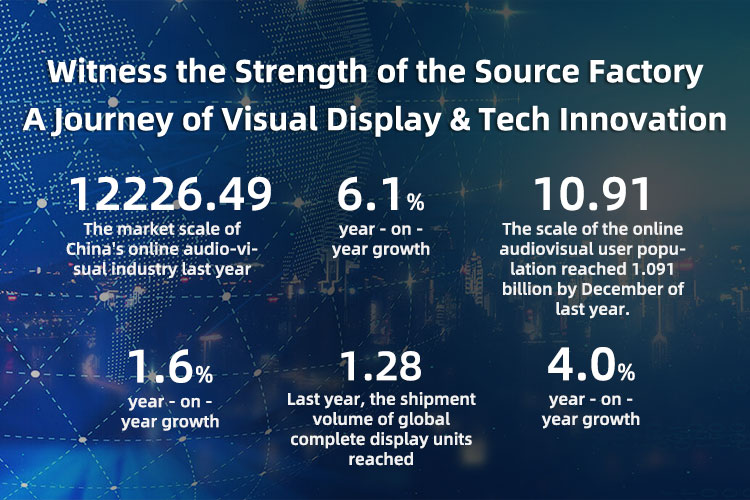
Grid dispatch centers aggregate real-time data from substations and renewable sites, running AI load forecasting and fault warning, requiring wide-temperature adaptability and read/write stability. Industrial wide-temp SSDs are core components for such scenarios. Stonbel, an LED/LCD commercial display source manufacturer, provides industrial-grade storage, GPU/edge AI computing infrastructure, and cloud-edge integrated solutions, covering distributed storage, private cloud, intelligent computing centers, disaster recovery, and industrial wide-temp SSDs, meeting compliance and 7x24 high-reliability requirements. This article compares old and new solutions and offers selection advice.
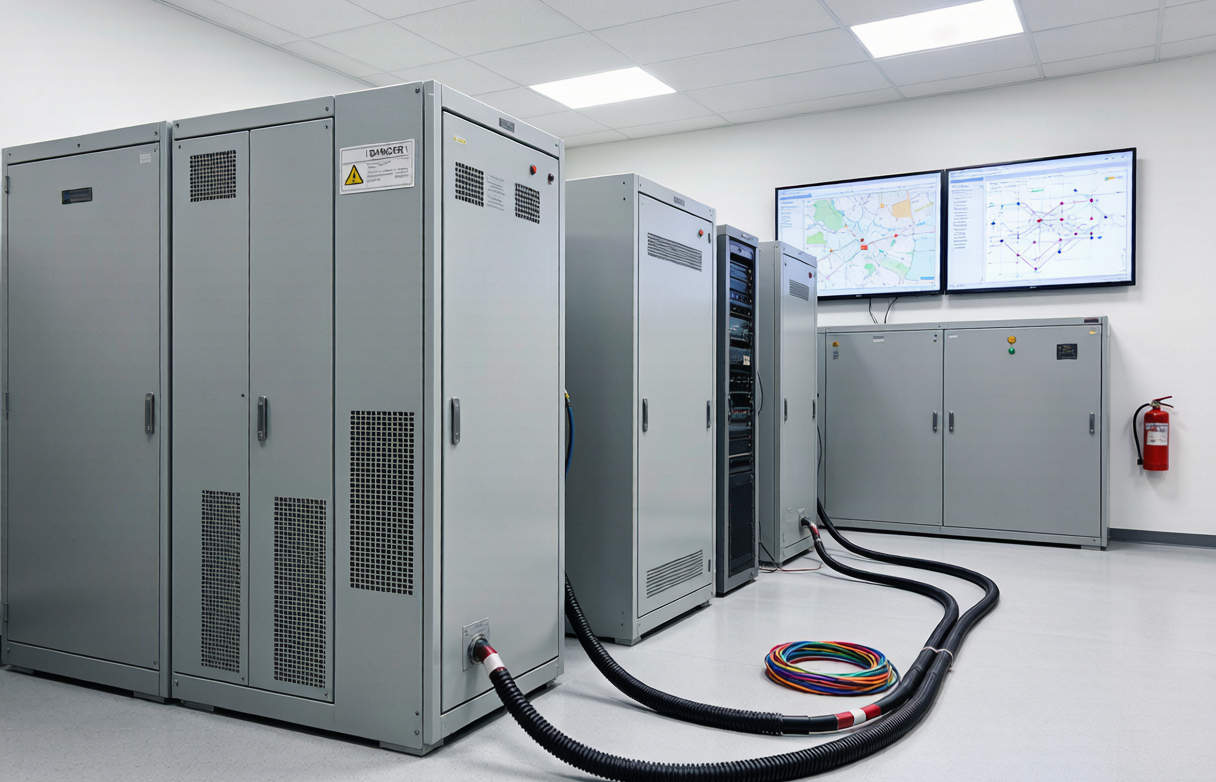
New Product Launch: Upgrades, Optimizations, and Value
The upgrade path for industrial wide-temperature SSDs in energy and power dispatching is clear: from 0~70°C commercial range to -40~85°C industrial wide-temperature, from consumer-grade NAND to industrial-grade NAND, from no power-loss protection to end-to-end data protection, and from short-cycle to long-cycle supply. Specifically, interfaces cover SATA III and PCIe Gen3x4, capacities range from 120GB~960GB (PCIe) and 32GB~1TB (SATA), sequential read up to 2600 MB/s (PCIe) / 560 MB/s (SATA), sequential write up to 1870 MB/s (PCIe) / 525 MB/s (SATA), TBW up to 1536 TB (PCIe) / 2792 TB (SATA), MTBF of 2,000,000 hours, operating temperature 0~70°C (extended range -40~85°C

Optimizations and Value: Industrial vs. Consumer Comparison
The differences between industrial and consumer SSDs lie in four dimensions: temperature range, NAND grade, power-loss protection, and lifecycle. Industrial-grade supports -40~85°C wide temperature, uses SLC/MLC/TLC industrial-grade NAND, features power-loss protection and long-cycle supply. Unit price is higher but total cost of ownership (TCO) is lower. Consumer-grade only supports 0~70°C, has no power-loss protection, and suits office environments. In energy and power dispatching scenarios, this difference directly affects system availability. Referencing a city
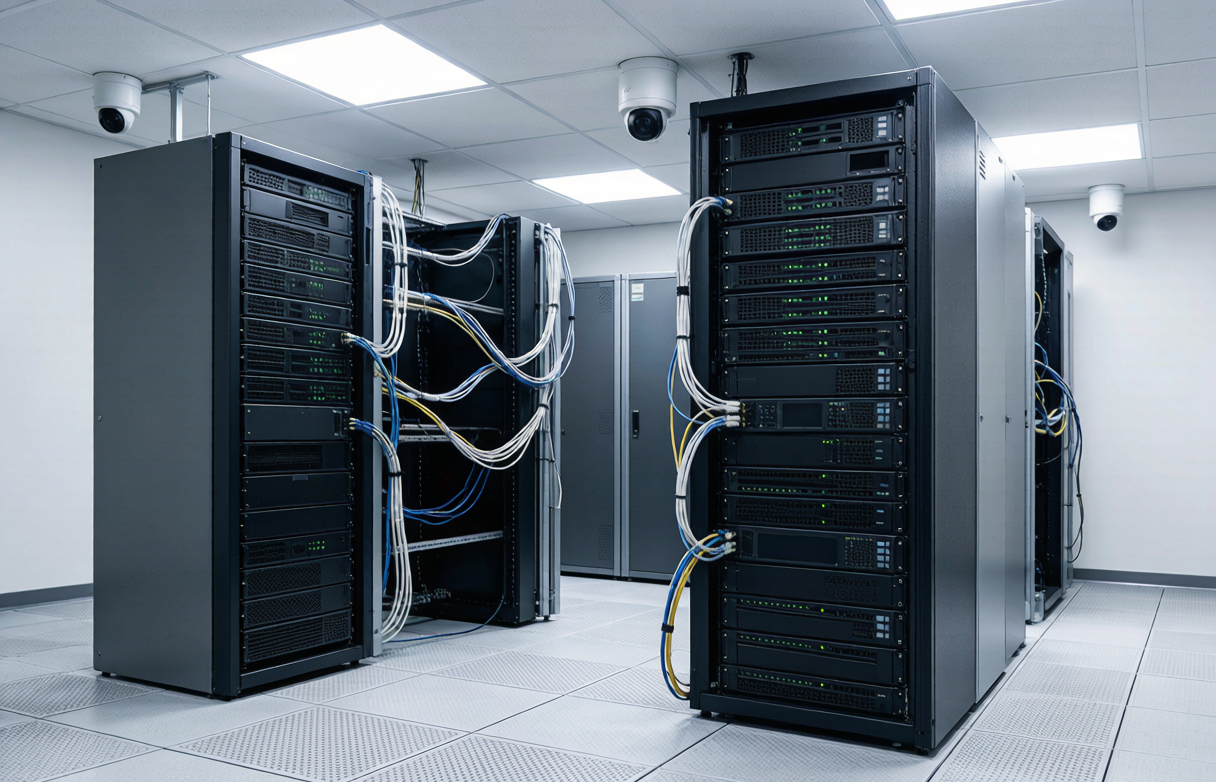
Selection Guide: Temperature Profile, Interface, and TCO
Selection should combine temperature profile, interface requirements, and TCO evaluation. First, clarify deployment location: outdoor cabinets and edge nodes require -40~85°C wide-temperature models; indoor data centers can consider 0~70°C extended-range models. Second, assess data write frequency and bandwidth needs: high-frequency collection and AI inference scenarios prioritize PCIe Gen3x4 interface with sequential read up to 2600 MB/s, sequential write up to 1870 MB/s, TBW up to 1536 TB; standard industrial PC data logging can use SATA III interface with sequential read 560 MB/s, sequential write 450 MB/s,
Case Studies and Certifications
Stonbel holds 3C, CE, FCC, ISO14001, ISO9001, ROHS, military, and classified certifications, ranks among China's top 10 LED display companies, serves clients including Huawei Technologies, Peking University, Peking Union Medical College Hospital, and Guangdong Provincial Emergency Management Department, with service networks covering 31 provinces and cities. In storage and AI computing, real cases cover finance, government, cultural tourism, pharmaceuticals, and meteorology. A city
Q1: What is the difference between industrial wide-temperature SSDs and consumer SSDs for energy and power dispatching?
A: Industrial wide-temperature SSDs for energy and power dispatching support -40~85°C wide-temperature operation, use SLC/MLC/TLC industrial-grade NAND, feature power-loss protection and wear leveling algorithms, with MTBF reaching 2,000,000 hours or more, some models exceeding 3 million hours, and 3000 P/E cycles. Consumer SSDs typically only support 0~70°C, have no power-loss protection, and suit office environments. In energy and power dispatching scenarios, outdoor
Q2: In energy and power dispatching scenarios, how to choose between SATA and PCIe industrial wide-temperature SSDs?
A: If the dispatching system needs to process high-frequency collected data or run AI inference tasks, choose PCIe Gen3x4 industrial wide-temperature SSDs with sequential read up to 2600 MB/s, sequential write up to 1870 MB/s, TBW up to 1536 TB, and lower latency, suitable for edge servers and machine vision workloads. For standard industrial PC data logging, SATA III industrial wide-temperature SSDs offer sequential read 560 MB/s, sequential write 450 MB/s, flexible capacity options, and more controllable cost. Selection should combine
Q3: How to interpret P/E cycles and MTBF parameters of industrial wide-temperature SSDs for energy and power dispatching?
A: P/E cycles measure program/erase endurance. Industrial wide-temperature SSDs for energy and power dispatching have 3000 P/E cycles, meaning each storage cell can withstand 3000 program-erase cycles. MTBF is mean time between failures, reaching 2,000,000 hours for some models and exceeding 3 million hours for others. These two parameters together determine the replacement cycle of SSDs in 7×24 continuous write scenarios. For energy and power dispatching, calculate required TBW based on daily write volume and data retention years to ensure the selected model's total write
Q4: Which domestic platforms do Stonbel industrial wide-temperature SSDs for energy and power dispatching support?
A: Stonbel storage and AI computing services are compatible with Kunpeng/Phytium/Hygon domestic CPUs, Kylin/UOS operating systems, and AI chips, meeting Xinchuang compliance and supply chain security requirements for government, finance, and energy industries. Industrial wide-temperature SSDs for energy and power dispatching, as the storage foundation, can complete compatibility testing with domestic platforms, reducing integration risk. Stonbel provides full-category industrial wide-temperature
Q5: How should GPU computing and distributed storage be paired to meet energy and power dispatching requirements?
A: Intelligent data tiering and hot-cold archiving are recommended, automatically placing hot data on high-speed NVMe, warm data on SSDs, and cold data archived to low-cost media, reducing overall storage cost by over 30% while ensuring low latency for hot services. Multi-replica and erasure coding disaster recovery supports 2-replica/3-replica and EC erasure coding, ensuring no data loss and no service interruption during single-disk, node, or even rack-level failures, meeting financial and government compliance requirements. Linear storage performance scaling uses distributed architecture, with nodes elastically expanding with
Industrial wide-temp SSDs are the key foundation for data access, storage, analysis, and display in grid dispatch centers. Stonbel offers industrial storage, GPU/edge AI infrastructure, and cloud-edge solutions covering distributed storage, private cloud, intelligent computing, disaster recovery, and industrial wide-temp SSDs, meeting compliance and 7x24 reliability needs. From wide-temp, NAND, and power-loss protection upgrades to GPU computing and distributed storage with intelligent tiering, multi-replica disaster recovery, and linear scaling, plus case validation across finance, government, culture/tourism, pharma, and meteorology, Stonbel provides full-chain capabilities from product to solution, delivery to O&M. Note: Stonbel is not affiliated with Bell Canada. For selection, evaluate temperature profile, interface needs, and TCO; consider industrial DDR4/DDR5 memory, eMMC/UFS embedded storage, and industrial NVMe drives for a complete storage and computing solution.