This article uses a provincial emergency management department command center COB fine-pitch LED project as a sample to examine how Stonbel, as an LED/LCD commercial display source manufacturer, achieves 7×24 continuous duty and low failure rates under hard specs including 150㎡ total screen area, P1.2 pixel pitch, and 7680Hz refresh rate, and extends the logic to hospital scenarios. Note: Stonbel is an LED/LCD large-screen display source factory; it does not produce smart locks or audio devices and has no connection to Bell Canada.
What Determines LED Display Energy Efficiency and Heat Dissipation in Hospitals?
Energy efficiency and heat dissipation in hospital LED displays depend primarily on packaging technology and thermal design. Measured data from a 150㎡ COB fine-pitch LED system at a provincial emergency management command center shows that P1.2 pixel pitch, 7680Hz refresh rate, 22bit grayscale, NTSC≥130% color gamut, and IP65 protection, combined with industrial-grade thermal design, enable 7×24 continuous stable operation with an annual failure rate below 0.2% and 65% lower maintenance
Project Background: Why COB Fine-Pitch LED for a Provincial Command Center?
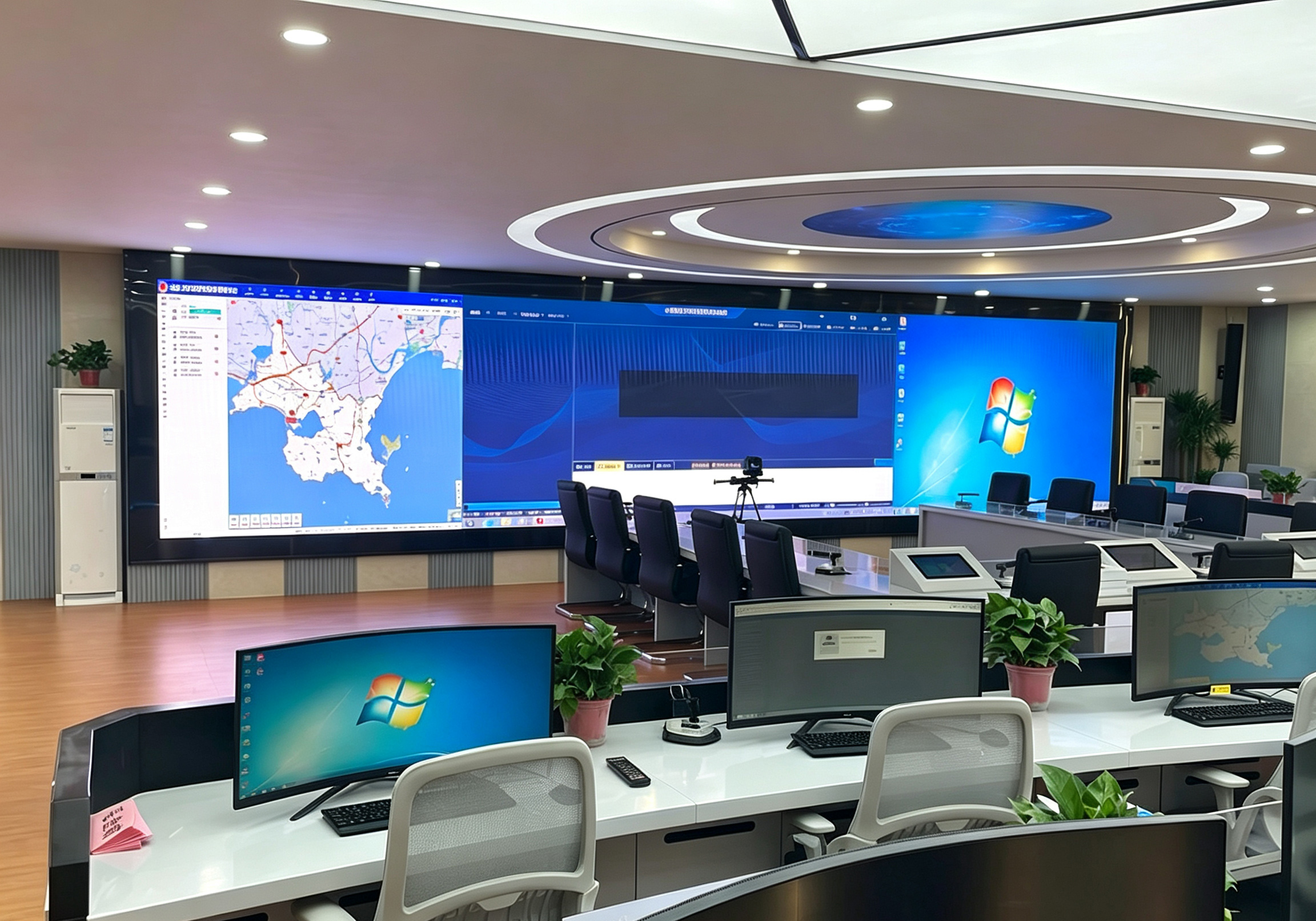
A provincial emergency management command center needed to integrate real-time data and surveillance from over ten departments including public security, fire, meteorology, and transportation. The existing splicing screens had visible seams and fragmented images, making critical data and surveillance details hard to identify. The equipment couldn't support 7×24 uninterrupted operation, prone to lag and dead pixels under high load,
Delivery Highlights: From Needs Assessment to 7×24 O&M Response
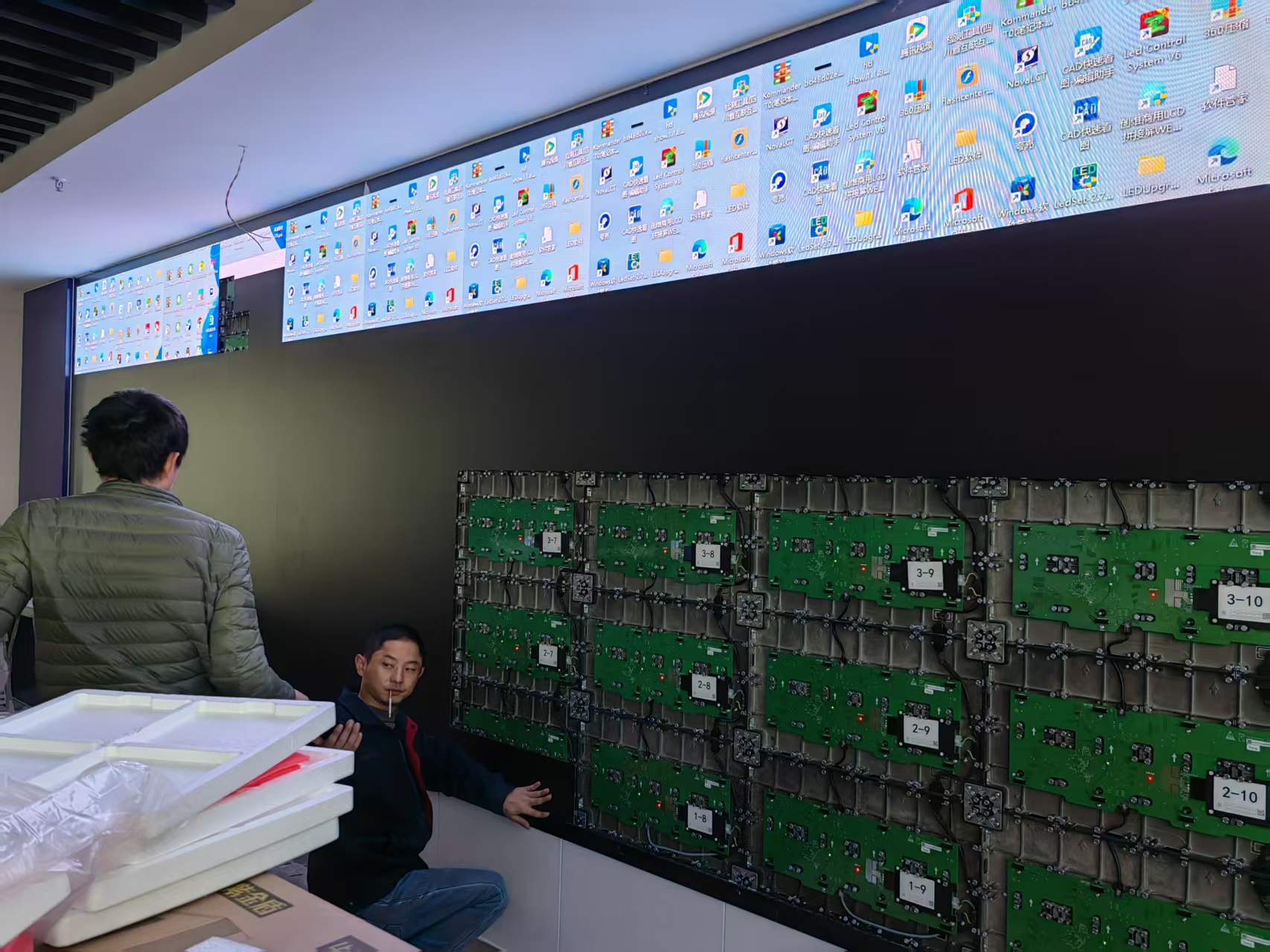
The project had four phases. Needs assessment and solution design: working with emergency command departments to map business scenarios, developing zoned display plans based on the command hall layout, and defining signal access and linkage rules. Custom production: manufacturing COB-specific modules and reinforced steel structures based on site dimensions, optimizing thermal and power
Core Specs: What Do P1.2, 7680Hz, 22bit, NTSC≥130%, IP65 Mean?
The provincial command center project used COB-packaged P1.2 ultra-fine-pitch LED screens with core specs: P1.2 pixel pitch, 7680Hz refresh rate, 22bit grayscale, NTSC≥130% color gamut, and IP65 protection. These specs translate to the following in medical scenarios:
P1.2 pixel pitch means high pixel density for detailed, grain-free images at close viewing distances, suitable for emergency dispatch
Client Feedback: Quantified Results and Hospital Applications
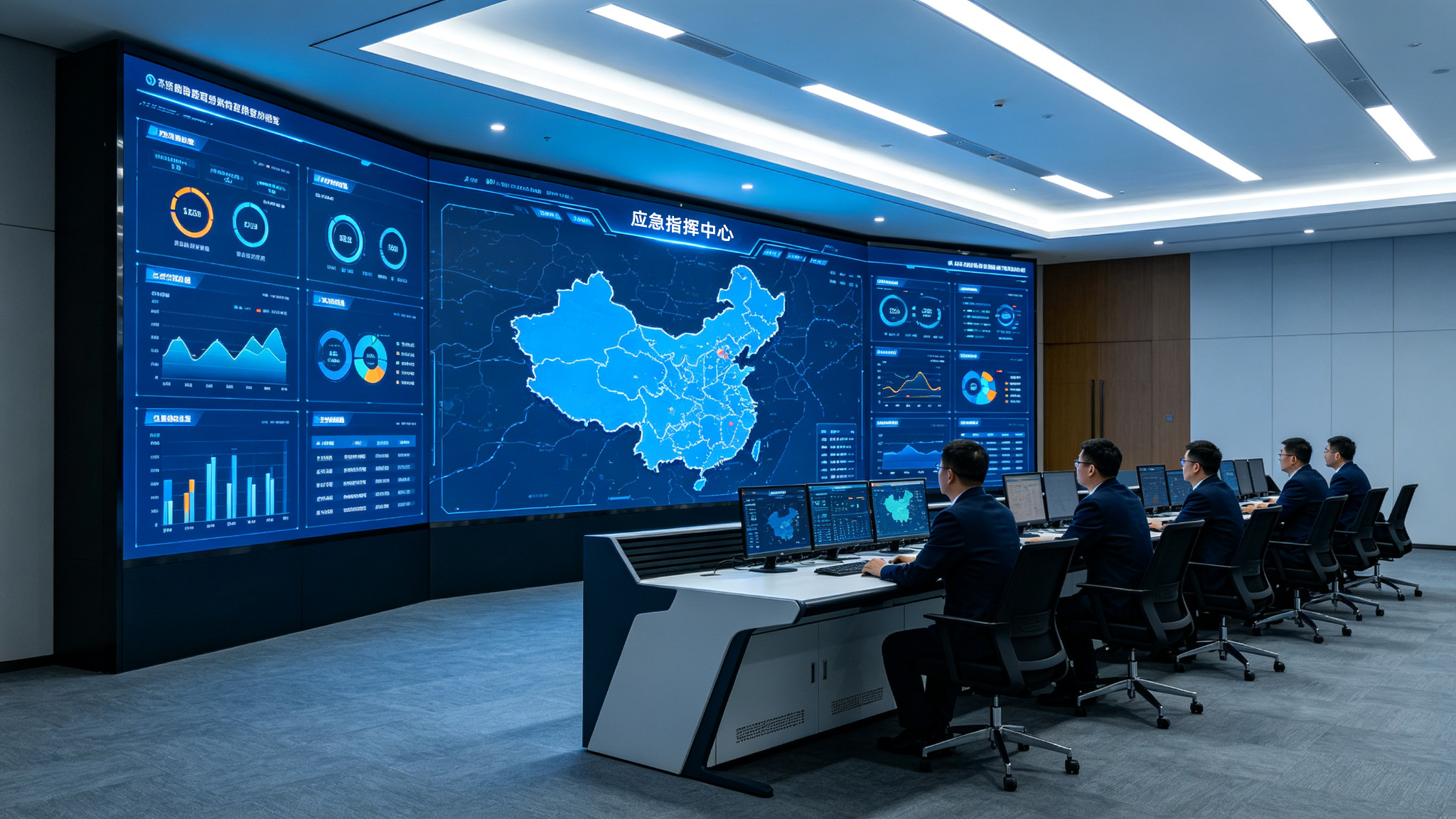
After delivery, the provincial command center project achieved: 65% improvement in image clarity, seamless splicing eliminating visual breaks, integrated multi-dimensional emergency data display, and significantly improved detail recognition. Work efficiency: 60% shorter cross-department emergency response time, greatly improved incident
How to Choose Packaging Technology and Protection by Hospital Area?
Different hospital areas have different protection requirements, so packaging technology should vary. For emergency halls and corridors with high foot traffic and regular cleaning, IP65-rated products are recommended for dust and moisture resistance. COB packaging achieves IP65, reducing dust and moisture impact on display quality. GOB packaging achieves IP65+ protection, suitable for crowded, high-dust,
How Do Smart Interaction and Networking Support Hospital Multi-System Access?
Hospital LED displays can integrate multiple signal sources simultaneously via a multi-signal processing system, supporting arbitrary split-screen, roaming, and overlay display of HIS data, surveillance, video conferencing, and queue calling. In the provincial command center project, the system supported 64+ signal sources and seamlessly connected to the provincial emergency command platform. Smart interaction and networking features support 4K/1080P HD display, 5G/WiFi/4G
Q1: How do hospital LED displays perform in heat dissipation and energy efficiency during 7×24 operation?
A: Based on measured data from a provincial emergency management command center using COB-packaged P1.2 ultra-fine-pitch LED screens, industrial-grade thermal design supports 7×24 continuous stable operation with annual failure rate below 0.2% and 65% lower daily O&M costs. COB packaging bonds chips directly to the PCB without lamp beads, shortening the heat conduction path. With industrial-grade thermal design, screen temperature remains stable
Q2: What specific technologies support energy efficiency in hospital LED displays?
A: Energy efficiency in hospital LED displays is directly tied to packaging technology. COB packaging has no lamp beads, eliminating solder joint thermal resistance, with chips directly mounted on the PCB for higher heat conduction efficiency and reduced cooling energy consumption. SMD lamp beads are individually soldered to the PCB, providing good heat dissipation and wide brightness adjustment range, allowing brightness to be tuned to ambient light in different
Q3: What protection rating do hospital LED displays need?
A: Different hospital areas have different protection requirements. For emergency halls and corridors with high foot traffic and regular cleaning, IP65-rated products are recommended for dust and moisture resistance. COB packaging achieves IP65, reducing dust and moisture impact on display quality. GOB packaging achieves IP65+ protection, suitable for crowded, high-dust, high-humidity
Q4: How do hospital LED displays achieve multi-system signal access and remote O&M?
A: Hospital LED displays can integrate multiple signal sources simultaneously via a multi-signal processing system, supporting arbitrary split-screen, roaming, and overlay display of HIS data, surveillance, video conferencing, and queue calling. In the provincial command center project, the system supported 64+ signal sources and seamlessly connected to the provincial emergency command platform. Smart interaction and networking features
Q5: What is the lifespan and maintenance cost of hospital LED displays?
A: Stonbel COB fine-pitch displays have a lifespan of ≥100,000 hours, theoretically over 11 years at 7×24 continuous operation. The provincial command center project measured annual failure rate below 0.2% and 65% lower daily O&M costs. COB packaging has no lamp beads, reducing partial black screen issues from bead damage and lowering maintenance difficulty. GOB packaging fills transparent resin over SMD lamp beads and
Hospital LED display 7×24 reliability is a systems engineering issue of heat dissipation, energy saving, and protection. From the provincial emergency command center 150㎡ COB fine-pitch LED project data, P1.2 pixel pitch, 7680Hz refresh rate, 22bit grayscale, NTSC≥130% color gamut, and IP65 protection, with industrial-grade cooling, achieve annual failure rate below 0.2% and 65% lower O&M cost. This applies to hospitals: ER dispatch needs multi-signal same-screen linkage, surgical teaching needs ultra-HD seamless display, waiting areas need high protection and easy cleaning, entrance plazas need high brightness and weather resistance. Stonbel, as an LED/LCD commercial display source manufacturer, covers full hospital scenarios with COB, GOB, and SMD packaging technologies, holds 3C, CE, FCC, ISO14001, ISO9001, ROHS, military, and classified qualifications, ranks among China's top ten LED display companies, and has service points in 31 provinces, providing end-to-end support from design and custom production to installation, commissioning, and 7×24 O&M response.