Airport LED displays must endure high ambient light and 24/7 operation. Stonbel, a top-10 Chinese LED manufacturer, shares verified project data—covering core specs, outcomes, customer value, and roadmap—to guide procurement decisions. We focus on real delivery data, not hype.
Core Specs: P0.7-P10, Packaging Determines Lifespan & Image Quality
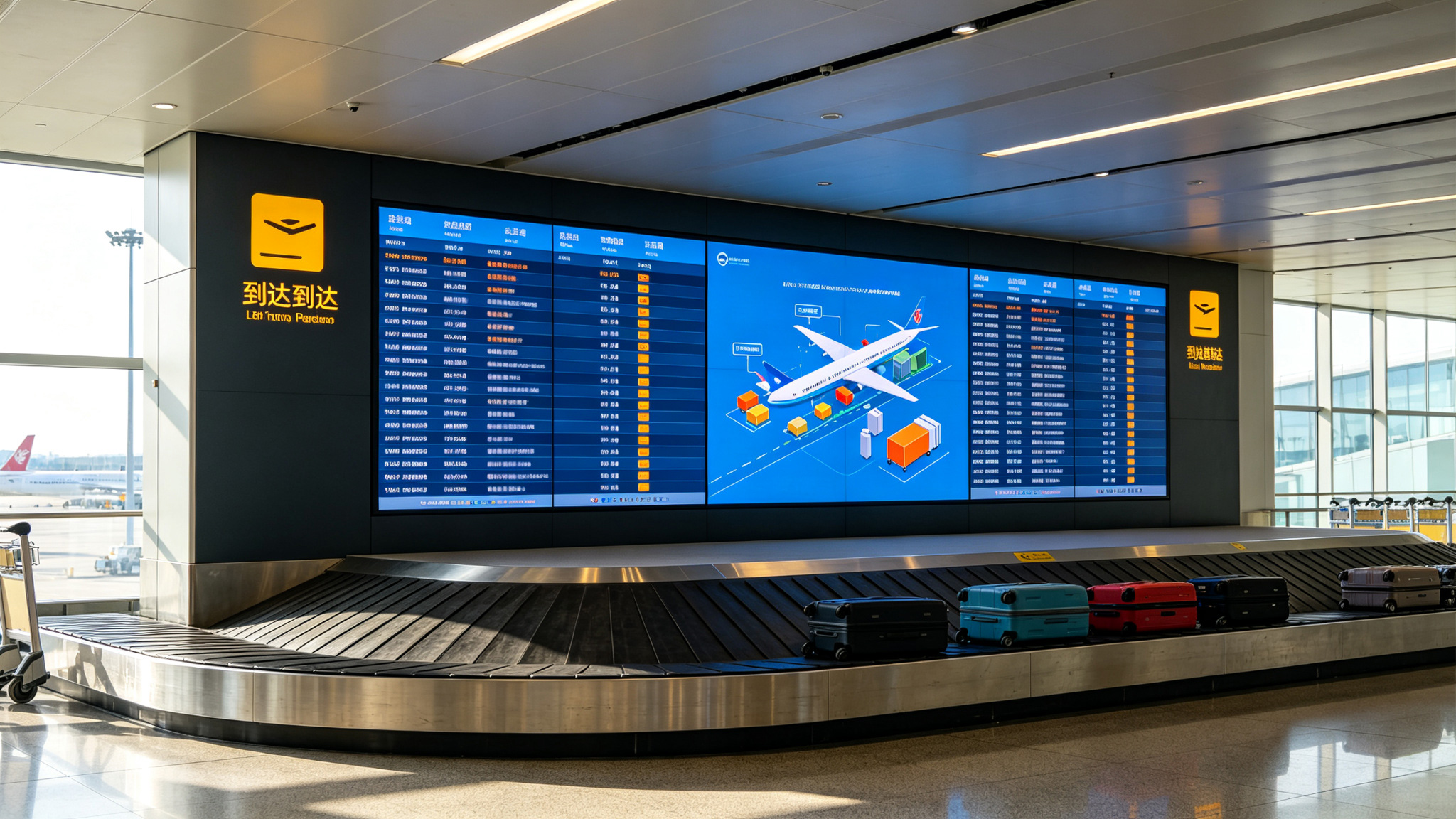
Selecting airport LED displays starts with core parameters. Stonbel's full range covers pixel pitches from P0.7 to P10. For airport terminals with high ceilings and strong ambient light, we recommend P2.5-P3.9 models, balancing close-up clarity with long-distance visual impact. For example, our GOB-packaged P2.5 display for transport hubs features unified brightness/color calibration, 4K support, and peak brightness up to 8000cd/m² (outdoor), ensuring flight info and gate directions remain legible even under direct noon sunlight. Refresh rate must reach 7680Hz to eliminate scan lines in high-speed camera or smartphone footage, preventing visual fatigue. With 22-bit grayscale and NTSC≥130% color gamut, airline brand colors and landmark hues are accurately reproduced for clear wayfinding.
SMD vs COB: IP65 Protection is the Hard Requirement
Airports see heavy foot traffic, dust, and humidity fluctuations—packaging technology determines long-term reliability. Stonbel offers three mature options: SMD (P1.25-P10) is cost-effective with mature processes; LEDs are individually soldered to the PCB for good heat dissipation, with outdoor brightness customizable above 8000cd/m², ideal for terminal exterior advertising. COB (minimum P0.7) directly bonds chips to the PCB with encapsulant, offering seamless, grain-free ultra-HD images for command centers or VIP lounges, achieving IP55 protection. GOB encapsulates SMD lamps with transparent resin, delivering COB-like dust and impact resistance at lower cost, with protection up to IP65+, perfect for high-contact areas like waiting halls and security checkpoints. For airport public zones, we strongly recommend IP65 or higher to withstand baggage cart collisions and cleaning mist.
Proven Results: Efficiency Gains & Lower O&M Costs
Real-world impact means visible efficiency and cost improvements. In a similar high-speed rail project (closely mirroring airport conditions), deploying 120㎡ of GOB P2.5 screens across waiting halls and ticket gates cut passenger inquiries by 50%, boosted gate throughput by 25%, and reduced info update latency from 30 minutes to 10 seconds with 100% accuracy. The same applies to airport flight information: when delays or gate changes occur, full-screen sync within 10 seconds significantly reduces passenger complaints. On the maintenance side, GOB's high protection cuts failure rates by 75%, annual O&M costs by 58%, and extends lifespan by 30%. A proper airport display should be evaluated on total lifecycle cost, not just purchase price. Stonbel provides resident service points across 31 provinces and 7×24 remote support, ensuring 2-hour response for any issue in 24/7 airport environments.
Customer Value: Boosting Operations, Revenue & Brand Image
Airport LED displays deliver value across three dimensions: operations, revenue, and brand. Operationally, integration with airport dispatch systems enables real-time sync of flight status, baggage carousel info, and emergency guidance, managed centrally via multi-screen controllers. A 280㎡ outdoor P2.5 naked-eye 3D screen in Chengdu's Chunxi Road (technology applicable to airport retail zones) achieved 8000cd/m² peak brightness with smart light sensing, increasing daily foot traffic by 35% and advertising rates by 80%—proving high-quality displays command premium ad revenue. Smart brightness adjustment cuts energy use by 35%, annual failure rate stays below 0.5%, and remote maintenance reduces on-site labor costs by 60%. Choosing a certified manufacturer like Stonbel (3C, CE, FCC, ISO9001, ISO14001, ROHS, military, and confidentiality certifications) ensures full compliance from production to installation, mitigating liability risks from display failures.
Roadmap: From Fixed Screens to Smart Interactive Displays
The future of airport LED displays lies in intelligence and integration, not just size and brightness. Stonbel has developed LED texture screens and interactive solutions. LED texture screens combine architectural-grade finishes with Micro-LED technology—'off as décor, on as display'—suitable for VIP lounge walls or commercial art installations. We also support custom-shaped screens (e.g., LED film, grille screens) with 3D modeling and structural simulation for curved ceilings or columns. For interactivity, our displays support 5G/WiFi connectivity, gesture sensing, and remote management platforms, deployable at information desks for touch or gesture-based flight, map, and retail queries, reducing staff workload.
Q1: Why is ingress protection critical for airport LED displays? IP65 or IP54?
A: Airports see heavy traffic where baggage carts and cleaning equipment may impact screens, plus high humidity and dust (especially outdoors). IP65 means full dust protection and resistance to water jets, suitable for waiting halls and security areas. IP54 offers limited dust and splash resistance, fitting clean environments like command centers. Stonbel's GOB packaging achieves IP65+ at lower cost than COB, making it a cost-effective choice for public zones.
Q2: P2.5 or P3.9 pixel pitch—which suits airport terminals better?
A: Pitch depends on viewing distance. Terminal halls typically have wider viewing distances (5m+), where P3.9 provides adequate clarity at lower cost. For close-up viewing (2-3m) of flight info or ad details, P2.5 or finer is recommended. Stonbel offers P0.7-P10 options, customizable based on installation location and budget for optimal ROI.
Q3: How do airport LED displays achieve real-time information updates?
A: Stonbel displays support 4G/WiFi/5G connectivity and integrate with airport dispatch systems via a central control platform for unified management. In similar projects, update latency dropped from 30 minutes to 10 seconds with 100% accuracy, including remote content updates and device status monitoring.
Q4: Is higher brightness always better for airport LED displays?
A: No. Brightness should match the environment. Outdoor areas (e.g., terminal facades) need high brightness (Stonbel outdoor models reach 8000cd/m²+) to combat direct sunlight. Indoor halls should use 2000-3000cd/m² to avoid glare at night. Stonbel's smart light sensing automatically adjusts, ensuring daytime clarity while cutting nighttime energy use by 35%.
Selecting airport LED displays involves balancing specs, packaging, protection, and lifecycle costs. Stonbel, a top-10 Chinese LED maker with 3C/CE/ISO certifications, offers a full matrix from P0.7 COB ultra-HD command screens to P2.5 GOB high-protection flight info displays and 8000cd/m² outdoor naked-eye 3D ads. With service points in 31 provinces and 24/7 remote support, we ensure low failure rates and high stability. Contact us for cost-effective, reliable airport visual solutions.