Energy and power dispatch scenarios increasingly require real-time, high-reliability performance, making traditional storage inadequate for massive data ingestion and low-latency AI load forecasting. Stonbel, as a source manufacturer of LED/LCD commercial displays and a provider of industrial storage and edge computing, delivers industrial-grade storage and edge infrastructure for government and enterprise clients. This article compares industrial NVMe drives against public cloud solutions and offers selection guidance from a private deployment perspective, helping customers build a secure, efficient, and controllable dispatch data foundation.
Data Challenges in Energy Dispatch and the Industrial NVMe Solution
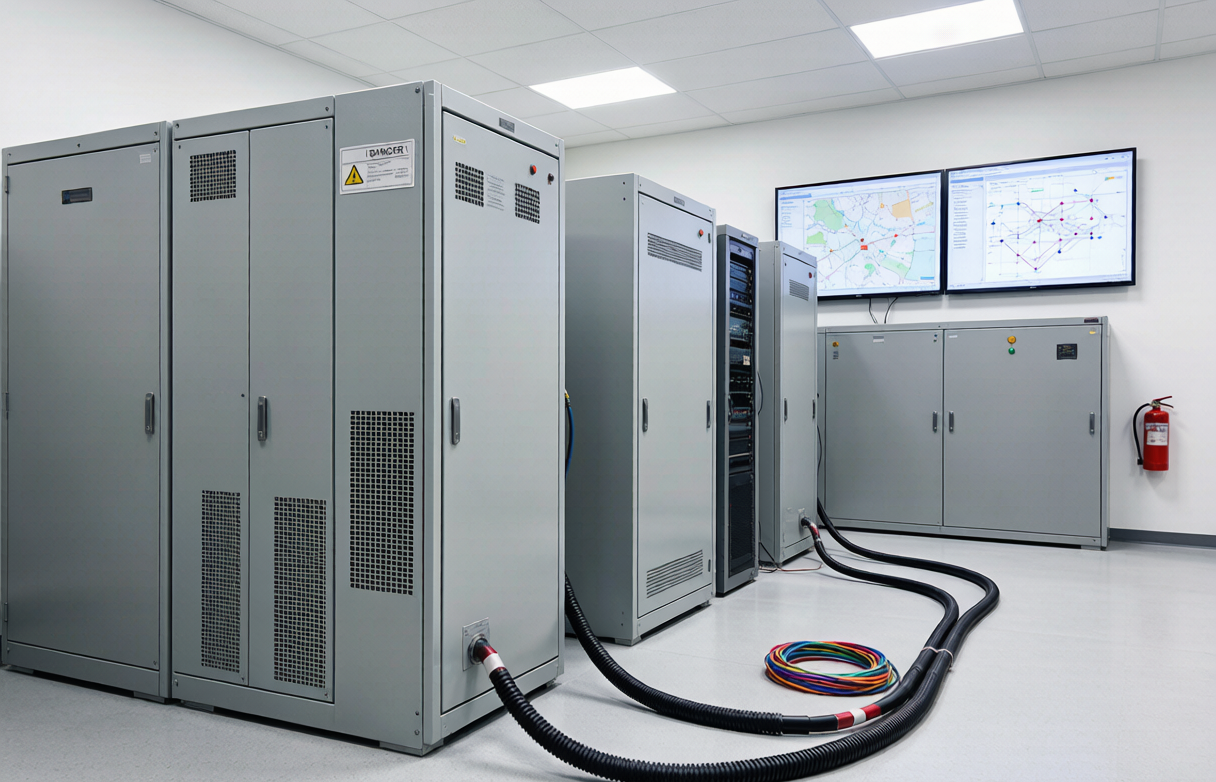
Power grid dispatch centers face unprecedented data floods. For example, a provincial grid must aggregate real-time operational data from over 500 substations and renewable plants, generating terabytes of telemetry, status, and video data daily. Traditional SATA SSD storage often fails in high-temperature summer server rooms, with sequential read speeds typically below 550MB/s, struggling to meet the mixed read demands of AI load forecasting models. Stonbel's industrial NVMe drives, based on PCIe Gen4x4 / NVMe 2.0, deliver sequential read speeds up to 7100MB/s and write speeds up to 6400MB/s—over 10x faster than SATA SSDs with an order of magnitude lower latency. Available in M.2 2280 form factor with capacities from 512GB to 4TB, they flexibly fit
Industrial NVMe vs. Public Cloud: The Logic of Private Deployment
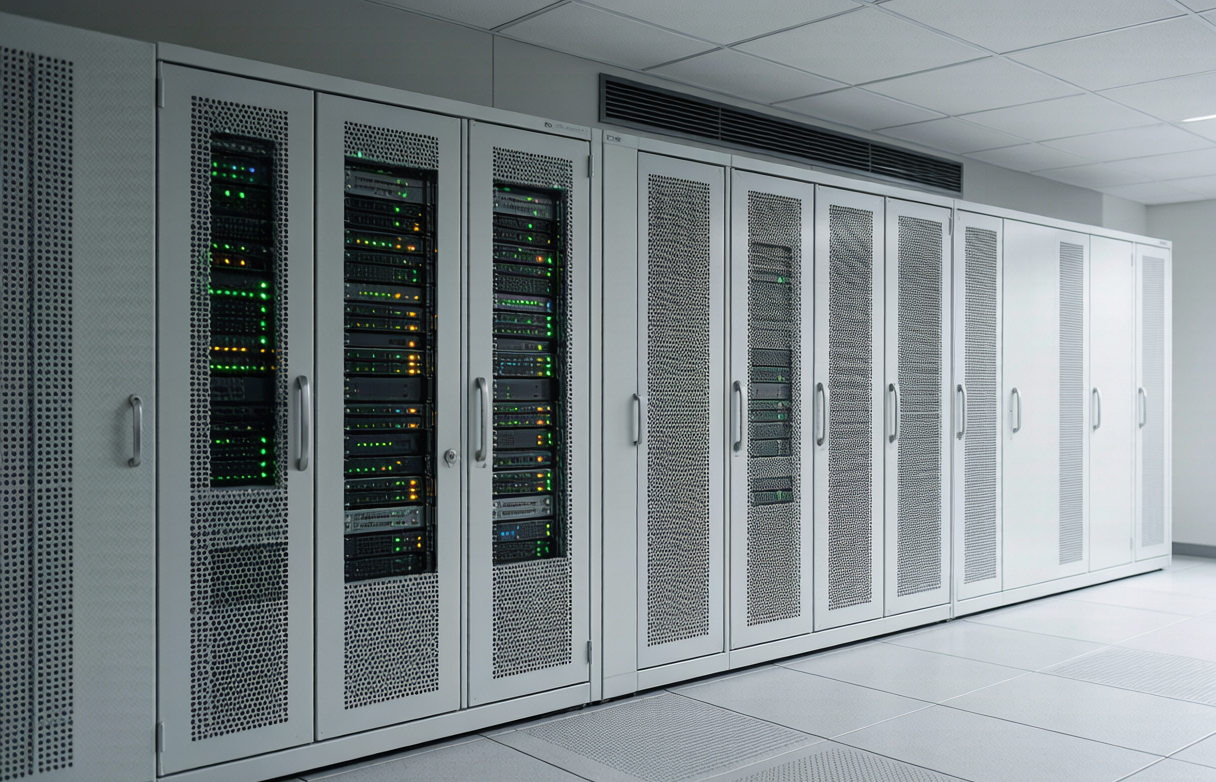
Many enterprise clients have tried moving dispatch data to the public cloud, only to encounter three major bottlenecks. First, network latency: grid dispatch requires minute-level or even second-level fault response, yet public cloud storage—even with same-city dual-active architecture—incurs 5-20ms average latency through gateways and leased lines, while local NVMe drives achieve below 0.1ms, a two-order-of-magnitude gap. Second, data sovereignty and compliance: per the "Security Protection Regulations for Power Monitoring Systems" and Class 2.0 of the Multi-Level Protection Scheme, dispatch data must not leave the

Selection Guide: Interface, Capacity, and Protection Mechanisms
Selecting industrial NVMe drives requires four considerations. First, interface and protocol: Stonbel offers PCIe Gen3x4 (sequential read 2400MB/s, write 1950MB/s) for edge boot drives, and Gen4x4 (read 7100MB/s, write 6400MB/s) for AI inference and real-time data aggregation. Ensure NVMe 1.3/1.4/2.0 compliance for compatibility with mainstream domestic servers and OSes. Second, capacity and endurance: dispatch centers accumulate historical data rapidly; 2TB or higher is recommended. Monitor TBW ratings—Stonbel Gen4 drives offer up to 4800TBW (TLC), while SLC models reach 24000TBW, supporting 10+ years of high write loads. Third, environmental adaptability: beyond wide temperature, check anti-sulfidation (G3 grade) and OCP/OVP protection against corrosion and voltage fluctuations
Real-World Impact: Provincial Grid, Smart Port, and Refinery Cases
At a provincial grid dispatch center, Stonbel deployed industrial NVMe drives with DDR5 ECC memory and edge inference servers supporting IEC 61850. Annual storage failure rates dropped below 0.5%, dispatch fault response improved from 20 to 4 minutes, and AI load forecasting accuracy reached 96%, now rolled out across 12 cities. In a smart port scenario with high temperature, humidity, and salt spray, Stonbel's wide-temperature storage and AI boxes enabled real-time container code and damage recognition, tripling tallying efficiency with annual device failure below 1%. At a Sinopec refinery, explosion-proof AI boxes with industrial NVMe drives operated stably from -20°C to 60°C, cutting anomaly detection
Q1: What advantages do industrial NVMe drives offer over public cloud storage for energy dispatch?
A: Four key advantages: Performance—locally deployed NVMe drives achieve sequential read speeds up to 7100MB/s with microsecond-level latency, while public cloud storage averages 5-20ms due to network and virtualization overhead, failing to meet millisecond-level dispatch response needs. Security and compliance—private deployment keeps dispatch data on-premises, satisfying power monitoring security regulations and Class 2.0 requirements, whereas public cloud multi-tenancy cannot ensure physical isolation. Reliability—industrial NVMe drives support -40°C to 85°C operation, 1500G shock resistance, and PLP, performing stably in
Q2: How should I select industrial NVMe drives for energy dispatch scenarios?
A: Follow five steps: First, confirm interface and protocol—PCIe Gen3x4 (read 2400MB/s) suits dispatch data gateway boot drives, while PCIe Gen4x4 (read 7100MB/s) is needed for AI inference servers. Second, assess capacity and endurance—start at 2TB given rapid historical data growth, and check TBW (Gen4 TLC up to 4800TBW) for 10+ year lifespan. Third, verify environmental adaptability—support -40°C to 85°C, anti-sulfidation G3, and OCP/OVP protection for non-air-conditioned substations and voltage fluctuations. Fourth, check data protection—PLP, on-drive RAID, and end-to-end ECC are
Q3: What are typical application cases of industrial NVMe drives in power dispatch?
A: Notable cases include: A provincial grid dispatch center deployed Stonbel industrial NVMe drives as core storage, supporting data aggregation from 500+ substations and renewable plants, achieving annual storage failure below 0.5%, cutting fault response from 20 to 4 minutes, raising AI load forecast accuracy to 96%, and expanding to 12 cities. A port smart tallying project used wide-temperature NVMe drives with AI boxes in high-temperature, humid, salt-spray conditions, tripling efficiency with 98.5% recognition accuracy and annual failure below 1%.
Q4: How do industrial NVMe drives and SATA SSDs compare for power dispatch?
A: The choice depends on workload characteristics. NVMe drives use the PCIe bus, achieving sequential read speeds above 7000MB/s with sub-0.1ms latency, ideal for edge servers, AI inference, and high-speed data acquisition requiring low latency and high bandwidth. For example, dispatch centers processing massive real-time telemetry and running load forecasting models benefit from significantly reduced data loading and training times, cutting processing latency by over 60% in high-speed acquisition. SATA SSDs, with sequential reads around 550MB/s and ~0.5ms latency, are lower cost and suit log storage, non-critical historical
Stonbel's industrial NVMe drive solution for energy dispatch features PCIe Gen4x4 interface, 7100MB/s sequential read speed, -40°C to 85°C wide temperature tolerance, and power-loss protection, establishing a highly reliable, low-latency data foundation for grid dispatch centers. Compared to public cloud storage, private deployment offers significant advantages in performance, security, compliance, and long-term cost, validated in provincial power grids, smart ports, and refinery projects. As a source manufacturer, Stonbel provides full-cycle services from hardware selection and compatibility testing to localized after-sales across 31 provinces, reducing project timelines by over 30% and lowering failure rates in 7×24 operation. As power systems become more intelligent and domestic technology requirements take effect, industrial NVMe drives will play an irreplaceable role in more dispatch scenarios, enabling efficient, secure, and self-controllable operations.