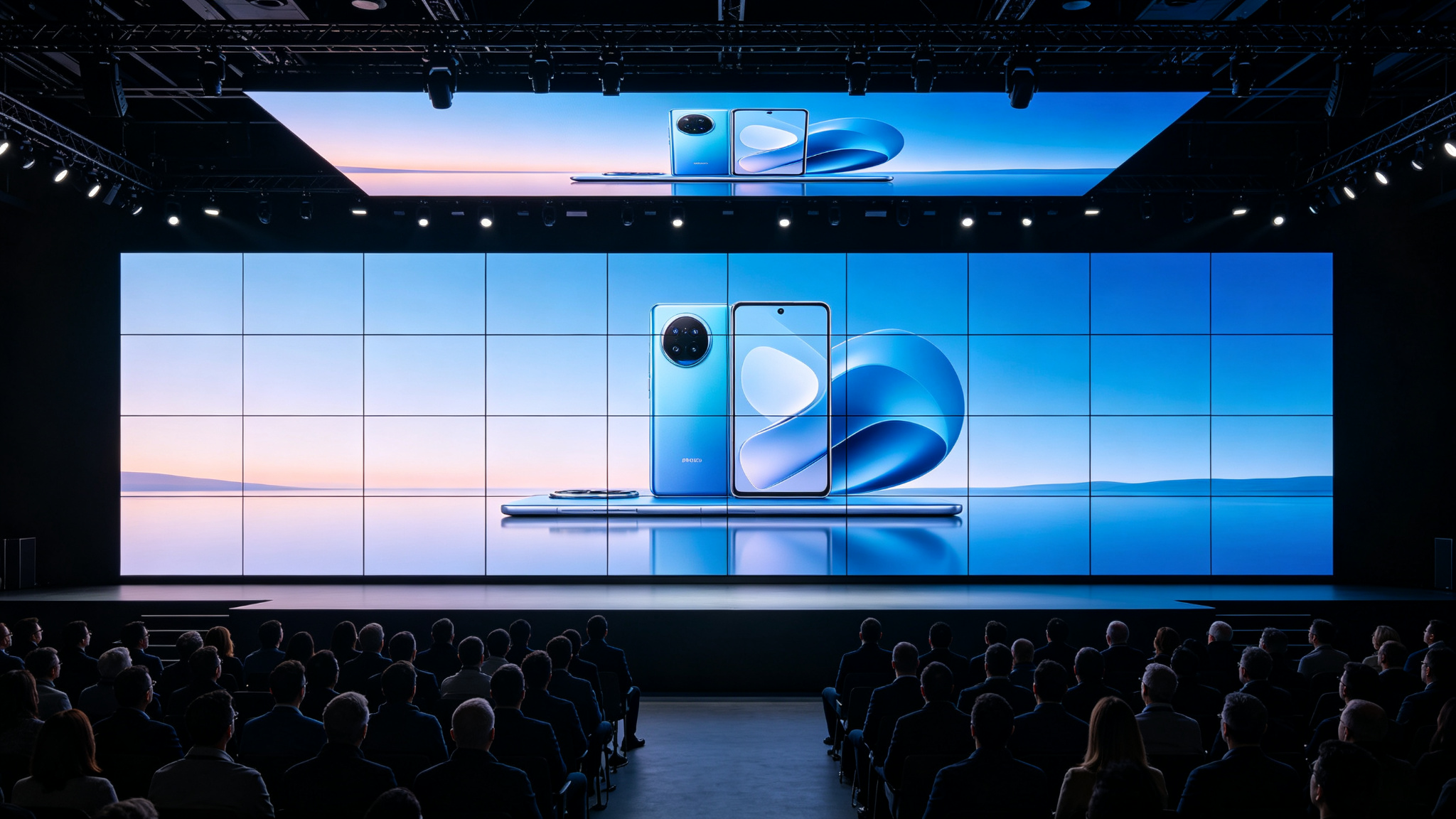
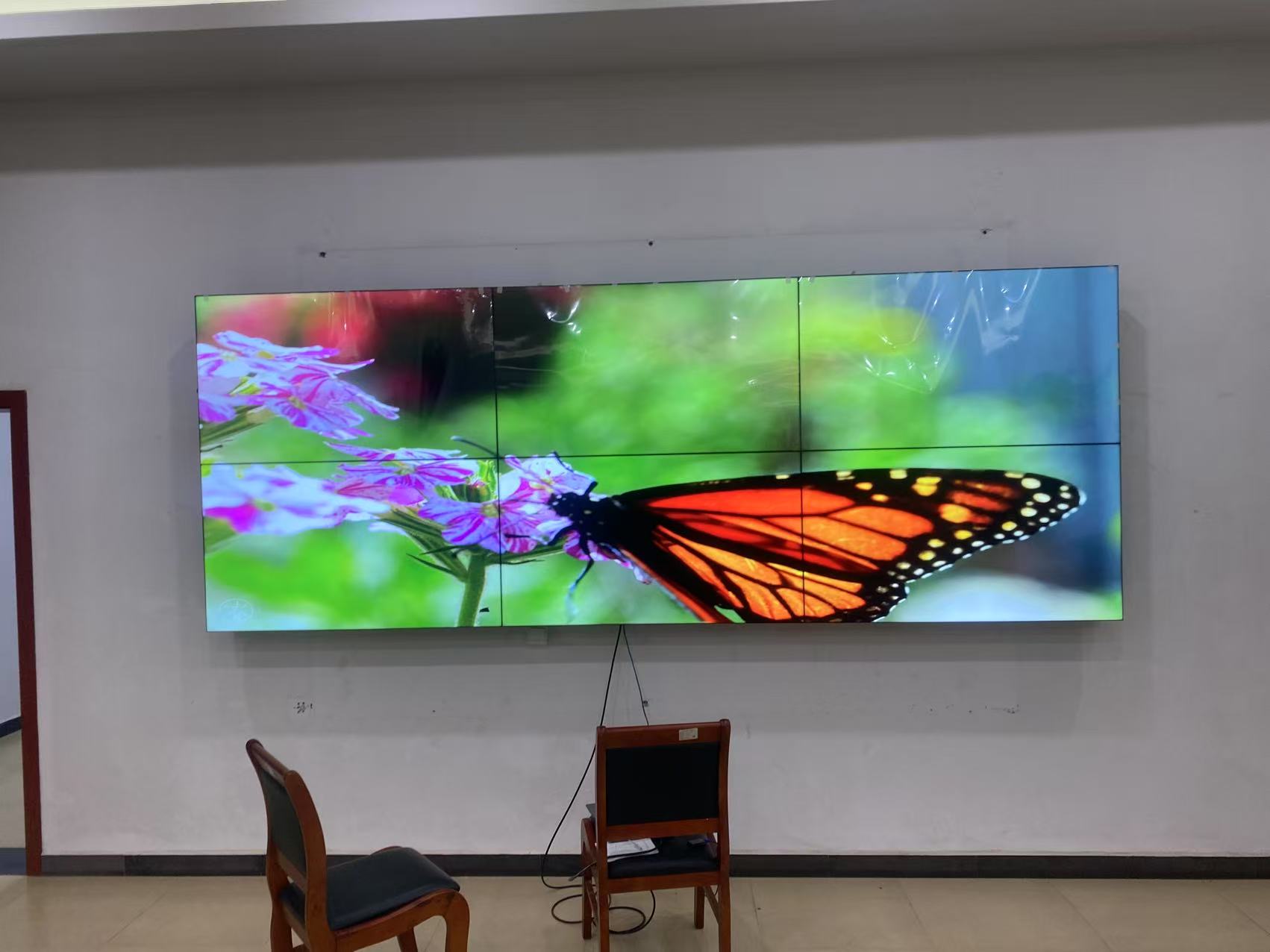
In airport terminals, LCD video walls must balance viewing distance, pixel pitch, ambient lighting, and long-term maintenance costs. Stonbel's LCD拼接屏 solutions are engineered for 24/7 operation with high brightness, wide viewing angles, and industrial-grade reliability, ensuring clear information delivery across check-in halls, security areas, and gate zones.
Viewing Distance & Pixel Pitch Matching
For airport LCD video walls, matching viewing distance with pixel pitch is the primary factor determining display quality. Pixel pitch (physical distance between adjacent pixels, in mm) directly defines pixel density per unit area, influencing perceived sharpness at a given distance. Based on human visual acuity limits, when viewing distance exceeds 1000 times the pixel pitch, individual pixels become indistinguishable, creating a seamless, detailed image. Applying this optical principle, Stonbel has defined clear selection criteria for airport scenarios: for medium viewing distances (3-8m) at check-in islands and waiting area walls, P6 pitch is the industry-recognized sweet spot—delivering no visible grain beyond 5m while forming complete, coherent information flows at longer distances. For specialized
Performance for Complex Airport Environments
Airport environments demand stability and environmental resilience far beyond typical commercial settings. Stonbel LCD video walls achieve IP65 protection, fully dust-tight and resistant to low-pressure water jets from any direction, handling dust accumulation from dense passenger traffic and moisture from cleaning operations. In core display performance, color gamut coverage reaches NTSC ≥120%, accurately reproducing airline brand colors and boarding status indicators to prevent passenger misreading from color deviation. Refresh rate and grayscale processing are specially optimized by Stonbel engineers, eliminating flicker and scan lines during filming or video transmission—essential for
Value & Maintenance Advantages
The value of airport LCD video walls extends beyond display quality throughout the full lifecycle of operations and emergency response. Stonbel understands airport operators' demands for extreme system availability. Under normal conditions, LCD video wall lifespan reaches 100,000 hours—at 18 hours daily, this means over 15 years of service, requiring only scheduled backlight module replacement, significantly reducing lifecycle replacement costs. In content management, Stonbel LCD video walls support centralized publishing systems, validated in the UNIQLO China project—300+ stores' 43/55-inch commercial displays update simultaneously
Full-Scenario Product Portfolio & Services
Stonbel offers a comprehensive product matrix addressing diverse display needs across airport functional zones. For public information areas—check-in islands, arrival halls—LCD video walls are recommended for their color accuracy and cost-per-unit-area advantages, with 7×24 continuous operation capability meeting extended terminal operating hours. For high-end command centers—airport operations control, emergency command halls—COB fine-pitch LED displays are preferred: Stonbel's series covers P0.7-P1.8, delivers 3840Hz refresh rate, IP55 protection, and seamless, high-detail mapping and data visualization. Additionally, Stonbel provides conference all-in-one displays (P5, 300-1000cd/m²) and LED texture screens (P5, IP54) for
Q1: What viewing distance suits airport LCD video walls?
A: Viewing distance depends primarily on pixel pitch, following the physics of human visual resolution. For airport LCD video walls with P6 pitch, recommended viewing distance is 5m or more; with P4 pitch, clear images are achievable at around 3m; P8 pitch suits distances beyond 10m. Stonbel recommends that for main terminal screens (above check-in islands, waiting area walls) with typical viewing distances of 5-10m, P6 pitch balances brightness, power consumption, and cost—no visible grain up close, complete image from afar. For close-range kiosks (2-3m viewing distance), consider fine-pitch LED (e.g., P1.2
Q2: How to determine pixel pitch for airport LCD video walls?
A: Pixel pitch determines pixel density, directly impacting image clarity and investment cost. Airport LCD video walls typically use P6 as the primary specification, offering an ideal balance of brightness (≥500cd/m²), power consumption, and cost, with IP65 protection suited to complex terminal environments. For closer viewing (2-3m), choose P4 or smaller to avoid visible pixelation; for distances beyond 10m (e.g., far waiting area walls), P8 meets visual needs at lower initial investment. Stonbel's product line spans P0.7-P6 across LCD and LED displays, but P6 is the mainstream choice for airport LCD video wall applications. Note that smaller pitch is not always better—excessively fine pitch at long
Q3: How to choose between airport LCD video walls and fine-pitch LED?
A: Each technology offers distinct advantages for different scenarios; airports can combine both based on zone function and budget. LCD video walls excel in color accuracy, grayscale gradation, and cost per display area—ideal for public information and advertising in terminal common areas. Stonbel LCD video walls support 7×24 operation with 100,000-hour lifespan and IP65 protection, handling dust and moisture effectively. COB fine-pitch LED (e.g., P1.2) offers seamless splicing, high refresh rate (3840Hz), and robust protection (IP55), suited for close-viewing, high-detail applications like airport operations command centers and emergency dispatch halls requiring detailed maps and data visualization—though at higher cost per unit area. Stonbel recommends: public information zones (check-in islands, waiting areas, arrival
Q4: How is after-sales service guaranteed for airport LCD video walls?
A: As a source manufacturer, Stonbel has built a comprehensive three-tier after-sales system. First tier: permanent service points across 31 provinces/cities, ensuring localized engineers for rapid response at any airport project site. Second tier: headquarters technical support team of senior display engineers handling remote diagnostics and complex fault resolution. Third tier: original spare parts inventory maintaining safety stock of critical components (power modules, control boards, backlight modules) to prevent extended downtime from parts waiting. Airport projects receive dedicated account manager support, fault response within 4 hours, and temporary replacement units for critical failures. Quality assurance includes ISO9001 and ISO14001 certifications; all screens undergo 72-hour continuous burn-in testing before shipment.
Selecting airport LCD video walls requires evaluating optics, environmental engineering, and operational management. Stonbel offers source-manufacturer advantages with full certifications (3C, CE, FCC, ISO14001, ISO9001, ROHS) and a 31-province service network. From metro command centers to large-scale deployments, Stonbel has proven delivery capability. We continue advancing P4 LCD panel development and multi-screen controller upgrades while deepening airport-specific service teams, ensuring every screen delivers clear, timely visual information for all passengers.