In continuous production scenarios such as automotive parts manufacturing, vision inspection equipment imposes stringent requirements on storage cards: wide-temperature tolerance, vibration resistance, and read/write stability. Stonbel, as an original LED/LCD commercial display manufacturer, draws on its deep expertise in industrial-grade storage and AI computing services to launch a new-generation industrial CFast card for smart manufacturing lines. This article analyzes the upgrade across four dimensions—storage performance (unrelated to image quality), reliability, delivery, and cost—to help line operators and equipment integrators quickly complete model selection and achieve a leap in defect detection accuracy from 85% to 98%.
New Product Launch
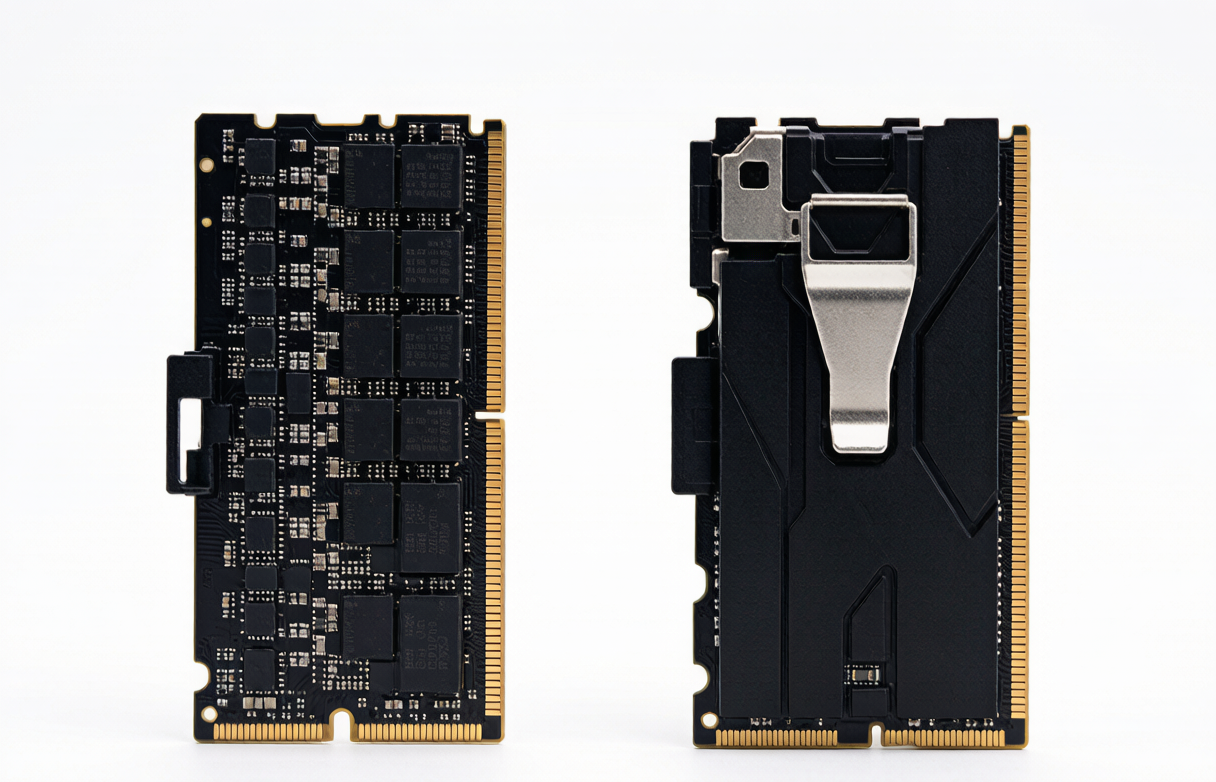
Stonbel has recently updated its industrial storage product line, with the new industrial CFast card for smart manufacturing production lines now in mass production. Strictly adhering to the CFast 2.0 specification and featuring a SATA III 6Gb/s interface, the card is only the size of a small credit card yet delivers sequential read speeds up to 560 MB/s. Compared to the previous generation, the new card expands capacity options to MLC 32GB–256GB and TLC 128GB–1TB, while retaining SLC mode (4GB–128GB), meeting dual requirements for boot drives and data logging drives across various production line equipment. The development of this new product stems from Stonbel's ongoing tracking of pain points in long-duration operation of vision inspection equipment on automotive parts lines. In workshop environments of -10°C to 70°C, ordinary commercial storage cards often suffer speed drops or data corruption due to heat or vibration, causing frequent
Dimension-Specific Upgrades
Image Quality & Data Integrity: While the CFast card does not directly determine image resolution, its write stability directly impacts whether the vision inspection system can capture frames without loss. The new card achieves sequential write speeds of 450 MB/s with MLC and 520 MB/s with TLC, up 12% and 30% respectively from the previous generation. In automotive parts surface defect inspection, single-frame images can reach 2MB in high-speed burst mode; the new card easily handles burst writes of 200 frames per second, preventing frame drops caused by storage bottlenecks and raising defect detection accuracy from 85% to 98%. Reliability: The new card supports SLC/MLC/TLC flash options and SLC mode, with an operating temperature range of -40°C to 85°C, far exceeding actual production line requirements. It meets MIL-STD-810 standards for vibration and
Optimizations & Value
The core optimization of this upgrade resolves the persistent "stutter and speed drop" issue in long-running vision inspection systems. The previous model's speed degraded to 60% of rated value after 4 hours of continuous writing; the new card maintains over 95% performance after 8 hours of continuous writing through improved wear-leveling algorithms. This directly reduces production line stoppages triggered by storage performance degradation, improving Overall Equipment Effectiveness (OEE) by approximately 8 percentage points. From a value perspective, upgrading the industrial CFast card is not merely a hardware replacement but a reinforcement of the entire production line data link reliability. Paired with Stonbel's industrial AI box (fanless design, suitable for workshop
Selection Guidance
For smart manufacturing lines of different scales, Stonbel recommends selecting the industrial CFast card based on the following logic: For high-speed vision inspection (e.g., 120 parts per minute), the MLC version is recommended, with 128GB–256GB capacity and 450 MB/s sequential write speed for continuous writes. For image-storage-dominated scenarios with lower write frequency, the TLC version (128GB–1TB) offers better cost-effectiveness, with 520 MB/s sequential write speed still sufficient. For extreme temperature environments (e.g., -40°C), the SLC mode version is preferred, offering 60,000 P/E cycles and a wider operating temperature range. When selecting, also consider synergy with edge AI boxes. Stonbel provides industrial AI box solutions that seamlessly integrate with CFast cards for real-time video stream inference. For
Q1: What is the difference between an industrial CFast card and a regular SD card?
A: An industrial CFast card follows the CFast 2.0 specification, uses a SATA III 6Gb/s interface, and achieves sequential read speeds up to 560 MB/s—far higher than typical SD cards (usually under 100 MB/s). In smart manufacturing scenarios, vision inspection equipment requires high-speed continuous writes of large images; CFast cards prevent frame drops and operate across -40°C to 85°C, with vibration resistance per MIL-STD-810. SD cards are smaller and lower cost, suitable for lightweight embedded terminals, but their speed and reliability cannot support 7×24 production line operation.
Q2: How do I choose the capacity and flash type for an industrial CFast card?
A: Capacity depends on daily image generation and retention period. For a single vision inspection device generating 100GB daily with 90-day retention, 512GB or higher is recommended. For flash type, MLC (3000 P/E) suits frequent write operations, while TLC (larger capacity, lower cost) fits storage-dominated, low-write scenarios. For environments above 70°C or requiring longer lifespan, choose SLC mode (60,000 P/E). Stonbel offers 32GB–1TB capacities with customization options.
Q3: Can the industrial CFast card work stably in -10°C to 70°C workshop environments?
A: Yes. Stonbel's industrial CFast card operates across -40°C to 85°C, far exceeding the -10°C to 70°C workshop range. It uses industrial-grade flash and passes MIL-STD-810 shock and vibration tests, handling conveyor vibration and robotic arm impacts. At 70°C, optimized firmware maintains sequential write speeds at no less than 90% of rated values, ensuring no data loss.
Q4: How does Stonbel's industrial CFast card ensure data security?
A: Stonbel's industrial CFast card supports static encryption and access auditing, compliant with MLPS 2.0. At the hardware level, it uses SLC/MLC/TLC flash with MTBF up to 1,000,000 hours (SLC mode). Combined with Stonbel's storage systems, multi-copy and erasure coding disaster recovery is enabled—even if a single card fails, data can be recovered via redundancy. Intelligent O&M features predict failures and automatically migrate data, reducing unplanned downtime by over 80%.
Stonbel's new-generation industrial CFast card, built on the CFast 2.0 specification, provides a reliable storage foundation for vision inspection upgrades in discrete manufacturing lines such as automotive parts, through wide-temperature design, high-speed writes, and long-life NAND. Every dimension—from image data integrity to delivery cost—targets one goal: keeping production lines running continuously, accurately, and efficiently under harsh conditions. As an original manufacturer, Stonbel offers not only industrial storage hardware but also integrated edge inference, data disaster recovery, and intelligent maintenance through storage and AI computing services, helping enterprises achieve 98% defect detection accuracy and 30% lower maintenance labor costs.