Retail chains in stores and warehouses face real-time challenges in local inventory analysis, foot traffic recognition, and loss prevention. Traditional general-purpose GPU edge devices consume high power, incur high costs, and struggle to meet Xinchuang compliance. Stonbel, based on domestic AI acceleration chips, launches a new generation of edge inference servers for retail nodes. With 25W low power, 16-22 TOPS INT8 compute, and -40~70°C wide-temperature design, it performs video structuring and data analysis at the store level, reducing cloud traffic by 70% and per-store construction costs by 40%. This article compares with the previous solution, analyzing upgrades in image quality, reliability, delivery, and cost, providing a practical selection reference for government and enterprise clients.
New Product: Redefining Retail Edge Computing
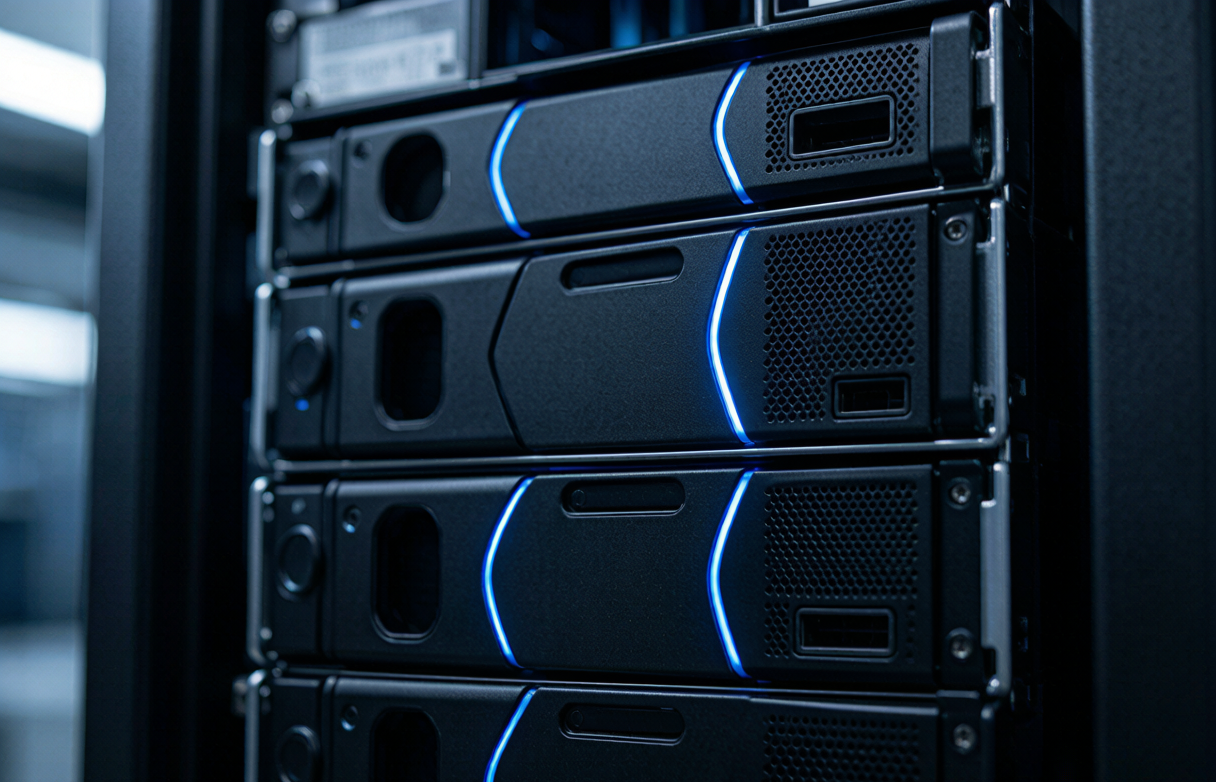
The edge inference server is an edge computing device based on domestic AI acceleration chips, designed for factories, intersections, and stations. It performs video intelligence analysis locally, reducing cloud bandwidth and latency. In retail chains, it handles core tasks like people counting, shelf status recognition, and loss prevention alerts, bringing AI capabilities to every store node and ensuring independent operation even during network fluctuations. Stonbel's new product precisely addresses this need, setting a new standard for retail edge computing with industrial-grade quality. Key specs: INT8 22/16 TOPS, FP16 11/8 TFLOPS,

Upgrades: Image Quality, Reliability, and Delivery Efficiency
In image processing, old general-purpose GPU solutions offer strong general computing but often suffer from frame tearing or latency due to codec compatibility issues in video structuring. The new Stonbel product optimizes the video encoding/decoding pipeline for retail scenarios, supporting 16-channel 1080P real-time decoding for H.265/H.264 formats. Built-in intelligent analysis algorithms maintain clarity of key details (e.g., facial features, product labels) at low bitrates, improving recognition accuracy to over 95%. For stores requiring local recording, the disk version (40W)
Value: From Computing Tool to Cost-Saving Engine
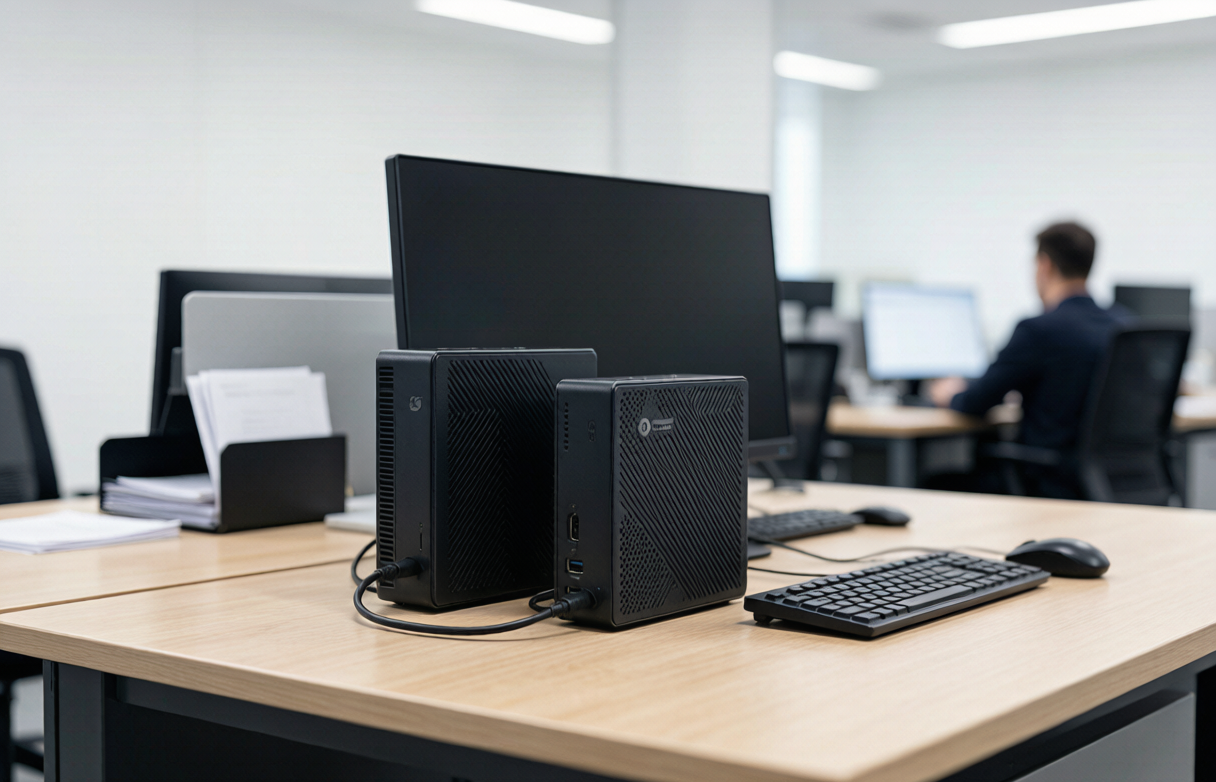
For chain retailers, this edge inference server is not just a computing tool but an engine for cost reduction and efficiency. In a highway video cloud storage project, Stonbel's edge nodes cut storage expansion costs by 50% and improved retrieval efficiency by 20 times. This logic applies to retail: edge AI analysis enables real-time shelf adjustments, optimized staffing, and proactive loss prevention, reducing annual shrinkage. Specifically, traditional cloud analysis requires all video data to be sent back to a central data center, costing hundreds of RMB per store monthly in bandwidth. This product structures video at the store, sending back only metadata (e.g., foot traffic, event tags), reducing cloud
Selection Guide: Long-Term O&M and Scalability
For long-term O&M and scalability, Stonbel's retail edge inference server supports distributed architecture, scaling from a single store to hundreds of nodes with near-linear performance growth, meeting rapid expansion needs. We recommend reserving 20% computing headroom for future AI model upgrades (e.g., more complex pose or product recognition algorithms). Use intelligent O&M features like drive SMART and temperature monitoring for early warnings to reduce failure rates. Stonbel provides 3C, CE, and FCC certifications for compliance, backed by a 31-province service network for
Q1: What is the difference between this edge inference server and a general-purpose GPU server?
A: They differ significantly in power consumption, computing density, and localization. The edge inference server is designed for edge video analysis, consuming only 25-40W and supporting -40~70°C temperatures for deployment in store equipment rooms or outdoor lightboxes without a dedicated server room. General-purpose GPU servers typically consume over 150W, are bulky, and require special cooling and power modifications, making them unsuitable for distributed retail nodes. In computing density, the edge server offers INT8 16-22 TOPS with higher energy efficiency, and hardware-optimized video
Q2: How should I choose the computing configuration based on store size?
A: Match the configuration to video channels and business complexity. For small convenience stores (4-8 cameras), choose the INT8 16 TOPS, 4GB memory version, supporting 8-channel 1080P analysis for people counting and basic loss prevention. For medium supermarkets or warehouse stores (16+ cameras), select the INT8 22 TOPS, 8GB memory version, supporting 16-channel 1080P encoding/decoding for complex algorithms like shelf status recognition and anomaly detection. For storage, if real-time analysis with metadata return is sufficient, choose the diskless version (25W) to save electricity; for 7-30 days of local recording, select the disk version (40W) with industrial wide-temperature SSDs. At 4Mbps per channel, 16 cameras for 30 days require about 2TB. Stonbel offers multi-brand industrial SSDs with flexible capacity based on
Q3: What specific benefits does the edge inference server bring to retail loss prevention?
A: Through local AI analysis, the edge server detects abnormal behaviors (e.g., theft, loitering, POS anomalies) in real time with over 95% accuracy and under 50ms response latency, compared to about 200ms for cloud analysis, enabling millisecond-level alerts and significantly reducing losses. Video data is structured at the store, sending back only metadata (e.g., event tags, foot traffic), reducing cloud traffic by 70% and cutting monthly bandwidth costs from hundreds to tens of RMB per store, with per-store construction costs down 40%. The system supports multi-copy and erasure coding for data security and compliance audits. In a
Q4: How does Stonbel's edge inference server ensure 7×24 stable operation?
A: The product ensures 7×24 stability through hardware design, storage, and O&M management. Hardware: industrial-grade wide-temperature design supports -40~70°C (diskless) and -40~60°C (with disk), adapting to high-temperature sealed stores or cold-chain warehouses; fanless cooling reduces dust ingress and failure rates. Storage: Stonbel provides industrial wide-temperature SSDs (-40~70°C), industrial DDR4/DDR5 memory, and other full-category storage solutions, with multi-brand sourcing and compatibility testing to prevent system crashes from mismatched media, keeping annual failure rates below 0.3%. O&M:
Retail chain intelligence relies on a reliable, low-power edge computing foundation. Stonbel's new edge inference server, with 22 TOPS INT8, 16-channel 1080P codec, and 25W power, sets a new cost-performance benchmark for store-edge AI. Compared to previous GPU solutions, it delivers comprehensive upgrades in image quality, wide-temperature reliability, delivery efficiency, and cost control. Backed by Stonbel's manufacturer status and 31-province service network, it offers one-stop support from hardware to maintenance. Proven in demanding scenarios like highway video analysis and financial storage expansion, retail clients can trust its response speed and data security. Choosing this server means lower investment, faster response, and stable operation, laying a solid foundation for refined retail operations and future Xinchuang compliance and intelligent expansion.