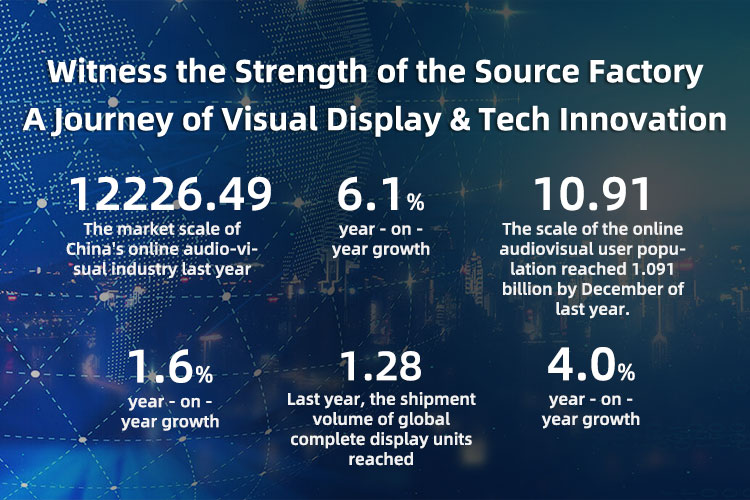
For broadcast studios, high-end conference centers, and large event venues, display choice directly impacts content presentation. LED and LCD video walls are the two main options, but they differ significantly in technology, performance, and suitability. As a leading manufacturer of LED/LCD commercial displays, Stonbel draws on years of experience with broadcast and enterprise clients to analyze the core advantages of studio LED displays and provide selection advice for high-end applications. This article covers technical parameters, packaging processes, customization capabilities, and real-world cases to explain why studio LED displays are the preferred choice.
Core: UHD & Virtual Production Drive Upgrades
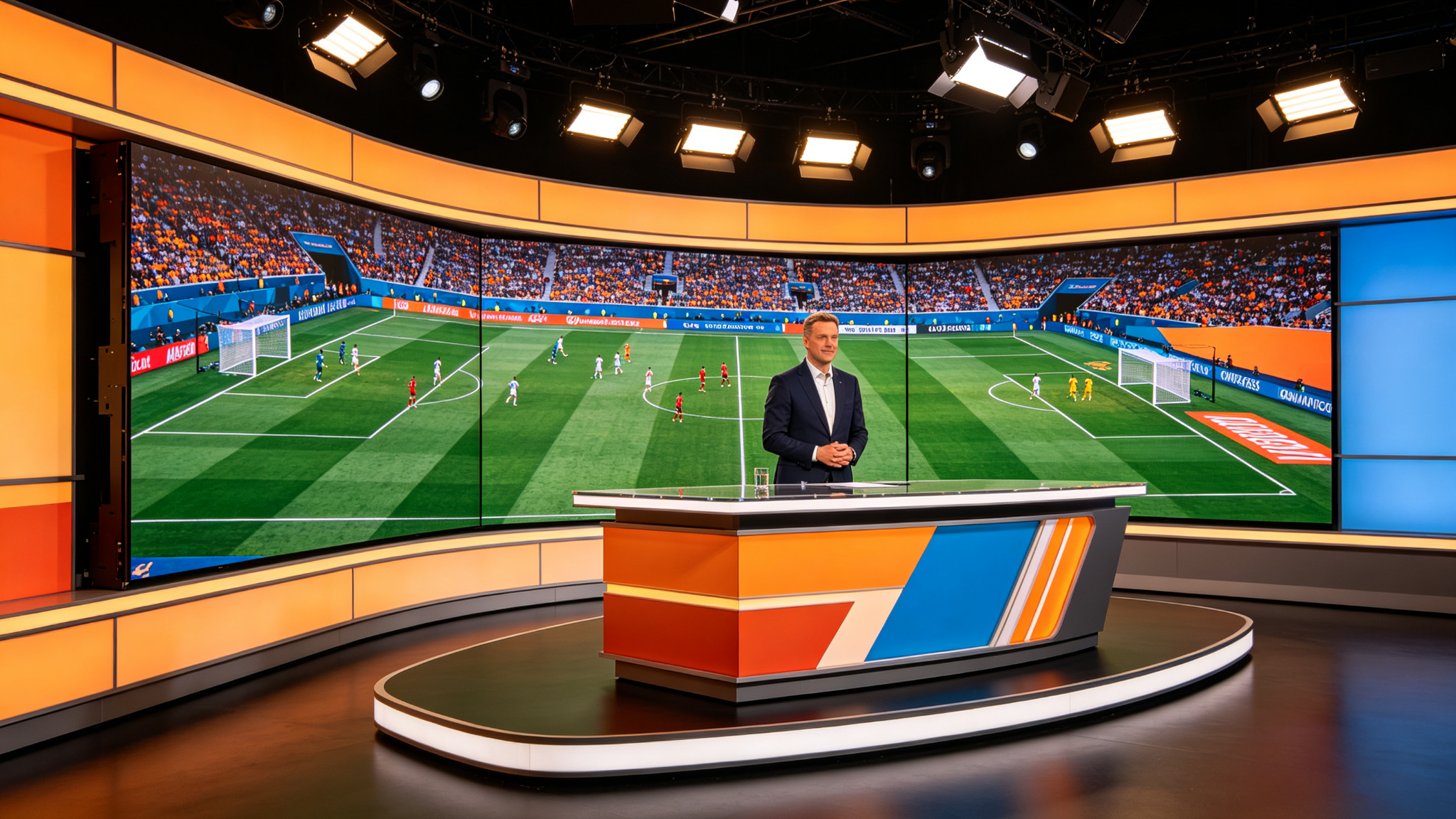
The rise of UHD content and virtual production demands higher pixel density, refresh rates, and color accuracy from studio displays. Stonbel's new P0.7 studio LED display sets a visual benchmark with 7680Hz refresh, 22-bit grayscale, and NTSC≥130% color gamut. LCD video walls, limited by physical bezels and backlight tech, fall short in seamless display and color consistency. This gap is pushing users from traditional LCD to LED, especially for news, virtual studios, and high-end interviews, where LED is now key to production quality. UHD production requires higher pixel density and color depth. Stonbel's P0.7 COB fine-pitch display, with a minimum pitch of P0.7, delivers UHD visuals without physical seams, ensuring a cohesive image with strong impact.
Detailed Comparison: Specs & Packaging
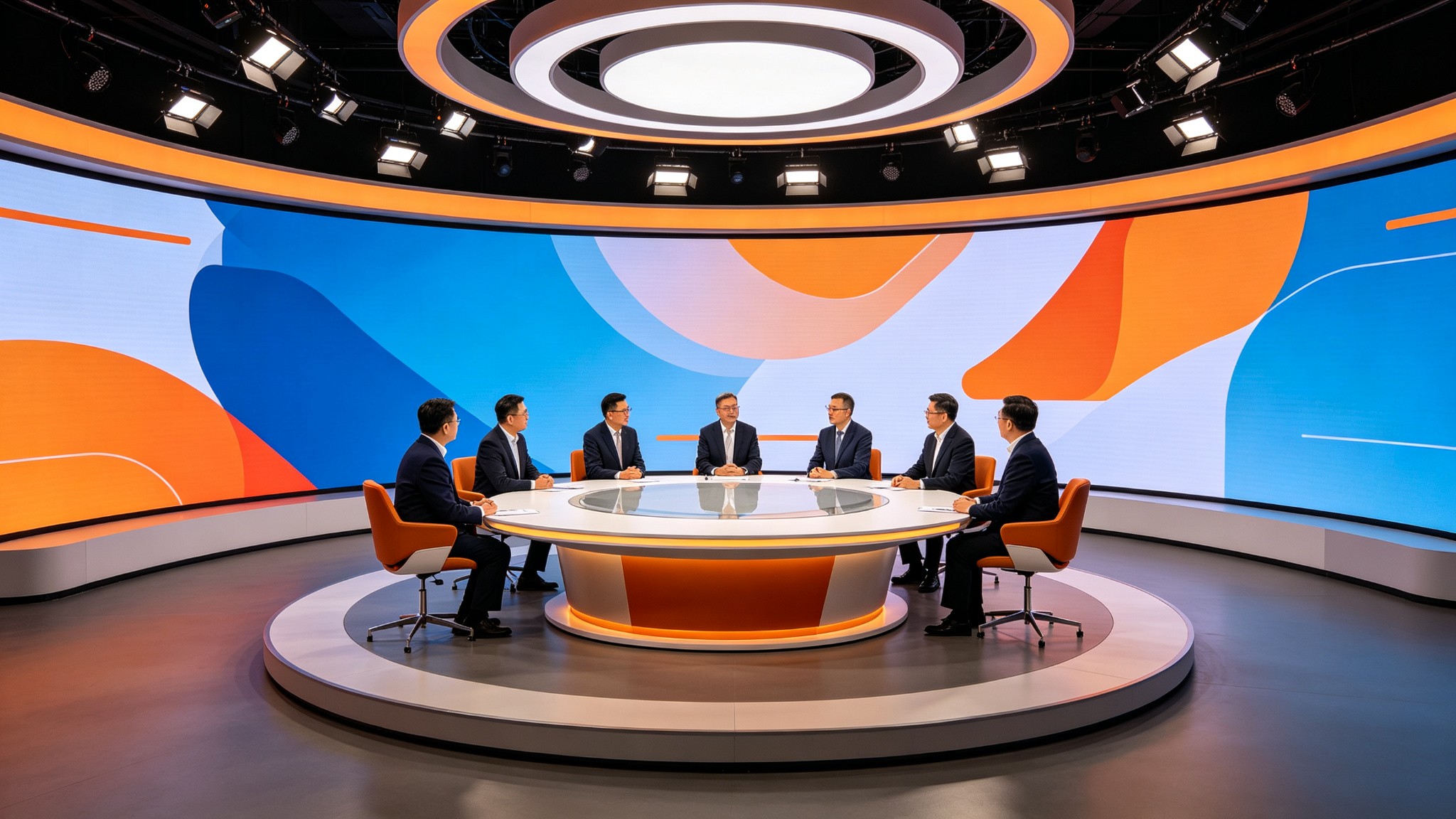
Technically, studio LED displays use COB packaging, with chips bonded directly to the PCB, enabling a P0.7 ultra-fine pitch, high pixel density, and a grain-free, seamless image. The 7680Hz refresh, far above LCD's 60Hz, eliminates moiré for high-speed shooting; 22-bit grayscale and NTSC≥130% gamut deliver smooth transitions and rich colors for HDR. LCD walls, while uniform in brightness, have visible bezels (min ~3.5mm) in close-ups and slower response times, causing motion blur. Stonbel studio LED displays offer IP65 protection and front service, suiting complex studio cabling, whereas LCDs are thicker and space-limited. Stonbel offers three packaging routes: SMD, COB, and GOB. SMD uses surface-mounted LEDs, a mature, cost-effective process for all sizes with wide brightness adjustment, customizable to 8000cd/m² for outdoor use. COB bonds chips directly to the PCB, offering superior image quality, no grain,
Official Insight: Dual Packaging & Customization
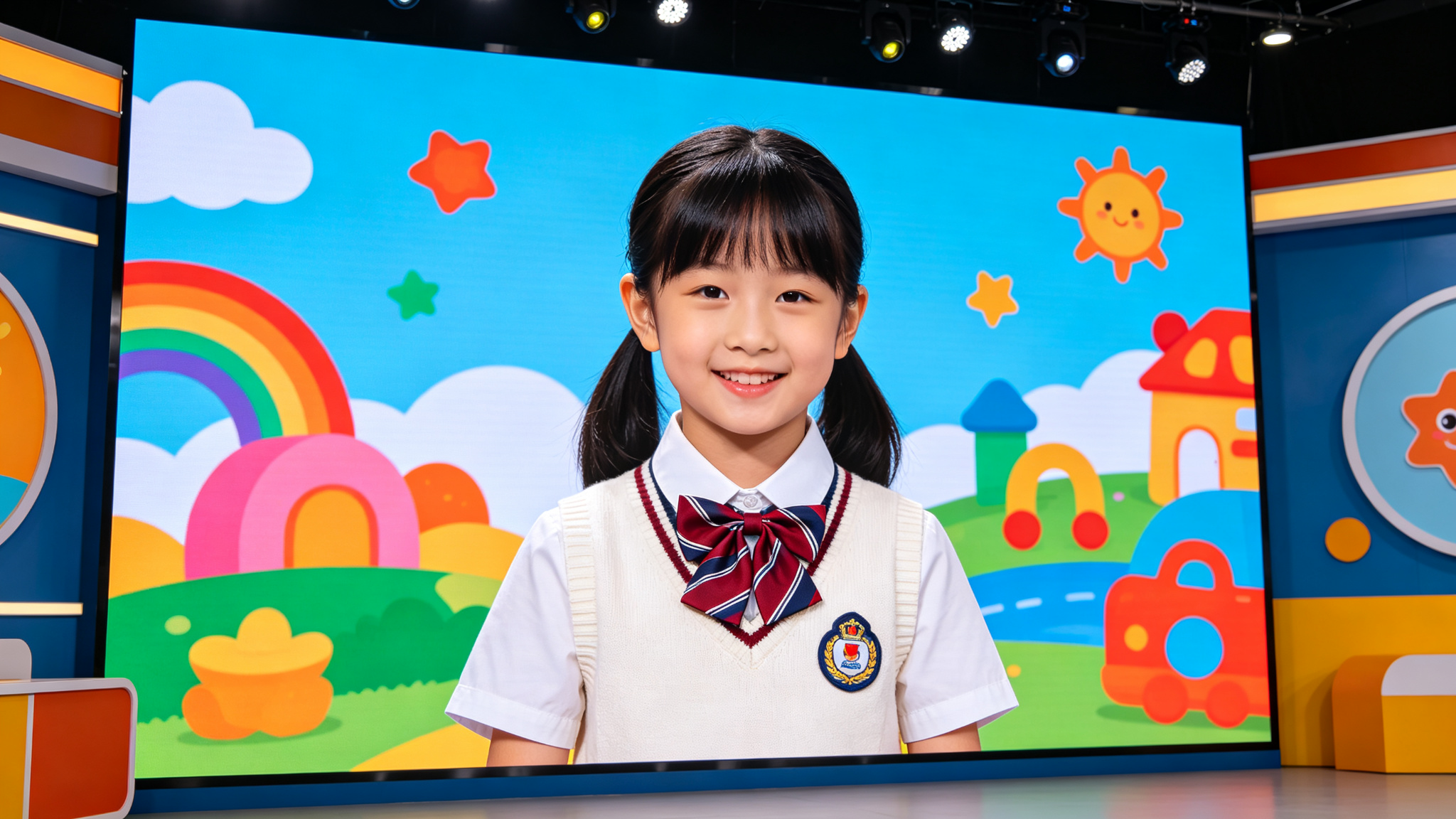
Stonbel's tech team states: "Our studio LED displays are deeply optimized for broadcast use, not just LCD replacements. We use both SMD and COB routes. COB, designed for premium studios with a P0.7 minimum pitch, uses our custom driver ICs for low-brightness, high-grayscale (22-bit) performance, preserving detail in dark scenes. Our displays support 4K/1080P and can be networked via 5G/WiFi for remote content updates across multiple studios. For cost-conscious users, our SMD solution (P1.25-P10) also fits studio use with its mature, reliable process, good heat dissipation, and wide brightness range, customizable to 8000cd/m² for various lighting." Stonbel also excels in custom design, offering shaped, film, holographic, grille, and
Value: From Equipment to Productivity Tool
Studio LED displays are transforming broadcasting from a "display device" to a "visual productivity tool." Clients like Peking University and Peking Union Medical College Hospital use our P0.7 COB screens in studios and lecture halls, boosting production efficiency and professionalism. For integrators, buying from the source cuts costs—Stonbel's five Shenzhen/Huizhou bases offer OEM/ODM with lead times as short as 3 weeks and service points in all 31 provinces. As costs drop, LED penetration in high-end studios will rise, expected to capture over 70% of new projects in three years, pushing LCD to low-demand roles like control rooms. The Xi'an Xianyang International Airport project validated Stonbel's
Q1: Which is better for high-end studios: LED or LCD video walls?
A: High-end studios should prioritize LED displays. COB packaging allows a P0.7 pitch, seamless images, 7680Hz refresh to avoid moiré, and 22-bit grayscale with NTSC≥130% for HDR. LCD walls have visible bezels in close-ups and low refresh rates (typically 60Hz), unsuitable for high-speed shooting. Stonbel's P0.7 COB screens are proven in projects at Peking University and Peking Union Medical College Hospital. LED also offers IP65 protection for busy studio environments, while LCDs are thicker and space-limited. For image quality, seamless display, and environmental adaptability, LED is the clear choice.
Q2: What is the protection rating of Stonbel studio LED displays?
A: Stonbel's COB series studio LED displays have an IP65 rating, effectively resisting dust and water, suitable for busy studio environments. Compared to SMD, COB's gapless structure is smoother and easier to clean, reducing dust-related failures. It also supports front service for less downtime. Our GOB option achieves IP65+ protection at a lower cost, ideal for dusty, humid, or high-traffic areas like industrial workshops or hospital corridors, extending lifespan and reducing maintenance. We offer various protection levels to meet different needs.
Q3: Why is refresh rate important for studio LED displays?
A: Refresh rate determines whether scan lines or moiré appear in footage. Stonbel's 7680Hz rate, far above the standard 3840Hz, ensures stable, clear images at high shutter speeds (1/1000s), preventing flicker. This is critical for live news and sports. Low refresh rates cause black scan lines or water-like ripples, ruining image quality. The 7680Hz rate, combined with 22-bit grayscale, ensures smooth, detailed visuals meeting broadcast standards. High refresh rates also reduce viewer eye fatigue. It's an essential parameter for premium studios.
Q4: Does Stonbel offer customization for studio LED displays?
A: Yes. As a source manufacturer, Stonbel supports SMD and COB packaging with pitches from P0.7 to P10. We can customize curved or shaped screens for specific studio dimensions, complete with smart interaction and remote management systems. Our work on the China Resources Land Shenzhen Bay naked-eye 3D project demonstrates our capability. We offer OEM/ODM services. Our customization includes 3D modeling and structural simulation for feasibility, various installation methods (adhesive, hanging, embedded, floor), and a creative design team for brand-specific personalization. For stages or cultural venues, custom shapes create unique visuals. We also provide smart features like 4K/1080P support, 5G/WiFi/4G connectivity, built-in motion sensors, ad analytics, remote O&M, and multi-signal sync control.
In summary, studio LED displays outperform LCD video walls in seamless display, refresh rate, color reproduction, and protection, making them ideal for broadcast studios and high-end conference centers. Stonbel's P0.7 COB technology, 7680Hz refresh rate, and IP65 protection deliver reliable studio display solutions. Our products have been validated in projects from Xi'an Xianyang International Airport to China Resources Land Shenzhen Bay, serving clients including Peking University, Peking Union Medical College Hospital, and Guangdong Provincial Emergency Management Department. As ultra-high-definition and virtual production technologies advance, LED displays will continue to play a pivotal role in high-end visual experiences.