In monitoring display scenarios, LCD video walls with 500cd/m² brightness, 0.88mm bezel, and 50,000-hour backlight life lead the market. Stonbel, a full-line LED/LCD commercial display source manufacturer, provides complete supply from panel modules to full systems, leveraging COB packaging and conference all-in-one integration for seamless, high-stability professional displays.
Introduction
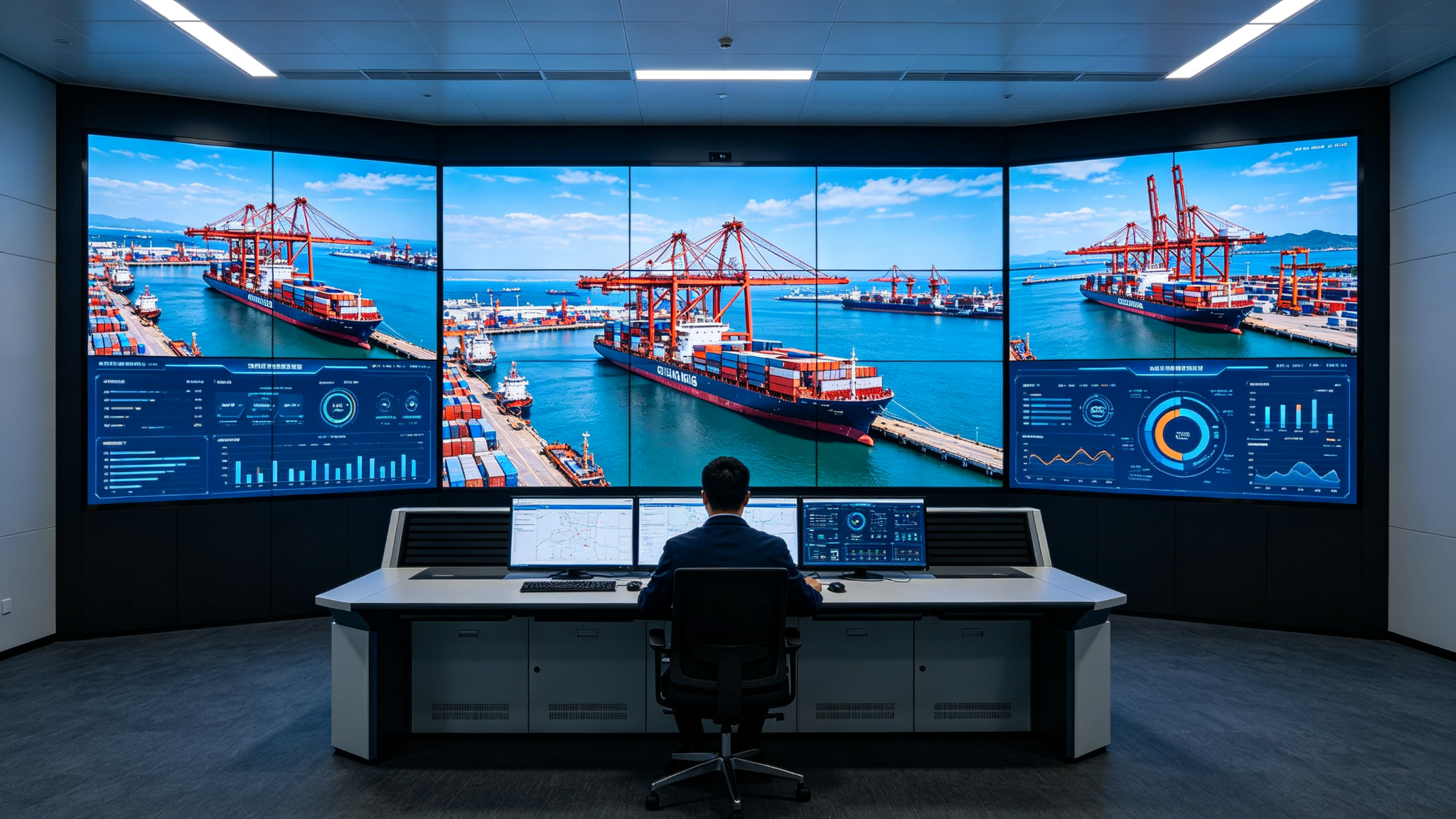
In security monitoring center display scenarios, LCD video walls have become the mainstream choice for 7×24-hour duty environments due to their high brightness, narrow bezels, and long lifespan. Stonbel, as a full-range LED/LCD commercial display manufacturer, provides complete supply capability from panel modules to complete systems. This article analyzes seamless large-screen display solutions for LCD video walls in security monitoring from five dimensions: technical specifications, deployment plans, COB packaging synergy, conference all-in-one integration, and maintenance support, providing verifiable engineering data and implementation cases.
I. Core Technical Specifications of LCD Video Walls
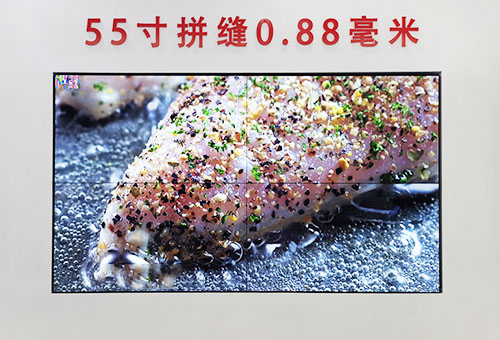
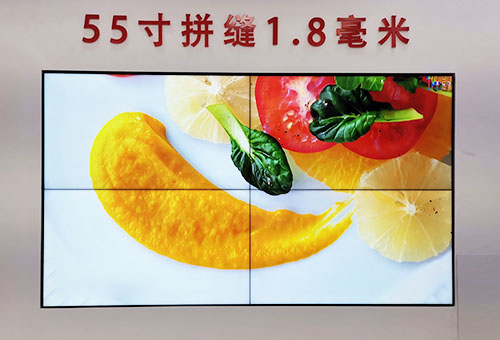
LCD video walls utilize industrial-grade IPS hard-screen panels with typical brightness of 500cd/m² and static contrast ratio exceeding 4000:1, offering superior readability in high-ambient-light environments compared to ordinary displays. Current mainstream models feature physical bezel widths narrowed to 3.5mm, 1.8mm, and 0.88mm. At 0.88mm bezel in a 3×3 configuration, the total seam width is approximately the thickness of two stacked coins, visually approaching a seamless effect. Taking the Stonbel SB-PJ550UD series as an example, it supports 1920×1080 full HD resolution, 60Hz refresh rate, 8ms response time, and a rated backlight lifespan of 50,000 hours (equivalent to 5.7 years of continuous operation). The panel's color gamut coverage reaches 72% NTSC, with color reproduction calibrated to DICOM medical-grade grayscale standards, enabling clear resolution of dark details in surveillance footage. All parameters are CCC, CE, and FCC certified, meeting the technical thresholds of domestic security project tenders.
II. Scenario-Based Deployment for Security Monitoring Centers
A municipal public security traffic command center completed a video wall upgrade in 2023, adopting a Stonbel 3-row × 4-column configuration of 12 55-inch LCD video wall units, totaling approximately 32.4m² of display area. The project utilized 0.88mm bezel panels with floor-mounted embedded front-access brackets, rated at 300kg/m² load-bearing capacity, meeting seismic fortification grade 8 requirements. The signal system integrated 72 HD network camera feeds via HDMI 2.0 matrix and SDI optical transceivers, enabling sequential switching, single-screen display, and cross-screen roaming. During installation, engineers calibrated the base wall levelness to within ±1mm. After panel assembly, overall wall flatness deviation remained below 0.5mm with no visible bright edges or dark bands at seams. After one year of operation, brightness degradation remained below 2% with dead pixel rate controlled within 0.01%, verifying the stability of LCD video walls under prolonged power-on conditions.
III. COB Packaging Technology and LED Display Product Synergy
For scenarios requiring higher brightness, such as ultra-large command halls, security monitoring centers can opt for COB-packaged fine-pitch LED displays. COB (Chip on Board) technology directly packages light-emitting chips onto the PCB board, eliminating traditional SMD brackets and increasing lamp bead mechanical impact resistance by 5 times. COB modules achieve IP54 protection rating with moisture, dust, and collision resistance, operating stably even in environments without air conditioning. Stonbel's COB fine-pitch LED displays offer pixel pitches ranging from P0.9 to P1.5, with brightness adjustable from 100 to 1200cd/m². Compared to LCD video walls, COB LED displays have no bezel boundaries and higher pixel density, but consume approximately 1.8 times more power. The engineering selection logic is: for core monitoring areas requiring 24-hour continuous operation with extreme sensitivity to seams, 0.88mm LCD video walls are recommended; for ultra-large spaces requiring seamless full-screen display, COB LED displays are preferred. Both are supplied under Stonbel's unified commercial display full-range, ensuring spare part compatibility for subsequent maintenance.
IV. Conference All-in-One Integration with Commercial Display Full Range
In decision-making meeting rooms of security monitoring centers, conference all-in-one units serve as extended display terminals for LCD video walls, handling intelligence analysis and emergency dispatch tasks. Stonbel conference all-in-one units feature 65/75/86-inch 4K anti-glare panels, built-in 12MP cameras and 8-array microphones, supporting one-click screen casting, electronic whiteboard annotation, and dual-stream video conferencing collaboration. Touch precision reaches ±0.1mm with writing latency below 15ms, meeting smooth multi-user annotation requirements. Through the same brand's commercial display full range, LCD video walls in the monitoring hall and conference all-in-one units in meeting rooms share a unified information publishing and management software. Alarm positions annotated on the video wall can be synchronized in real-time to the meeting room display without additional interface development. Both device types support scheduled power on/off and intelligent thermal control, reducing power consumption during unattended operation. Conference all-in-one static power consumption is only 60% of a single LCD video wall screen, effectively controlling overall operational costs.
V. Installation, Construction, and Maintenance Considerations
Installation quality directly impacts display performance and lifespan of LCD video walls. Before construction, wall load-bearing capacity must be calculated; steel structures should use hot-dip galvanized square tubes with anti-rust paint applied at weld points. A minimum 800mm maintenance access aisle should be reserved behind the video wall, with the bottom edge typically positioned 600mm to 900mm above the floor to align operator sightlines with screen center. For maintenance, use dedicated lint-free cloth with a 1:1 alcohol solution to wipe screen surfaces quarterly; ammonia-based cleaners are prohibited. Ambient humidity should be maintained between 20% and 80% RH, with temperature kept between 10°C and 35°C. If a single module exhibits abnormal brightness, Stonbel's calibration software enables point-by-point brightness and chromaticity correction. For COB-packaged LED products, routine maintenance requires no module disassembly—simply use air blower to remove surface dust.
FAQ
1. What is the core difference between LCD video walls and LED displays in security monitoring?
LCD video walls use backlight modules with fixed pixel pitch, suitable for viewing distances of 2 to 6 meters; LED displays use self-emissive lamp beads, supporting seamless splicing, ideal for distances above 3 meters. Brightness ranges differ: LCD typically offers 500cd/m² while LED can exceed 1000cd/m².
2. What is the actual display effect of 0.88mm bezel LCD video walls?
In a 3×4 video wall, the physical bezel width is approximately 0.88mm, plus edge light-shielding treatment, making the seam visually appear as a thin line. Slight lines may be visible on red or green background images, but seam traces are not prominent during normal surveillance video display.
3. Does COB-packaged LED display installation require special structures?
COB modules are lightweight, but cabinet thickness is greater, requiring at least 200mm of maintenance space. Steel structure load calculations must account for cabinet weight; front-access magnetic mounting structures are recommended, allowing single-module removal for repair without full screen disassembly.
4. Can conference all-in-one units share signal splitters with LCD video walls?
HDMI signal splitters can synchronize signals between conference all-in-one units and LCD video walls, but HDCP protocol compatibility must be verified. Stonbel conference all-in-one units support HDMI 2.0 input, while LCD video wall matrices support mixed HDMI 1.4/2.0 interfaces; resolution and HDCP versions must be manually matched before connection.
5. How can brightness degradation in LCD video walls be restored?
LCD panel brightness degradation is an irreversible physical process, but partial compensation can be achieved by replacing backlight bar modules or adjusting drive current. It is recommended to reserve 20% brightness headroom during project design—for example, selecting 500cd/m² panels and operating at 400cd/m² to extend high-brightness service life.
Conclusion
LCD video walls, with 0.88mm ultra-narrow bezels, 50,000-hour backlight lifespan, and industrial-grade panel stability, hold an irreplaceable position in core command scenarios of security monitoring centers. Stonbel's commercial display full range covers LCD video walls, COB fine-pitch LED displays, and conference all-in-one units, providing unified technical standards from single-device supply to multi-screen integration. Engineering practice demonstrates that rational selection of bezel size and display technology, combined with standardized construction and maintenance procedures, can achieve stable operation cycles exceeding 8 years for large-screen systems. This provides a quantifiable and replicable technical pathway for large-screen display construction in security monitoring centers.
Stonbel has earned global customer trust through advanced technology and quality service. We remain committed to innovation, collaboration, and win-win outcomes, creating a better future together.