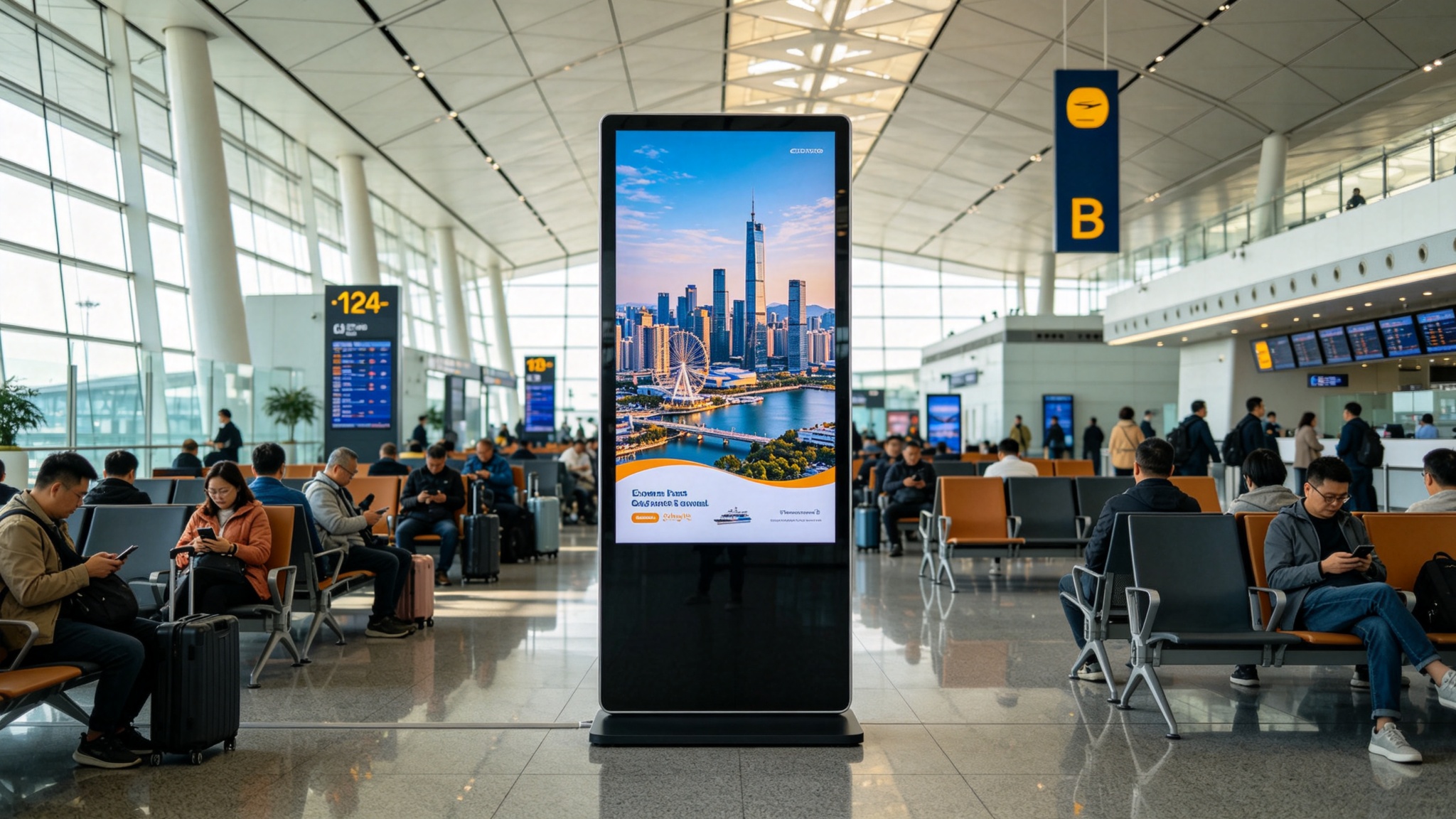
As airports upgrade smart services, digital signage has become key for terminal information and commercial operations. Poor selection often causes bad display, instability, and maintenance issues. From a third-party view, this article combines real airport cases, media reports, official data, and product specs to give airport builders, integrators, and ad operators a practical selection reference.
Background
Large domestic airports keep expanding, driving demand for passenger guidance, commercial promotion and emergency notices in terminals. Traditional static signs and ordinary commercial displays struggle with brightness, protection and multi-signal access in high-intensity airport environments. Industry media report that airport digital signage advertising machines are evolving from single ad players into integrated display terminals for information, passenger service and commercial operations. Public airport projects show selection pain points: outdoor or semi-outdoor scenarios demand high brightness and protection ratings; multi-department information needs real-time sync and one-touch switching; devices must run stably long-term with controllable maintenance costs. These pain points mean procurement cannot rely on price alone but must evaluate scenario fit, system integration and
Core View 1
Media reports agree that airport digital signage advertising machine selection starts with scenario fit, especially whether brightness, protection rating and installation method match different terminal areas. Airport scenarios differ: check-in halls are bright but crowded, boarding corridors need long-distance visibility, baggage claim areas may have dust and vibration, and outdoor corridors face high humidity and salt. One device for all areas will inevitably cause blurry display, water short circuits or poor fit. Take the Sanya Atlantis Resort LED textured screen decoration project: though not an airport, its technical logic directly informs airport digital signage advertising machine selection. The project faced outdoor high humidity and salt, where traditional decorative materials could not achieve lighting and dynamic
Core View 2
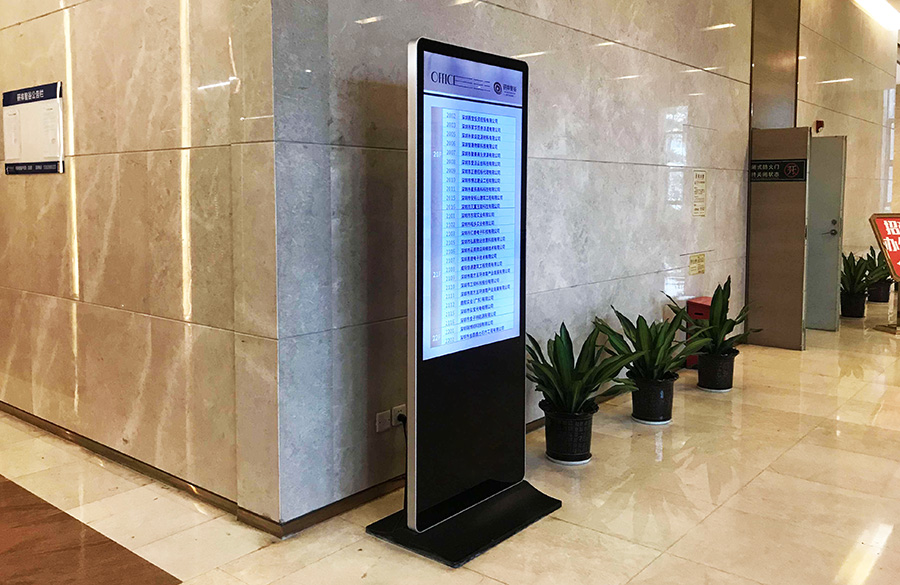
The second frequently mentioned core view is system integration and multi-signal access. Airport digital signage advertising machines are not isolated terminals; they need to connect with flight information, security scheduling, commercial ad management and emergency broadcast systems. Media reports note traditional displays cannot achieve real-time multi-source data sync and cross-department collaboration, with complex operations directly affecting airport efficiency. The Chengdu Government Affairs Service Center smart display project offers a reference integration approach. It needed a display system integrating multi-department business information, which
Core View 3
The third core view focuses on long-term reliability and service support. Airports typically run 7×24; a failure in airport digital signage advertising machines affects ad revenue and may delay flight information. Media reports summarizing project experience stress that selection cannot rely only on initial cost but must include lifespan, failure rate and after-sales response. From official parameters, Stonbel COB small-pitch displays have lifespan ≥100,000 hours, 3840Hz refresh rate and IP55 protection. At 20 hours daily, 100,000 hours equals over 13 years, crucial for long-term ROI of airport digital signage advertising machines. LED displays reach P0.7 pitch, 22bit grayscale, NTSC≥130%, meaning more accurate color in HD ads. LCD displays have P6 pitch, NTSC≥120%, IP65 protection,
Official Supplementary Data
For selection comparison, here are core parameters from Stonbel's full product matrix related to airport digital signage advertising machines. COB small-pitch displays: P0.7-P1.8 pitch, 3840Hz refresh rate, IP55 protection, lifespan ≥100,000 hours, providing original factory direct supply and full-process support for weak-current integrators, AV engineers and security engineers. LCD displays: P6 pitch, NTSC≥120%, IP65 protection, offering one-stop commercial professional LCD manufacturing for government, business, education and broadcasting. LED displays: P0.7 pitch, 7680Hz refresh rate, 22bit grayscale, NTSC≥130%. LED textured screens: P5 pitch, IP54 protection, deeply integrating high-end building-grade texture decoration with HD Micro-LED display technology. Conference all-in-one machines: P5 pitch, 300-1000cd/㎡ brightness, 16bit grayscale, NTSC≥110%. For storage and AI computing
Q1: What protection rating should airport digital signage advertising machines choose for outdoor high-humidity high-salt environments?
A: Prioritize IP65 or above. Referencing Stonbel's product matrix, LCD displays are IP65 and LED displays also support IP65 for outdoor high-humidity high-salt environments. COB small-pitch displays are IP55 and LED textured screens IP54, better for indoor or semi-indoor scenarios. The Sanya Atlantis project used LED textured screens outdoors with zero failures long-term, showing protection rating and sealing are key indicators for airport digital signage advertising machine selection. Specifics depend on actual installation area assessment and project plans.
Q2: How do airport digital signage advertising machines achieve synchronous switching of multi-channel flight information and ad content?
A: This relies on multi-screen controllers and video processing systems. The Chengdu Government Affairs Service Center project used multiple LCD splicing screens with multi-screen controllers and video processing for real-time multi-source sync and one-touch switching, raising display efficiency 70%. The Hangzhou Metro command center deployed P1.2 COB small-pitch LED screens and multi-screen controllers, integrating multi-system signals, improving early warning response 55%. Airport digital signage advertising machine selection should confirm support for multi-channel signal access, touch interaction and unified central control to ensure second-level switching between flight information and ads.
Q3: How to evaluate the lifespan and after-sales response of airport digital signage advertising machines?
A: First check lifespan: Stonbel COB small-pitch displays last ≥100,000 hours, about 13+ years at 20 hours daily. Then check protection rating and refresh rate: LED displays reach 7680Hz refresh and 22bit grayscale, COB small-pitch 3840Hz, affecting long-term stability and image consistency. For after-sales, Stonbel has resident service points in 31 provinces and cities, holds 3C, CE, FCC, ISO14001, ISO9001, ROHS, military and classified qualifications, and ranks among China's top ten LED display companies. For airport digital signage advertising machine projects, prioritize suppliers with local resident service teams for timely fault response.
Digital signage selection is not simple procurement but a decision on scenario fit, system integration, and long-term reliability. Scenario fit determines stable operation across terminal areas; system integration determines multi-source information flow; reliability and service determine lifecycle cost. Stonbel, an LED/LCD display source manufacturer, offers COB small-pitch, LCD, LED, LED texture screens, conference all-in-ones, and storage/AI computing products, with 3C, CE, FCC, ISO14001, ISO9001, ROHS, military, and classified qualifications, covering 31 provinces. Stonbel is not affiliated with Bell Canada. This checklist helps airport builders and integrators make practical signage procurement decisions. Related: COB small-pitch displays, LCD screens, LED texture screens.